Particle board is a cornerstone material in the modern furniture and construction industries. Understanding the different types of particle board available is crucial for manufacturers, designers, and builders seeking cost-effective and reliable solutions. This article delves into the world of particle board, exploring its composition, manufacturing process, various types, applications, and how it compares to other wood products, helping you make informed decisions for your projects. Whether you’re a furniture maker like Mark Thompson in the USA looking for quality materials or an interior designer specifying components, knowing the nuances of particle board is key to success.
What Exactly is Particle Board? Unpacking the Basics
Particle board is a widely used engineered wood product. At its core, particle board is made from wood chips, sawdust, shaving remnants, or other wood wood particles that are bound together using a synthetic resin or binder. This mixture is then subjected to intense heat and pressure, compressing the wood particles into dense, flat panels. The result is a versatile material known for its affordability and versatility, making it a staple in various industries.
Unlike solid wood, which is milled directly from logs, particle board utilizes wood waste, contributing to sustainability by maximizing resource utilization. It offers a uniform surface and consistent density, which can be advantageous over natural wood’s variations. While often confused with other engineered woods, particle board has distinct characteristics and applications, primarily valued for being a cost-effective material for non-structural uses where appearance or high load-bearing capacity isn’t the primary concern, unless enhanced with laminate or veneer. Its adaptability makes it suitable for mass production of furniture and interior components.
The inherent structure of particle board, being composed of smaller particles glued together, means it’s generally less strong and less moisture-resistant than plywood or solid wood unless specifically treated. However, its smooth surface provides an excellent base for decorative finishes like melamine or wood veneer, allowing it to mimic more expensive materials effectively. Understanding these fundamental properties is the first step in appreciating why particle board remains a popular choice for many different applications.
How is Particle Board Manufactured? From Wood Chips to Engineered Panel
The manufacture process for particle board involves several key stages, transforming wood residue into functional panels. It begins with collecting raw wood materials – typically sawmill shavings, sawdust, and wood chip fragments. These materials are cleaned, screened to ensure consistent particle size, and dried to a specific moisture content. Consistent moisture levels are critical for proper resin bonding and preventing defects in the final particle board product.
Next, the dried wood particles are thoroughly mixed with a synthetic resin binder, often urea-formaldehyde (UF) or melamine-urea-formaldehyde (MUF), especially for moisture-resistant grades. The amount and type of resin used significantly impact the particle board‘s strength, durability, and resistance to environmental factors like humidity. This resin-coated mixture is then formed into large mats, often in multiple layer configurations, with finer particles typically placed on the outer surfaces for a smoother finish and coarser particles in the core for structural integrity.
Finally, these mats enter a large hydraulic press where they are subjected to high heat and pressure. This crucial step cures the resin, creating a strong bond between the wood particles and compressing the mat into a rigid, flat particle board panel of the desired thickness and density. After pressing, the large master panels are cooled, trimmed to standard sizes and thicknesses, and sanded to achieve a smooth, uniform surface ready for finishing or direct use. This efficient process allows for the large-scale production of budget-friendly particle board.
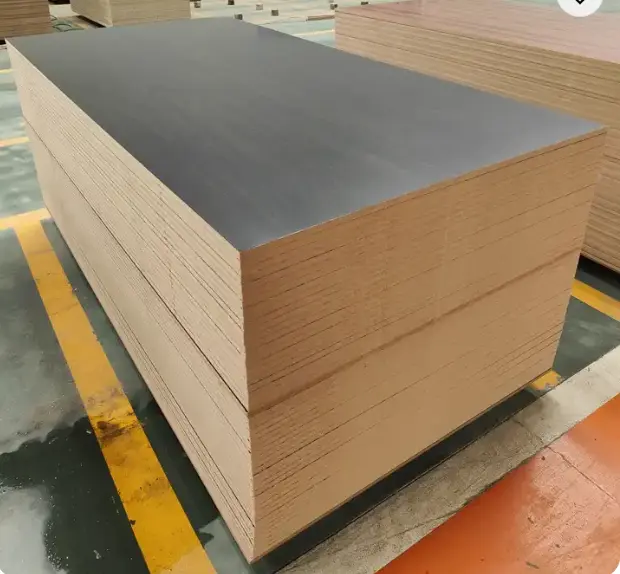
Particle Board vs. Plywood: What Key Differences Should You Know?
When selecting engineered wood products, the choice often comes down to particle board vs. plywood. While both are panel products used extensively in furniture and construction, they differ significantly in structure, properties, and cost. Plywood is constructed from thin sheets of wood veneer (plies) glued together, with the grain direction of adjacent layers rotated by 90 degrees. This cross-graining technique gives plywood superior structural strength, stability, and resistance to warping compared to particle board.
Particle board, on the other hand, is made by compressing wood particles (wood chips, sawdust) with resin. This results in a panel that is typically denser but lacks the directional strength of plywood. Particle board is more susceptible to expansion and swell when exposed to moisture, and it doesn’t hold screws or fasteners as securely as plywood, especially on the edges. However, particle board boasts a smoother, more uniform surface free from knots or grain patterns found in plywood, making it an excellent substrate for laminate or thin veneer applications.
The most significant advantage of particle board over plywood is its lower cost. Its manufacturing process utilizes wood waste, making it a highly cost-effective option, particularly for applications where structural strength is not the primary requirement, such as ready-to-assemble furniture, cabinet boxes, shelving, and underlayment for floor coverings. Plywood is generally preferred for structural applications like subflooring, roof sheathing, and higher-end cabinetry where greater durability and moisture resistance are needed.
Is Particle Board the Same as Chipboard or OSB (Oriented Strand Board)?
While the terms are sometimes used interchangeably, there are distinctions between particle board, chipboard, and OSB (Oriented Strand Board). Particle board is generally considered the umbrella term in North America for panels made from small wood particles, including sawdust and shavings, bonded with resin. The term chipboard is more common in the UK and other regions, often referring to the same type of product – a panel made from wood chips compressed with adhesive. So, in many contexts, particle board and chipboard essentially describe the same material.
OSB (Oriented Strand Board), however, is distinctly different. While also an engineered wood product made from wood and adhesives, OSB is constructed from larger, rectangular wood strands or flakes arranged in specific orientations. These strands are layered, much like plywood veneers, with the strands in outer layers typically aligned parallel to the panel’s length, and inner layers oriented perpendicularly. This layered, oriented strand structure gives OSB greater structural strength and stiffness than standard particle board, making it suitable for load-bearing applications like wall sheathing, roof decking, and subflooring, often competing directly with plywood.
In summary:
- Particle Board / Chipboard: Made from small, randomly oriented wood particles (wood chips, sawdust, shavings) bonded with resin. Known for smooth surface, uniformity, and affordability. Primarily used in non-structural applications like furniture, cabinetry, and underlayment.
- OSB (Oriented Strand Board): Made from larger wood strands arranged in cross-oriented layers. Offers greater structural strength than particle board. Used in construction for sheathing, decking, and subflooring.
Understanding these differences helps in selecting the appropriate panel type of engineered wood for specific project requirements, balancing cost, performance, and application demands.
What are the Main Different Types of Particle Board Available?
Particle board isn’t a one-size-fits-all product. Several different types of particle board cater to specific needs and applications. The most common is Standard Particle Board, which uses urea-formaldehyde (UF) resin and is suitable for general-purpose interior applications like basic furniture carcasses, shelving, and light construction use where moisture exposure is minimal. It offers the best affordability.
-
Melamine Faced Particle Board (MFC): This is standard particle board laminated with a melamine-impregnated decorative paper. The melamine layer provides a hard, durable, scratch-resistant, and often moisture-resistant surface available in countless colors, patterns (like wood grains or marbles), and textures. Melamine Particle Board Double Sides White is extremely popular for furniture, cabinetry, shelves, and shop fittings due to its aesthetic versatility and enhanced durability.
-
Moisture-Resistant (MR) Particle Board: Engineered for environments with higher ambient humidity, MR particle board incorporates special melamine-urea or phenol-formaldehyde resins and sometimes water-repellent additives during manufacture. While not fully waterproof, it significantly reduces swelling and degradation when exposed to occasional moisture, making it suitable for kitchen and bathroom cabinet carcasses, laundry room furniture, and underlayment in potentially damp areas. It’s often identifiable by a green dye incorporated during production, though color is not a guaranteed indicator.
-
Veneered Particle Board: Similar to MFC, this type of particle board features a thin layer of real wood veneer (like oak, maple, or walnut) applied to one or both surfaces. This provides the aesthetic appeal of solid wood or hardwood at a lower cost and with greater stability than solid panels. It’s commonly used in furniture manufacturing, wall paneling, and doors where a natural wood look is desired without the expense of solid wood.
-
Fire-Retardant Particle Board: Treated with fire-retardant chemicals during manufacturing, this specialized particle board offers increased resistance to ignition and slows the spread of flames. It’s used in commercial buildings and public spaces where fire safety regulations require enhanced protection.
-
Cement-Bonded Particle Board: This heavy-duty variant uses cement as the primary binder instead of synthetic resin. It offers excellent resistance to moisture, fire, insects, and fungi. It’s primarily used in construction for exterior cladding, floor systems, and partitions where high durability is paramount.
Choosing the right particle board type depends heavily on the intended application, required performance characteristics (durability, moisture resistance), aesthetic preferences, and budget constraints.
Why Choose Melamine Laminated Particle Board for Furniture?
Melamine Laminated Particle Board, often referred to as MFC (Melamine Faced Chipboard) or simply melamine board, is an extremely popular choice for modern furniture manufacturing, cabinetry, and decorative paneling. Its popularity stems from a compelling combination of aesthetics, durability, and cost-effectiveness. The core particle board provides an affordable and stable substrate, while the melamine surface offers significant advantages.
The melamine surface itself is a resin-impregnated paper, thermally fused to the particle board core under heat and pressure. This process creates a hard, seamless finish that is highly resistant to scratches, stains, heat, and general wear and tear. This makes laminated particle board particularly suitable for high-touch surfaces like kitchen cabinet doors, countertops (though less common now than High-Pressure Laminate or HPL), office desks, and retail fixtures. The ease of cleaning – usually just requiring a damp cloth – adds to its practicality in both residential and commercial settings.
Furthermore, the decorative possibilities are vast. The melamine paper can be printed with virtually any color, pattern, or texture, realistically mimicking natural materials like various wood grains, stone, or textiles, or offering contemporary solid colors and abstract designs. This allows manufacturers and designers to achieve diverse aesthetics without the high cost and potential inconsistencies of natural materials. Companies like Demeter offer a wide array of finishes, such as Factory Price Wood Grain Melamine MDF Board (though this link is for MDF, the principle applies to particle board/chipboard), providing options for every style and décor. Its combination of affordability, durability, and design flexibility makes melamine particle board an ideal choice for mass-produced and custom furniture.
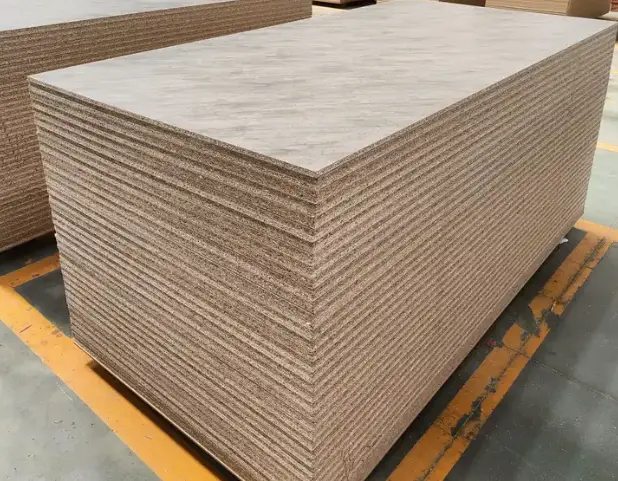
When is Moisture-Resistant Particle Board the Right Choice?
Standard particle board has a known vulnerability: moisture. When exposed to water or high humidity, the wood particles can swell, lose their bond, and the panel can warp or disintegrate over time. This is where Moisture-Resistant (MR) Particle Board comes into play. While it’s crucial to understand that MR particle board is not waterproof, it is specifically engineered to perform better in environments where intermittent moisture or high ambient humidity is expected.
The key difference lies in the resin binder used. MR particle board typically utilizes melamine-urea-formaldehyde (MUF) or phenol-formaldehyde (PF) resins, which are more resistant to breaking down in the presence of moisture compared to the standard urea-formaldehyde (UF) resins used in regular particle board. Some formulations may also include additives like wax emulsion to further enhance water repellency. This improved formulation significantly reduces the rate and extent of swelling and thickness increase when the particle board encounters moisture.
Therefore, MR particle board is the recommended choice for applications in potentially damp areas such as kitchen carcasses (especially around sink areas), bathroom vanities and cabinetry (though solid plywood or specialized waterproof boards might be better for very wet zones), laundry room furniture, window sills, and as underlayment for floor coverings in basements or areas prone to spills. Using MR particle board in these situations extends the lifespan and maintains the structural integrity of the finished product, preventing costly repairs or replacements down the line. It provides a sensible balance between cost and performance for moderately damp conditions where standard particle board would likely fail.
Exploring Veneered Particle Board: Aesthetics Meets Affordability
For projects demanding the natural beauty and warmth of real wood without the associated cost or potential instability of solid wood, Veneered Particle Board presents an excellent solution. This type of particle board combines the cost-effective core of standard particle board with the aesthetic appeal of genuine hardwood. It involves applying a thin layer of real wood veneer – slices of high-quality timber like oak, maple, walnut, cherry, or exotic species – onto one or both surfaces of the particle board substrate.
The result is a panel that looks and feels remarkably like solid wood, showcasing authentic grain patterns, textures, and color variations. This makes veneered particle board highly desirable for manufacturing high-quality furniture, architectural panels, doors, and cabinetry where visual appeal is paramount. It allows designers to incorporate the luxurious look of expensive woods into projects while adhering to tighter budgets. The stable particle board core also reduces the risk of warping or splitting that can occur with wide panels of solid wood, especially in environments with fluctuating temperature and humidity.
Compared to melamine particle board, which uses a printed paper to simulate wood grain, veneered particle board offers the genuine article. It can be sanded (lightly), stained, and finished much like solid wood, allowing for greater customization and a more premium feel. While more expensive than standard or melamine particle board, it remains significantly more budget-friendly than using solid timber throughout a piece of furniture. It effectively bridges the gap between the economy of engineered panels and the high-end look of natural wood, making it a versatile option for achieving sophisticated designs cost-effectively.
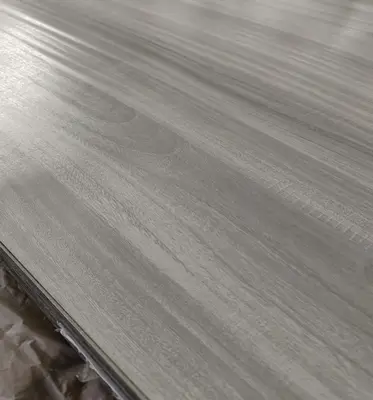
Where is Particle Board Used Most Commonly?
The affordability and versatility of particle board have made it ubiquitous in numerous applications, particularly within the interior furniture and construction sectors. Its most common use is undoubtedly in the manufacture of ready-to-assemble (RTA) or flat-pack furniture. Think bookcases, desks, entertainment centers, wardrobes, and storage units found in homes and offices worldwide. Standard particle board forms the carcasses and shelves, often finished with melamine or laminate for durability and aesthetics.
Kitchen and bathroom cabinetry is another major application area. While higher-end cabinets might use plywood or solid wood for boxes, particle board (especially MR grade for kitchens/baths and often with a melamine finish) is widely used for cabinet carcasses, shelving, and sometimes even door and drawer fronts in more budget-friendly lines. Its smooth surface is ideal for laminate or decorative foil application, offering a clean look. You can explore various finishes suitable for cabinets, such as those seen in DEMETER Melamine chipboard PB 18mm manufacturer solid color black color.
Beyond furniture, particle board serves crucial roles in construction and remodeling. It’s frequently used as underlayment for carpets, vinyl tiles, and laminate floor coverings. Laid over a subfloor (which might be plywood or OSB), particle board underlayment provides a smooth, flat, and uniform surface, ensuring better installation and appearance of the final floor. Other uses include non-structural partitions, core material for countertops (typically covered with high-pressure laminate), shop fittings, displays, and speaker boxes. Its consistent thickness and flatness make particle board a reliable choice for these diverse applications.
What Makes Particle Board Such a Budget-Friendly and Popular Choice?
The enduring popularity of particle board largely hinges on two key factors: its remarkable affordability and its inherent versatility. Being a cost-effective material is perhaps its most significant advantage. The manufacturing process primarily utilizes wood byproducts – sawdust, shavings, and wood chips – which are often considered waste from other timber operations like sawmilling. By repurposing these materials, particle board production minimizes waste and reduces reliance on whole logs, leading to significantly lower production costs compared to solid wood or even plywood. This cost advantage is passed down the supply chain, making products used in furniture and construction more accessible and budget-friendly for consumers and businesses.
Secondly, particle board is a versatile material adaptable to many non-structural needs. Its smooth, uniform surface provides an excellent substrate for various finishes. Whether it’s applying melamine papers, high-pressure laminates, wood veneers, paints, or vinyl foils, particle board readily accepts these decorative layers, allowing manufacturers to achieve a wide range of aesthetic outcomes. This adaptability means it can mimic more expensive materials effectively or present clean, modern finishes, catering to diverse design trends.
Furthermore, particle board is available in a wide range of sizes and thicknesses, and its consistent density and dimensional stability (in controlled environments) make it easy to machine and work with using standard woodworking tools. This ease of processing contributes to efficient manufacturing processes for furniture and cabinet makers. While it has limitations regarding strength and moisture resistance (unless specifically treated), its balance of low cost, smooth finish, and finishing versatility ensures particle board remains a go-to, popular choice for countless interior applications.
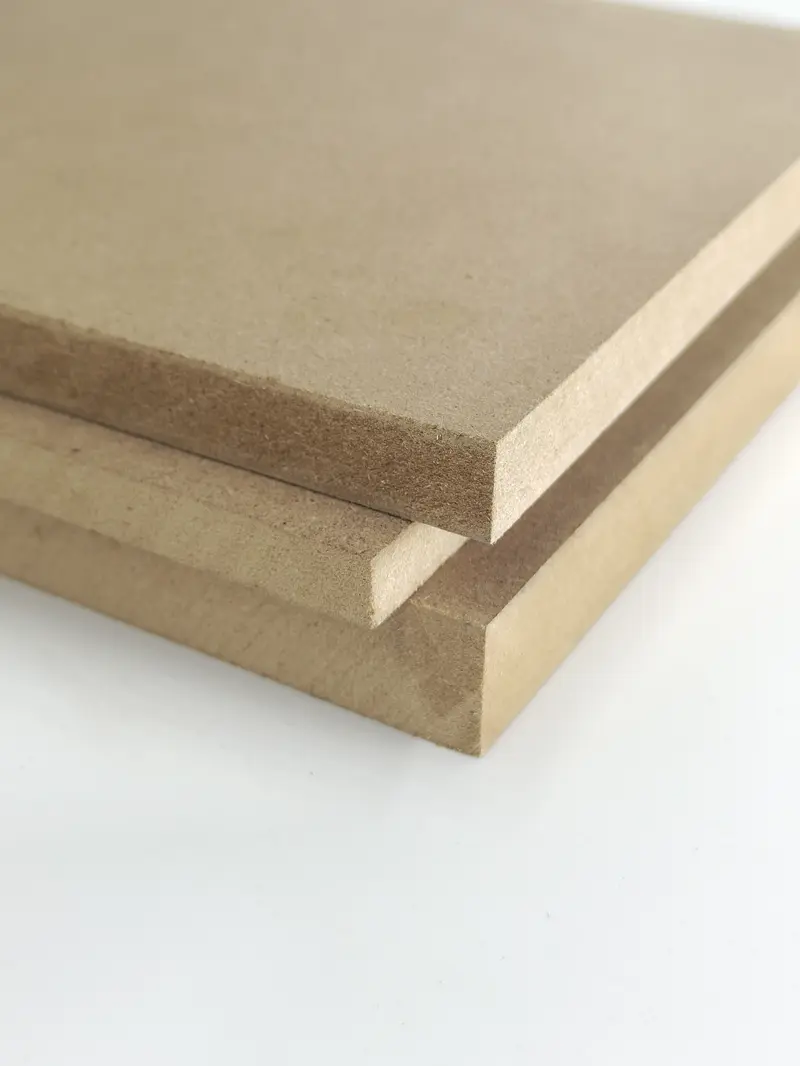
Key Considerations When Sourcing Particle Board: Quality, Certifications, and More
For businesses like Mark Thompson’s, sourcing particle board effectively requires careful consideration of several factors beyond just the base price. Quality control is paramount. This involves inspecting the surface finish for smoothness and uniformity, ensuring the core material is well-bonded without voids, checking for consistent thickness and dimensional accuracy across panels, and verifying color/pattern consistency, especially for melamine or veneered particle board. Poor lamination quality or defects can lead to production issues and customer dissatisfaction.
Certifications are increasingly important, particularly for export markets like the USA and Europe. Compliance with formaldehyde emission standards, such as CARB P2 (California Air Resources Board) or European E1/E0 standards, is often mandatory. These regulations limit the amount of formaldehyde off-gassing from the resin binders used in particle board, ensuring healthier indoor air quality. Additionally, certifications like FSC (Forest Stewardship Council) indicate that the wood fiber comes from responsibly managed forests, addressing sustainability concerns. Reputable suppliers should readily provide documentation for these certifications.
Other critical factors include moisture content (which should be appropriate for the intended climate to prevent warping), the grade and density of the particle board (higher density generally means better strength and screw-holding ability), and the type of resin used (especially if moisture-resistant properties are needed). Logistics, including reliable shipping schedules and secure packaging to prevent damage during transit, are vital for maintaining production timelines. Finally, establishing clear communication channels and agreeable payment terms with the supplier, like Allen’s factory, ensures a smooth and reliable procurement process. Understanding these pros and cons and specifications helps ensure the sourced particle board meets the required standards for quality, safety, and performance.
Key Takeaways:
- Particle board is an engineered wood product made from compressed wood particles and resin, known for its affordability.
- It differs from plywood (stronger, layered veneers) and OSB (stronger, oriented wood strands). Chipboard is often synonymous with particle board.
- Different types exist: Standard, Melamine Faced (MFC), Moisture-Resistant (MR), Veneered, Fire-Retardant, and Cement-Bonded, each suited for specific applications.
- Melamine particle board offers a durable, scratch-resistant, and decorative surface, ideal for furniture and cabinetry.
- MR particle board is used in areas prone to humidity, like kitchens and bathrooms, due to its enhanced resistance to swelling.
- Veneered particle board provides the look of real wood cost-effectively.
- Common uses include RTA furniture, cabinet carcasses, shelving, and floor underlayment.
- When sourcing, prioritize quality checks, necessary certifications (CARB P2, E1/E0, FSC), correct moisture content, appropriate grade/density, reliable logistics, and clear communication.
Post time: 04-11-2025