As a manufacturer of wood-based panels for decades, I’ve had countless conversations with procurement officers like Mark from the USA, furniture makers from Europe, and designers from Australia. One question surfaces time and again: "Allen, how do I choose the right MDF thickness for my project?" The choice between 12mm, 18mm, or a robust 25mm MDF board can make or break a project’s budget, durability, and final appearance. This is especially true for the workhorse of heavy-duty applications, the 25mm MDF sheet.
This article is your definitive guide, born from years of factory-floor experience and customer feedback. We’ll dive deep into the world of 25mm MDF, exploring its strength, comparing it to plywood and other thicknesses, and highlighting its best uses. By the end, you’ll have the confidence to select the perfect sheet material for your needs, ensuring your finished products are both beautiful and built to last.
What Exactly is MDF and How Is It Made?
Before we can judge its strength, let’s understand what MDF actually is. The term MDF stands for Medium-Density Fibreboard. It’s not sawdust and glue, as some myths suggest. It’s a highly sophisticated engineered wood product with remarkably consistent properties. Here in our factory, the process is a blend of precision engineering and material science. It starts with high-quality wood residuals—think chips and shavings. These are broken down into fine wood fibres, essentially separating the wood into its fundamental components.
These tiny wood fibres are then washed and put into a high-pressure defibrator. Imagine a giant pressure cooker that softens the fibre and makes it uniform. After this, the fibres are mixed with a special wax and a resin binder. This slurry is then laid out into large mats, which are passed through a massive press. This is where the magic happens. Under immense heat and pressure, the resin cures, bonding the fibres together to form a dense, solid, and homogenous wood panel. The result is an engineered wood sheet with no grain, no knots, and a perfectly smooth surface. This consistency is why so many industries rely on MDF.
Why Does MDF Thickness Matter So Much for Strength?
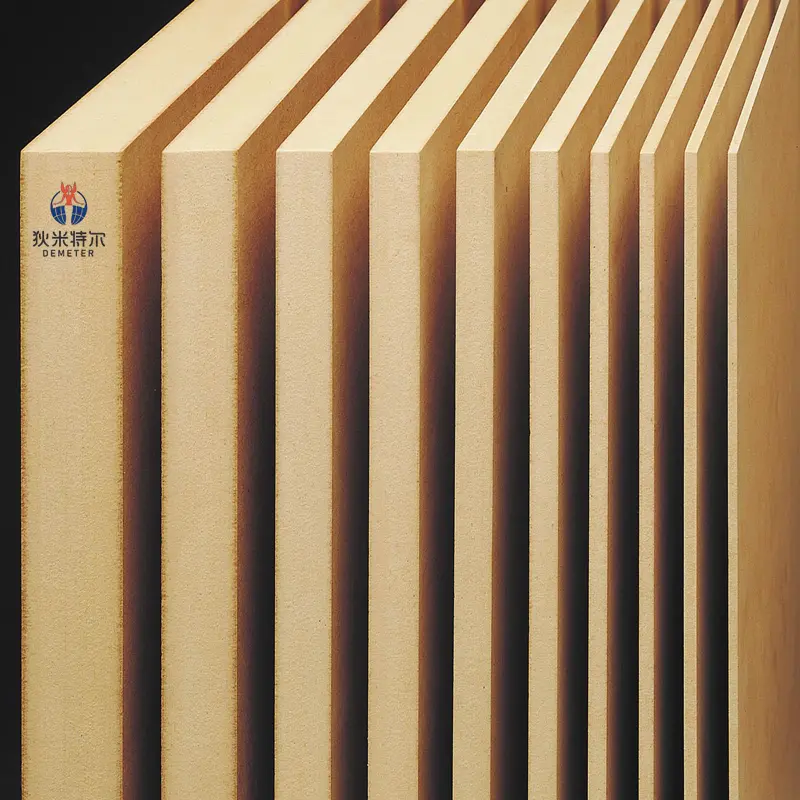
Does thickness really matter? Absolutely. The thickness of an MDF board is the single most important factor determining its structural integrity and its ability to resist bending or "sagging" under load. A thicker board has a greater cross-sectional area, which dramatically increases its stiffness and load-bearing capacity. Think of it like a bridge beam—a taller, thicker beam can span a greater distance and carry more weight than a thin one.
For a procurement manager like Mark, understanding this relationship is crucial for cost-effectiveness. Choosing a thickness that is too thin for the application (like using 12mm MDF for a long bookshelf) will inevitably lead to failure and customer complaints. Conversely, over-engineering a project with unnecessarily thick MDF (using 30mm where 18mm would suffice) adds unnecessary cost and weight. Getting the thickness right is the key to balancing performance with budget. The question, "mdf strong enough?" can only be answered when you specify the thickness and the application.
How Strong is a 25mm MDF Board Compared to Other Thicknesses?
A 25mm MDF board is a true heavyweight in the world of panel products. Its strength is significantly greater than that of its thinner counterparts. While thinner boards like 3mm or 5mm are perfect for drawer bottoms or cabinet backs, they have very little structural strength on their own. 12mm MDF is a step up, often used for light-duty cabinet carcasses or display units, but it requires good support.
The industry standard for many furniture applications has long been 18mm MDF. It offers a great balance of strength, weight, and cost. However, when you need superior strength and rigidity, the 25mm mdf board is the clear winner. The extra 7mm of thickness over an 18mm board doesn’t just add a little strength; it increases its stiffness exponentially. This makes it the go-to choice for applications that need to support the weight of heavy items or span longer distances without support. We even produce boards up to 30mm mdf for very specialized, heavy-duty structural uses.
| Thickness | Common Applications | Strength Profile |
|---|---|---|
| 3mm – 6mm | Cabinet backs, drawer bottoms, wall paneling, craft projects. | Non-structural, flexible. |
| 12mm MDF | Light cabinet construction, picture frames, small furniture. | Light-duty structural. Requires support. |
| 18mm MDF | General furniture, kitchen cabinets, standard shelving, doors. | The industry standard; good all-around strength. |
| 22mm / 25mm MDF | Heavy-duty shelving, workbenches, tabletops, cabinet doors. | High-strength, excellent rigidity, minimal sag. |
| 30mm+ | Commercial fixtures, structural components, exhibition stands. | Extremely durable, maximum strength. |
What are the Ideal Applications for 25mm MDF Sheets?
The exceptional strength and stability of a 25mm sheet of MDF open it up to a wide variety of applications where lesser materials would fail. Its density and thickness make it perfect for projects that demand durability and a high-end feel. As a supplier, we see our 25mm MDF being used by a diverse range of clients.
Here are some of the most common and ideal uses:
- Heavy-Duty Shelving: This is perhaps the most popular use. For a library bookshelf or garage storage that needs to hold significant weight, 25mm MDF is an excellent choice. It provides strength and minimizes the risk of sagging over time.
- Workbenches and Tabletops: The smooth, durable surface and inherent strength of 25mm MDF make it a fantastic material for a workshop workbench or a large dining or office tabletop. It can handle the impacts and loads associated with these environments.
- High-End Cabinetry and Furniture Making: For premium furniture, the heft and solid feel of 25mm mdf are highly desirable. It’s often used for the main structural components of large wardrobes, entertainment centers, and office furniture.
- Commercial Fixtures and Shopfitting: Retail stores and commercial spaces need displays and fixtures that can withstand constant public use. 25mm mdf board is extremely durable and provides a solid foundation for displays, counters, and point-of-sale units.
- CNC Routing and Machining: The homogenous nature of MDF, free of knots and grain, makes it a superior material for CNC machining. The 25mm thickness allows for deep, intricate carving and shaping without compromising the integrity of the wood panel.
Can You Use 25mm MDF for Shelving? Will it Sag?
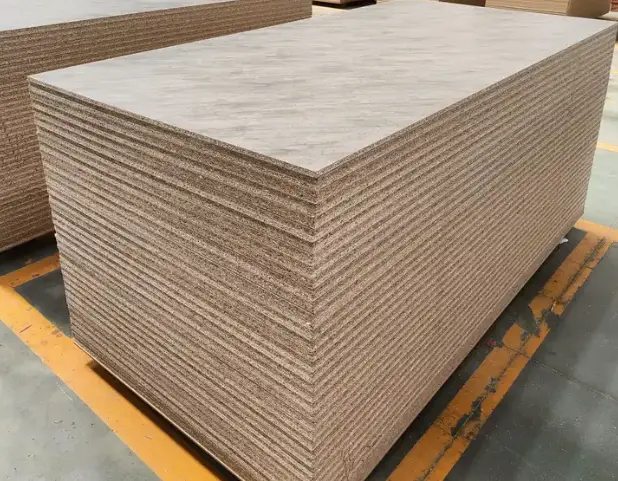
This is a critical question for any cabinet maker or furniture designer. The short answer is yes, 25mm MDF is an excellent choice for a shelve. The dreaded "sag" is a result of a material bending under its own weight and the weight of what it’s holding over a specific span. Due to its increased thickness and density, a 25mm mdf board is far more resistant to sagging than 18mm or 12mm boards.
However, no material is completely sag-proof over an infinite distance. A good rule of thumb I share with clients is to ensure a shelve made from 25mm MDF has support at least every 900mm to 1200mm (3-4 feet). For a standard 800mm wide bookshelf, a 25mm sheet will not bend or sag noticeably, even when loaded with books. For wider spans, adding a central vertical support or a reinforcing brace along the front or back edge is a simple and effective strategy. The key is that the board is strong enough to handle most typical shelving loads with minimal deflection.
How does 25mm MDF Compare to Plywood of a Similar Thickness?
The "MDF vs. Plywood" debate is a classic one in our industry. Both are fantastic sheet material products, but they have different strengths. A customer like Mark often has to weigh these differences to decide what’s best for a particular product line. Plywood is made from thin layers of wood veneer glued together, with the grain of each layer perpendicular to the last. This cross-graining gives it excellent structural strength, particularly in resisting bending across the grain.
However, MDF has a major advantage: its surface. The surface of MDF is perfectly flat and smooth surface, making it the ideal substrate for paints, lacquers, and thin laminates like veneer or melamine. Plywood surfaces can have imperfections from the wood grain that can show through a finish. Furthermore, the edges of MDF are solid and can be machined into detailed profiles, whereas plywood edges show the layers and can splinter. While hardwood plywood is generally more expensive, 25mm MDF often provides a better value proposition for applications where a flawless finish is paramount.
| Feature | 25mm MDF | 25mm Plywood |
|---|---|---|
| Surface Finish | Perfectly smooth and uniform. Ideal for painting/laminating. | Natural wood grain. Can have knots or voids. |
| Edge Finishing | Smooth and easily profiled. Requires sealing. | Shows layered edges. Prone to splintering. |
| Strength | Very strong and stiff, but heavy. Consistent strength. | Excellent strength-to-weight ratio. Directional strength. |
| Moisture Resistance | Standard MDF is not suitable for wet areas. Moisture-resistant MDF is available. | Better inherent moisture resistance than standard MDF. |
| Cost | Generally more affordable. | Typically more expensive, especially higher grades. |
| Consistency | Homogenous, no internal flaws. | Can have internal voids depending on the grade. |
Are There Different Types of 25mm MDF Boards Available?
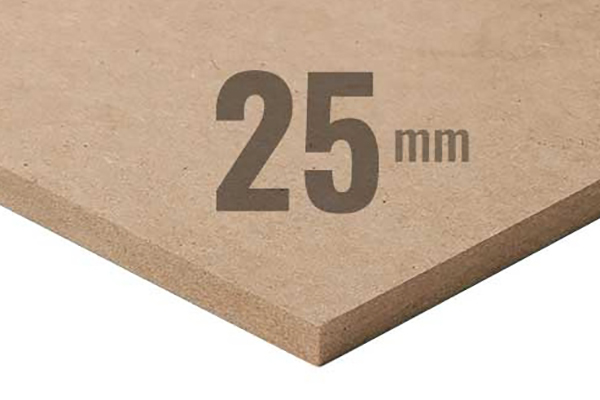
Yes, not all 25mm MDF is created equal. As a manufacturer, we produce a variety of thicknesses and types to meet specific customer needs. The most common type is standard MDF, which is perfect for most dry, internal use applications like furniture and general joinery. It’s the most cost-effective option and what most people think of when they hear "MDF."
For applications in environments with higher humidity, like kitchens, bathrooms, or laundry rooms, we produce Moisture-Resistant MDF (MR-MDF). This type is made with a special, moisture-repellent resin that significantly slows the absorption of water, preventing swelling and degradation. It’s often identifiable by a green dye in the core. Beyond these, we can also supply 25mm mdf board that comes pre-laminated. You can get boards with a real wood veneer or, more commonly, a durable melamine finish. We offer a huge selection of high-quality wood grain melamine MDF board in various colors and textures, saving manufacturers a significant amount of time and labor in the finishing process.
What is the Standard Sheet Size for 25mm MDF?
In the vast majority of markets, including North America and Europe, the standard sheet size for MDF is 2440mm x 1220mm. This is the metric equivalent of the imperial 8 feet by 4 feet, a size that has become a global standard for wood sheet goods. This standardization is incredibly important for logistics, planning, and manufacturing efficiency. It allows designers to create cutting lists and cabinet makers to optimize their layouts to minimize waste.
While 2440mm x 1220mm is the norm, as a direct-from-factory supplier, we have more flexibility. For large B2B orders, we can often produce custom mdf sheets in different dimensions to meet a client’s specific needs. This can be a huge advantage for manufacturers producing oversized items or looking to optimize their production process to the millimeter. This flexibility is a key reason why many large-scale furniture makers choose to work directly with a factory like ours.
What are the Best Practices for Working with Thick 25mm MDF?
Working with MDF, especially a thick and heavy 25mm sheet, requires the right techniques and tools to get the best results. The density that makes it strong also means it can be tough on tools. Always use sharp, high-quality carbide-tipped blades and router bits. A dull blade will burn the MDF rather than cut it, leaving a poor finish.
One of the most critical aspects is dust control. MDF produces a very fine dust when cut or sanded, so wearing a good quality dust mask and using dust extraction on your machine is non-negotiable for safety. When it comes to finishing, remember that MDF edges are more porous than the face. They will soak up paint like a sponge. To get a professional finish, you must seal the edges first with a sanding sealer or a thinned PVA glue before applying your primer and topcoat of paint or varnish. For joining, standard wood screws work, but specialized MDF screws with a finer thread provide a much better grip and reduce the risk of splitting.
How Do I Find a Reliable Supplier for High-Quality 25mm MDF?
Finding the right supplier is just as important as choosing the right material. For a buyer like Mark, this is where the real challenge often lies. It’s not just about finding the cheapest price; it’s about finding a partner who delivers consistent quality, clear communication, and reliable service. The key pain points are almost always related to quality control and communication. An inconsistent fibre mix can lead to a weak core, and poor pressing can result in variations in thickness.
When sourcing high-quality MDF, especially from overseas, insist on seeing certifications. Look for compliance with standards like CARB P2 or E1/E0 for formaldehyde emissions, which are critical for the US and European markets. Ask potential suppliers about their quality inspection process. Do they check for dimensional accuracy, density, and surface finish on every batch? A reliable supplier will be transparent and happy to provide this documentation. At Demeter, we have dedicated teams to ensure our Custom Raw Plain MDF Board meets these exacting standards, and our sales team is trained to understand the technical requirements of furniture manufacturers and designers, bridging the gap that so often causes frustration. Clear communication about logistics, payment, and production timelines is the foundation of a successful partnership.
Key Takeaways
To make your next project a success, here are the most important things to remember about 25mm MDF:
- Strength in Thickness: 25mm MDF is a high-strength, robust material ideal for applications requiring significant load-bearing capacity and rigidity.
- Best for Heavy Duty: It excels as a material for heavy-duty shelving, workbenches, large tabletops, and the structural frames of premium furniture.
- Superior Finish: Its perfectly smooth, dense surface makes it an ideal substrate for paint, veneer, and laminates like decorative laminated melamine paper.
- Sag Resistance: It offers excellent resistance to sagging, making it a reliable choice for shelves, but always consider the span and support needed.
- Work Smart: When working with mdf, use sharp tools, control the dust, and always seal the porous edges before finishing for professional results.
- Choose Your Supplier Wisely: Partner with a supplier who values quality control, holds relevant certifications (like CARB P2), and communicates clearly and effectively. This is just as crucial as the material itself.
Post time: 07-23-2025