Imagine supplying a batch of beautifully crafted cabinets for a high-end condominium project, only to receive a frantic call six months later because the vanity doors have swollen and the paint is cracking. For procurement professionals and manufacturers, this is a nightmare scenario. The culprit is almost always moisture intrusion into a board that wasn’t designed to handle it. While Standard MDF is a miracle material for dry furniture, it has its kryptonite: water. This is where Moisture Resistant MDF, often recognized by its distinctive green hue, enters the picture. But is the color reliable? And just how much water can it actually handle?
What Sets Green MDF Apart from Standard MDF Boards?
To understand the value of Moisture Resistant MDF (often abbreviated as MR MDF), we first have to look at Standard MDF. MDF (Medium Density Fiberboard) is an engineered wood product made by breaking down hardwood or softwood residuals into wood fibers. These wood fibres are combined with wax and a resin binder, then formed into panels by applying high temperature and pressure. Standard MDF is fantastic for dry interior applications; it surfaces beautifully and cuts cleanly. However, standard MDF panels act like a sponge when exposed to water.
Green MDF, or MR MDF, is a different beast entirely. While it looks similar on the surface, its internal chemistry is altered to withstand humid conditions. Compared to standard MDF, MR MDF is manufactured using a superior, moisture-resistant resin—typically a Melamine-Urea-Formaldehyde (MUF) blend. This makes the MDF boards significantly more resistant to humidity and moisture absorption. It is generally denser than standard MDF, giving it a high internal bond strength and superior physical properties. When you hold a piece of standard grade MDF and a piece of green MDF board, you can often feel the difference in weight and density.
The "Green" in Green MDF serves a specific purpose, but it is often misunderstood. It is crucial to know that the green color is actually a green dye added during the manufacturing process purely for identification purposes. The dye itself has no moisture-resisting properties. While MR MDF is often green, it doesn’t have to be. Conversely, just because a board is green doesn’t automatically guarantee it meets the specific moisture resistance standards (like V313) unless certified. However, in the vast majority of the market, that green tint is the visual shorthand for "safe for humid areas."
Where Should You Use Moisture Resistant MDF?
MDF is a highly versatile material, but knowing where to apply the moisture resistant version is key to the longevity of your projects. MDF is ideal for interior applications where humidity fluctuates or where incidental moisture is expected.
The most common applications include:
- Kitchens and Bathrooms: specifically for bathroom vanities, kitchen cabinets, and shelving. These are areas where moisture is present in the air (steam from showers or cooking).
- Skirting Boards and Architraves: Floors get mopped, and spills happen. Standard MDF skirting can swell at the bottom edge over time. MR MDF resists this incidental contact.
- Laundry Rooms: High humidity makes standard MDF a risk here.
- Boiler Rooms: Another area where heat and moisture levels can warp traditional boards.
MDF is designed to function in these environments by slowing down the rate of moisture uptake. It ensures that the structural integrity and the smooth surface of the paint finish remain intact even when the air gets heavy. For furniture manufacturers, switching to MR MDF for these specific components is a small cost increase that drastically reduces warranty claims related to swelling and finish failure.
A Critical Distinction: Is Moisture Resistant MDF Fully Waterproof?
This is the most critical misconception in the industry. MDF is not a fully waterproof material. It is moisture resistant. There is a massive difference between the two.
MR MDF is designed to withstand high humidity and occasional wetting (like a splash from a sink or a damp mop). It cannot be submerged in water. If you were to leave a piece of Green MDF in a bucket of water, or expose it to direct rain for example, it will eventually succumb to the water, swell, and degrade, albeit slower than standard MDF. It is not suitable for exterior use where it acts as the primary barrier against the elements.
MDF is designed for interior use. If your project involves a garden bench or exposed signage, MDF—even the moisture-resistant kind—is the wrong choice. You would need to look at specialized exterior-grade MDF (often called Medite Tricoya) or PVC alternatives. MR MDF provides a buffer against swelling, but it is not a magic shield against standing water. It offers resistance to moisture, not immunity to it.
The Manufacturing Process: Why is MR MDF Denser Than Standard MDF?
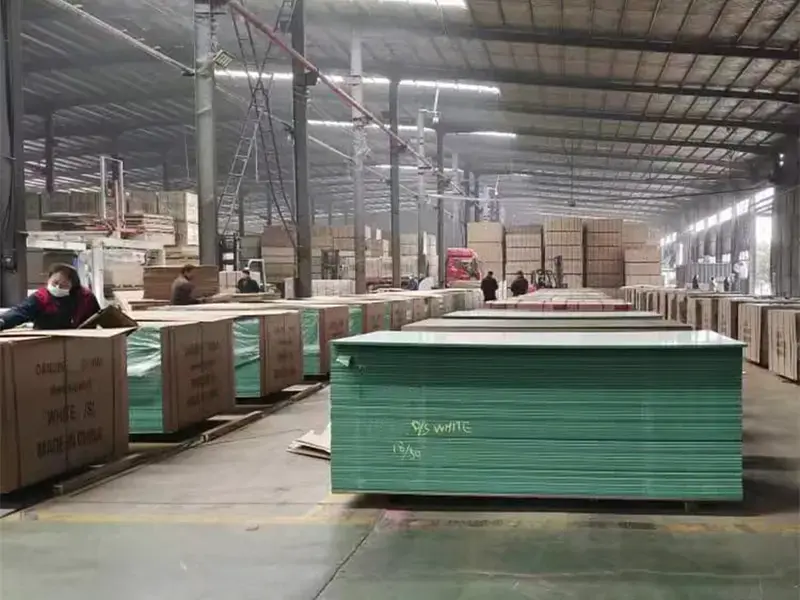
The superior performance of MDF boards designated as moisture resistant comes down to the manufacturing process. When MDF is made, the wood fibres are dried and mixed with resin. For Standard MDF, a Urea-Formaldehyde resin is typically used. This resin is strong but susceptible to hydrolysis (breaking down) in the presence of water.
For Moisture Resistant MDF, the resin used is fortified with Melamine. Melamine is a hard, thermosetting plastic that adds significant durability and water repellency. Furthermore, MR MDF is usually pressed to a higher density. This compacts the fibers more tightly, reducing the microscopic voids where water can enter. This density doesn’t just help with moisture resistance; it also makes the MDF sheets machine better. When you route a profile into MR MDF, the exposed core is smoother and "tighter" than standard MDF, requiring less sanding before painting. This features that make it moisture resistant also make it a premium choice for high-end cabinetry where a flawless finish is required.
Preparing the Surface: Do You Need to Prime Green MDF?
Even though Green MDF is resistant to humidity, the surface still behaves like wood fiber. To get the maximum durability and protection, you absolutely need to prime and seal it. In fact, a good paint system is half of the moisture defense.
MDF is often painted. Because the edges of MDF boards are more porous than the face, they are the weak point for water ingress. When using MR MDF in a bathroom or near a sink, you must pay special attention to sealing the edges.
- Seal the Edges: Use a specialized MDF sealer or a diluted wood glue size to lock the fibers on the cut edges.
- Prime: Use a high-quality solvent-based or acrylic primer. This bonds to the resin in the surface.
- Topcoat: Apply a water-resistant topcoat (like an eggshell or satin enamel).
If you stick green MDF board in a humid room without painting it, it will perform better than standard MDF, but it will eventually roughen and degrade. The "system" works together: the resin inside protects the core, and the paint protects the surface.
Exploring Different Types of MDF for Your Project
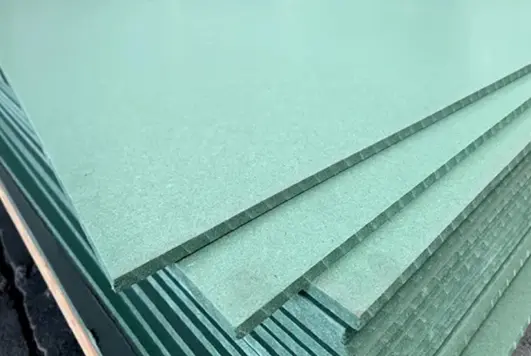
While standard MDF and Green MDF are the most common, the range of MDF available to manufacturers is extensive. Understanding different types of MDF allows you to select the best material for your project.
- Standard MDF: Great for furniture, toys, and dry linings.
- Moisture Resistant (MR) MDF: The green MDF we are discussing. Essential for kitchens and bathrooms and humid areas where moisture is a risk.
- Fire Retardant (FR) MDF: Often colored pink or red. Used in public buildings to meet safety codes.
- Melamine MDF: This is MDF (either standard or MR) that has a decorative paper factory-bonded to the surface. It is ready to use for cabinetry carcasses. At Demeter, we specialize in Factory High-Quality Melamine Mdf Board, which provides both the structural core and the finished surface in one product.
- Fibreboard (LDF/HDF): Lower or Higher density variants for specific weight or hardness requirements.
Choosing the right MDF sheet is about matching the properties of the board to the environment. You wouldn’t use standard MDF for a skirting board in a shower room, just as you wouldn’t pay the premium for MR MDF for a living room bookshelf.
Is Green Dye Purely for Identification Purposes?
It is worth repeating: the color is green dye. It is added purely for identification purposes. It helps the warehouse staff, the carpenter, and the inspector quickly identify that the correct board is being used.
However, supply chains vary. In some regions, moisture resistant MDF might be dyed blue, or even left brown (natural) with just a stamp on the edge. Conversely, cheap manufacturers might dye a standard MDF board green to pass it off as premium. This is why sourcing from a reputable supplier is non-negotiable. You need to rely on technical data sheets (checking for the V313 bond test results) rather than just the color. That said, in 99% of reliable B2B transactions, green MDF equals moisture resistant.
Why MDF is Perfect for Use in Aesthetic Applications
Beyond its practical resistance to moisture, Green MDF is a favorite among joiners for its finish quality. Because it is denser, it holds crisp edges. When you are creating routed paneling or intricate skirting boards, MR MDF leaves a fuzz-free edge that is much easier to sand and paint than standard MDF.
For aesthetic applications in humid environments, such as decorative wall paneling in a spa or a bathroom, MR MDF allows for design freedom that tile or plastic cannot match. It allows the warmth and customizability of wood-based joinery in spaces that were previously off-limits. Using our Melamine MDF board panel gives you a head start on these projects by providing a pre-finished surface that is durable and easy to clean.
Limitations: Where You Should Not Use MDF
Despite its "moisture resistant" label, there are places where MDF might fail.
- Exterior Cladding: Unless specifically rated exterior grade (Tricoya), green MDF will swell and disintegrate if left exposed to rain and UV.
- Direct Water Contact: Inside a shower cubicle or directly framing a bathtub where water sits.
- Flooring Sub-base (Ground Level): If there is rising damp, MDF will wick it up.
MDF is not a fully structural material for load-bearing in wet conditions. It is a versatile material for joinery and furniture. If your project involves structural integrity in a wet zone, marine plywood or solid treated timber is the better engineering choice.
Conclusion: Making the Right Choice for Humid Conditions
When sourcing materials for projects where moisture is a factor, distinguishing between standard MDF and moisture resistant MDF is critical. Green MDF is not magic; it won’t survive a flood. But for the high humidity of a bathroom or the spill-prone environment of a kitchen, it is the industry standard for a reason. Its high internal bond strength, denser core, and specialized resin make it a robust, reliable canvas for your designs.
Always remember that the green dye is an indicator, not the protective agent. Ensure you are buying certified MR MDF. By choosing the right MDF board and finishing it correctly (remembering that you need to prime), you ensure your sturdy construction and beautiful finishes withstand the test of time, even when the air gets heavy. Whether you need raw sheets or finished Factory wholesale cheap price High Quality melamine mdf board, choosing the right grade of MDF is the foundation of quality manufacturing.
Key Takeaways
- Green MDF (MR MDF) is designed for humid conditions, not for being submerged in water.
- It uses a special resin (often MUF) and is denser than standard MDF.
- The green dye is for identification; the protection comes from the chemistry.
- It is perfect for bathroom vanities, skirting boards, and kitchen cabinetry.
- It is not fully waterproof; exterior use requires different specialized materials.
- You need to prime and seal MR MDF to ensure its maximum lifespan.
Post time: 01-22-2026