Choosing the right building material for furniture manufacturing or interior fit-outs can feel like navigating a maze. You want something that looks like real wood, acts like real wood, but doesn’t come with the high cost or inconsistency of natural timber. This is where MDF (Medium-Density Fiberboard) steps in. It is one of the most versatile materials in the industry, yet it is often misunderstood.
In this comprehensive guide, we will strip away the confusion surrounding MDF board, hardboard, and HDF. We will explore why this engineered wood product has become a staple for everyone from IKEA to high-end cabinet makers. Whether you are a large-scale manufacturer or a procurement officer, understanding the capabilities of MDF will help you make smarter, more profitable decisions for your production line.
What is an Overview of MDF and How is it Manufactured?
To understand the material, we must look at how MDF is made. MDF stands for Medium-Density Fiberboard. Unlike solid wood, which is cut directly from a tree, MDF is an engineered wood product. We take wood fibers—often made from recycled scraps, sawdust, and wood chips—and break them down into a defibrillator.
These fibers are then combined with a resin binder and wax. The mixture is subjected to intense heat and pressure to form panels. The result is a dense, flat, and stiff board with no knots or grain patterns. Because the fibers are uniform throughout, the board is incredibly consistent.
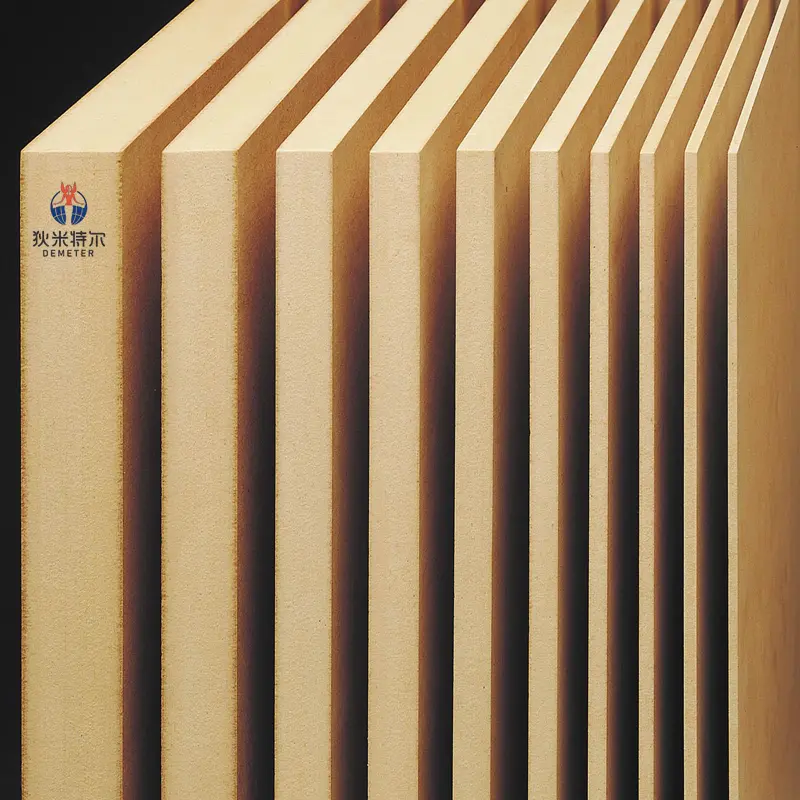
This process creates a smooth surface that is perfect for painting or laminating. Standard MDF usually has a density ranging from 600 to 800 kg/m³. This density is what gives it the "medium" designation compared to particle board (lower density) or hardboard (higher density).
MDF vs. Real Wood and Plywood: Which Panel Reigns Supreme?
When comparing MDF vs other materials, the distinction is clear. Real wood moves. It expands and contracts with humidity, which can cause cracks in paint or joints to separate. MDF, however, is stable. It does not warp like solid wood.
Plywood is another strong contender. Plywood is made from layers of wood veneer glued together. It is generally stronger than MDF and lighter. However, plywood can have voids in the layers, and the edge doesn’t finish as smoothly as MDF.
For painted applications, MDF is the winner. The smooth surface means you don’t see grain textures bleeding through the paint. However, for structural subfloors or outdoor use, plywood or solid wood might be better. MDF offers a balance of performance and cost that is hard to beat for indoor furniture.
What Distinguishes Standard MDF from Hardboard and HDF?
You might hear terms like hardboard or HDF thrown around. These are essentially cousins of MDF, distinguished by their density.
HDF stands for High-Density Fiberboard. It is made using the same method as MDF but compressed to a much higher density (over 800 kg/m³). HDF is much harder and thinner, often used for laminate flooring cores or door skins. Hardboard is a type of fiberboard that is often tempered (coated with oil and baked) to be water-resistant. You often see hardboard used as the back panel of a cheap bookcase or pegboard.
If you are looking for a robust material for detailed machining, our E1 Glue HDF PLAIN MDF BOARD is an excellent choice. It bridges the gap, offering the machinability of MDF with the durability of a denser board.
Is Moisture Resistance a Major Drawback for Standard MDF?
Every material has a weakness, and for standard MDF, it is water. This is the main drawback you need to know. If standard MDF gets wet, it acts like a sponge. The fibers absorb the liquid and swell, causing the board to blow out and lose its structural integrity. Once it swells, it does not shrink back.
However, this doesn’t mean you can’t use it in a bathroom or kitchen. You simply need to use Moisture-Resistant (MR) MDF. This version is made with a special moisture resistant resin. While it isn’t waterproof, it can withstand high humidity and occasional splashes much better than the standard board.
When sourcing for applications requiring damp resistance, always specify moisture-resistant MDF. It is usually dyed green to distinguish it from the standard brown board.
Why is the Smooth Surface of MDF Ideal for Painting and Veneering?
The surface of MDF is its greatest asset. Because it is made of fine wood fibers rather than chips or strips, it is incredibly smooth. There is no wood grain to sand down, no knots to seal, and no splinters.
This makes MDF wood the perfect substrate for:
- Veneer: Thin slices of real wood glued onto the MDF core. The stability of MDF prevents the expensive veneer from cracking.
- Melamine: Our Factory Price Wood Grain Melamine MDF Board utilizes this smooth core to ensure the decorative paper lays perfectly flat without texture telegraphing.
- Paint: You can achieve a glass-like finish on MDF with spray painting, which is why it is the standard for high-end painted cabinetry.
Working with MDF: Is it Easier to Cut and Machine than Solid Wood?
Working with MDF is a dream for modern manufacturing. It has no grain direction, meaning you can cut it any way you like without worrying about tear-out or splintering. It is very easy to work with routers and CNC machines.
You can create intricate profiles, ornate moldings, and clean edges that are impossible with plywood or chipboard. However, because of the high glue content, MDF can dull blades faster than softwood. We always recommend using carbide-tipped tools.
Also, MDF produces a lot of fine dust when cut. This dust can be harmful, so proper ventilation and masks are essential in the carpentry shop. Despite the dust, the ability to route a decorative edge directly into the panel makes it indispensable.
What Are the Primary Uses for MDF in Construction and Furniture?
There are many applications for this versatile board. Uses for MDF extend far beyond just cheap furniture.
- Cabinetry: It is the gold standard for painted cabinet doors.
- Shelving: While long shelves might sag if not supported, MDF is great for shorter spans or reinforced units.
- Wall Paneling: Traditional wainscoting and beadboard are now almost exclusively made from MDF because it doesn’t shrink and show gaps.
- Slatwall: Retail stores use thick MDF with grooves cut into it to hold display hooks.
- Moulding: Baseboards and crown molding made from MDF are cheaper and straighter than wood.
Its consistency makes it a great choice for mass production. Check out our High Quality Wood Grain Melamine mdf to see how it looks when finished for kitchen applications.
Is MDF an Environmentally Friendly Engineered Wood Product?
Sustainability is a huge concern for my clients in Europe and North America. Is MDF green? Generally, yes. MDF is made primarily from plantation thinnings, sawdust, and off-cuts that would otherwise be burned or thrown away. It creates value from waste.
However, the resin used to bind the fibers often contains formaldehyde. In the past, this was a major health concern. Today, regulations like CARB P2 and E1/E0 standards in Europe strictly limit formaldehyde emissions.
At Demeter, we prioritize producing environmentally friendly boards. We use low-emission glues to ensure our MDF board is safe for homes and offices. When you buy standard MDF from a reputable supplier, you are buying a sustainable product.
How Does Density Affect the Durability and Screw Holding of Fiberboard?
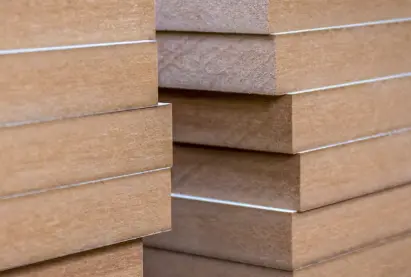
Density is the defining factor of quality. A low-density board will be light and cheap, but screws will strip out of it easily. A board with higher density holds screws much better and provides a crisper edge when machined.
Standard MDF usually sits around 700-750 kg/m³. For heavy-duty applications, you might want HDF or a high-grade MDF. When fastening into the edge of MDF, it is crucial to drill a pilot hole. Without one, the dense fibers create so much pressure that the board will split.
For items like wardrobe doors that rely on hinges, the screw holding capability of the MDF is vital. This is why we engineer our Custom Raw Plain MDF Board to have a consistent core density, ensuring hinges stay tight for years.
Why is MDF Often Used as a Cost-Effective Alternative in Manufacturing?
Let’s talk business. MDF is popular because it’s cost-effective. It is significantly cheaper than solid wood and often cheaper than high-grade plywood.
But it’s not just about the raw material cost. MDF saves money in labor and waste.
- Less Waste: No knots or bad grain means you use 100% of the sheet.
- Less Prep: The smooth finish requires less sanding before painting.
- Speed: It is easier to cut and process on automated machinery.
For a manufacturer, these savings add up. It allows you to produce a high-quality, durable product at a price point that is attractive to consumers. It is a budget-friendly option that looks premium.
Summary
MDF has transformed the woodworking world. It offers a unique combination of performance, versatility, and value that natural timber simply cannot match for certain applications.
- MDF is an engineered wood made from wood fibers, wax, and resin pressed under heat.
- It provides a perfectly smooth surface ideal for painting, veneering, and laminating.
- Unlike real wood, MDF does not warp or crack with humidity changes.
- Standard MDF is sensitive to water, so use moisture-resistant grades for damp areas like the bathroom.
- HDF is a denser, harder version used for flooring and high-wear surfaces.
- Working with MDF is easy; it cuts cleanly and routes beautifully but produces fine dust.
- It is a cost-effective and **environmentally frie
Post time: 02-06-2026