Welcome! If you’re looking for a versatile, cost-effective, and aesthetically pleasing material for your next project, you’ve come to the right place. This article dives deep into the world of laminated MDF board, a champion in the interior decor and furniture manufacturing industries. We’ll explore what makes this board so popular, how it compares to other materials like plywood or particle board, and what to look for when sourcing high-quality options. As Allen, with years of experience in a factory specializing in wood-based panels here in China, I’ll share insights that can help professionals like Mark Thompson in the USA make informed purchasing decisions. This guide will cover everything from the manufacturing process to design possibilities, ensuring you understand why laminated MDF is often the superior choice for achieving a high-end finish without breaking the bank. We will also touch upon veneer applications and the different types of laminate available.
What Exactly is Laminated MDF Board and How is it Crafted?
Let’s start with the basics. MDF board, or Medium-Density Fiberboard, is an engineered wood product made by breaking down hardwood or softwood residuals into fine wood fibres. These wood fibres are then combined with a resin binder (like urea-formaldehyde) and wax, formed into panels under high temperature and pressure. This process creates a board that is denser and more uniform than particle board but not as structurally robust in all aspects as plywood. The result is a smooth surface, free of knots or grain patterns, making it an ideal substrate for various finishes.
So, what makes it a laminated mdf board? The "laminated" part refers to the process of bonding a thin layer of material, known as a laminate, to one or both surfaces of the raw MDF board. This laminate can be made from various materials, including paper saturated with melamine resin, vinyl, or even real wood veneer. The lamination process typically involves applying the laminate sheet to the MDF board using adhesives, heat, and pressure, creating a permanent bond. This transforms a plain MDF board into a decorative and more durable panel, ready for a multitude of applications. The quality of this lamination is key to the final product’s performance.
The beauty of laminated MDF lies in its manufactured consistency. Unlike solid wood, which can have natural imperfections, each laminated MDF board offers a predictable quality and appearance. This makes it a reliable choice for large-scale projects where uniformity is essential. The base MDF board itself, often referred to as raw MDF, provides a stable and easily machinable core, while the laminate adds the desired aesthetic and protective qualities. This combination makes laminated mdf a versatile and widely used material in furniture manufacturing and interior design.
Why Opt for Laminated MDF Board Over Other Panel Materials?
When considering materials for furniture, cabinetry, or interior finishing, the choices can seem overwhelming. However, laminated MDF board presents several compelling advantages that often make it a superior option compared to materials like solid wood, plywood, or standard particle board. One of the primary benefits is its exceptional smooth surface. This uniformity allows for flawless application of laminates, paints, and veneers, resulting in a high-quality finish that can be difficult to achieve with other wood products that may have grain or knots.
Another significant advantage is cost-effectiveness. Laminated MDF board generally offers a more budget-friendly solution than solid wood or high-grade plywood, without compromising significantly on aesthetic appeal or performance for many applications. This makes it an attractive option for projects where managing costs is crucial, yet a sophisticated look is desired. Furthermore, its consistency in density and thickness ensures predictable machining and assembly, which can streamline the manufacture process and reduce waste. For instance, our Factory Price Wood Grain Melamine MDF Board provides an excellent balance of quality and affordability.
Finally, the versatility in design offered by laminated MDF board is a major draw. With a vast array of laminate options available – from solid colors and intricate patterns to realistic wood grains – designers and manufacturers have immense creative freedom. This adaptability allows laminated MDF to mimic the appearance of more expensive materials like hardwood or stone, providing a high-end look for various applications, including kitchen cabinets, shelves, and wall panels. This makes the board a go-to choice for modern design challenges.
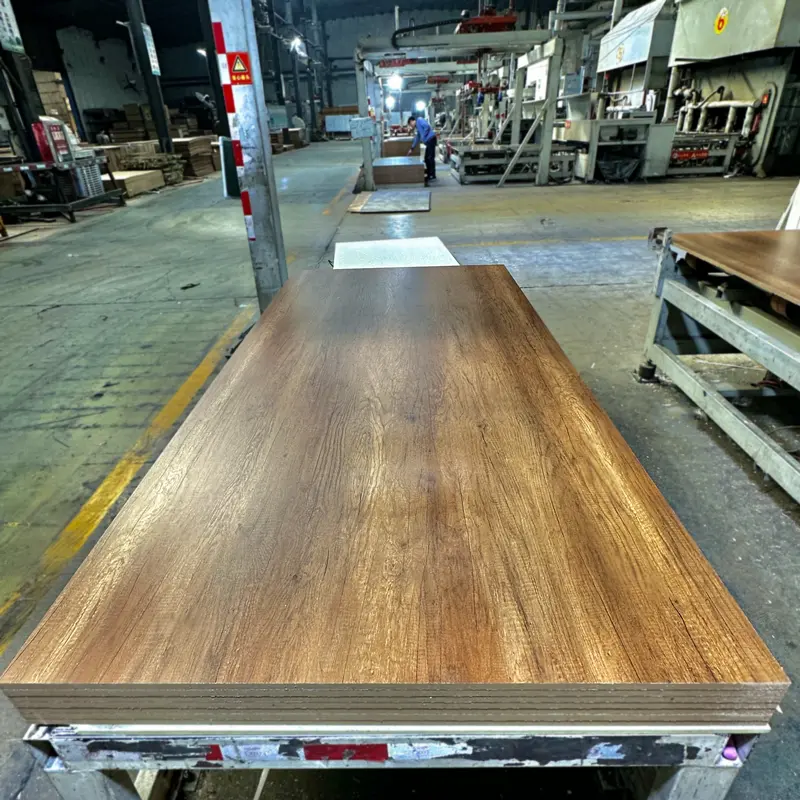
How Does the Laminate Layer Elevate MDF Board Performance and Aesthetics?
The laminate layer isn’t just for show; it significantly enhances the performance characteristics of an MDF board. One of the most crucial improvements is durability. The laminate acts as a protective shield, making the surface of the mdf more resistant to scratches, scuffs, and general wear and tear. This is particularly important for high-traffic applications like table tops, kitchen work surfaces, and commercial furniture. This added resilience ensures that the product maintains its appearance and functionality for a longer period.
Beyond physical protection, the laminate also improves the board’s resistance to moisture and stains. While standard MDF board can be prone to swelling or damage if exposed to liquids, a well-applied laminate creates a non-porous barrier. This makes laminated MDF easier to clean and maintain, and more suitable for environments like kitchens or bathrooms, provided edges are properly sealed. The laminate effectively seals the wood fibres of the MDF board, preventing absorption of spills and simplifying upkeep.
Of course, the aesthetic appeal is a primary reason for choosing a laminated mdf board. The laminate provides the final finish and design of the panel. Whether you’re aiming for the warm, natural look of oak or walnut, a sleek modern high-gloss finish, or a vibrant solid color, the laminate layer delivers. This versatility allows laminated MDF boards to fit into virtually any interior design scheme, offering endless possibilities for creating beautiful and functional spaces. The laminate transforms a utilitarian MDF board into a decorative element.
Laminated MDF vs. Plywood vs. Particle Board: A Clear Comparison of Board Choices
Choosing the right engineered wood product made for your project requires understanding the differences between the main contenders: laminated MDF, plywood, and particle board. Each has its unique characteristics, advantages and disadvantages.
| Feature | Laminated MDF Board | Plywood | Particle Board (often laminated) |
|---|---|---|---|
| Core Material | Fine wood fibres, resin binder | Thin wood veneer sheets (layers) glued together | Wood chips, shavings, sawdust, resin |
| Surface | Very smooth surface, ideal for lamination | Can show wood grain, may need sanding for fine finish | Coarser, typically requires a laminate |
| Density | Uniform density, medium-density | Varies; generally strong and sturdy | Lower density, less dense than MDF |
| Edge Finish | Smooth, takes paint well, good for routing | Shows layers, often needs edge banding or veneer | Rough, requires edge banding |
| Cost | Moderate, cost-effective for its finish | Generally higher than MDF or particle board | Cheapest option |
| Strength | Good, consistent; less screw-holding than plywood | Very strong, excellent screw-holding, good for structural use | Less strong, prone to chipping |
| Moisture Resist. | Base MDF is prone; laminate helps; MR MDF available | Better than standard MDF (especially marine grade plywood) | Most prone to swelling and damage |
| Common Usage | Furniture, cabinets, shelves, decor panels | Structural work, furniture, flooring, cabinets | Low-cost furniture, underlayment |
Laminated MDF board shines with its exceptionally smooth surface, making it perfect for painting or applying a flawless laminate. Its uniform density means no voids or splinters. While not as structurally strong as plywood for load-bearing applications, it’s very stable and doesn’t warp or crack easily. Plywood is made by gluing together multiple thin layers of wood veneer, resulting in excellent strength and screw-holding capacity. Its layered edges can be a desirable design feature or can be covered. Particle board, the most cost-effective option, is made from smaller wood particles and is less dense and less strong than MDF or plywood. It’s often used for budget furniture and requires a laminate or veneer for a decent finish due to its rougher surface. Each board has its place, but for decorative applications requiring a smooth, stable panel, laminated MDF is often the top choice.
Unlocking Design Potential: What Creative Possibilities Do Laminated MDF Boards Offer for Interior Decor?
The true power of laminated MDF board in interior decor lies in its incredible design versatility. The laminate surfaces offer a chameleon-like ability to adapt to any aesthetic, from minimalist modern to rustic charm. Imagine creating an entire feature wall that mimics reclaimed wood without the associated cost and installation challenges, or designing sleek, contemporary kitchen cabinets in a high-gloss solid color. This is all achievable with laminated MDF board. The range of available laminate finishes, including various wood grains, stone effects, metallic looks, and an extensive palette of solid colors, provides designers with a vast toolkit.
This board material is not just limited to large surfaces. It’s excellent for crafting bespoke furniture pieces, intricate panel details, stylish shelves, and unique decor items. Because MDF board itself can be easily cut, routed, and shaped, complex designs and custom fabrications are more accessible. When combined with the diverse laminate options, the creative possibilities expand exponentially. For example, a children’s room could feature brightly colored, playfully shaped furniture, while an office space might utilize a sophisticated walnut laminate for desks and storage units. You can even find options like our DEMETER Melamine wood MDF board 3mm 6mm 10mm 15mm 17mm 18mm manufacturer solid color white for furniture cabinet wardrobe for clean, crisp designs.
The consistency of laminated MDF board also plays a crucial role in achieving flawless interior design execution. Unlike natural wood, where grain patterns and color can vary significantly from one piece to another, laminated MDF offers uniformity across multiple panels. This is a huge advantage when creating large installations or matching sets of furniture, ensuring a cohesive and professional finish. This predictability, combined with its adaptability, makes laminated MDF board a reliable and inspiring choice for bringing creative visions to life in any interior space.
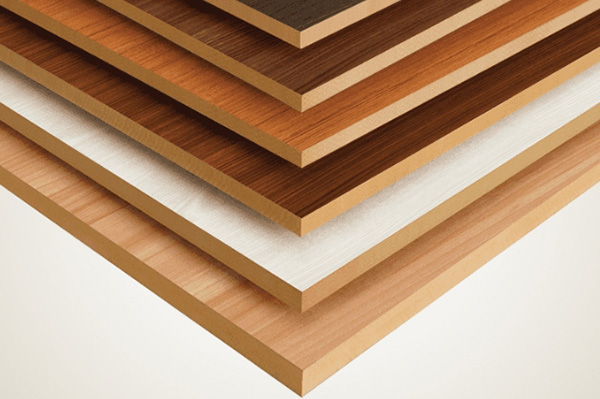
Is Laminated MDF Board a Suitable Material for Kitchens and Bathrooms?
This is a common question, and the answer is: yes, with caveats. Standard MDF board is indeed prone to moisture damage – it can swell and lose its structural integrity if it gets wet. However, the laminate surface on a laminated mdf board provides a significant degree of protection. This plastic or resin-based layer is inherently water-resistant, preventing spills on the surface from immediately soaking into the MDF board core. This makes it a practical choice for kitchen cabinets, vanities, and other furniture in these potentially humid environments.
The key to successfully using laminated MDF board in kitchens and bathrooms lies in proper specification and installation. Firstly, it’s crucial that all edges of the board are thoroughly sealed. Cut edges, or areas where fixtures are installed, are vulnerable points where moisture can penetrate the MDF board core. Using high-quality edge banding and sealants is essential. Secondly, for areas with higher moisture exposure, opting for Moisture Resistant (MR) MDF board as the substrate for the laminate is highly recommended. MR MDF board is manufactured with a special resin that gives it enhanced protection against humidity, making it more suitable for these demanding applications.
While laminated MDF board can be an excellent material for kitchen cabinet doors, drawer fronts, and carcasses, it’s generally not recommended for areas in direct and constant contact with water, such as shower enclosures or countertops around sinks without proper undermounting and sealing. However, for most other kitchen and bathroom applications, a well-chosen and correctly installed laminated MDF board offers a durable, aesthetically pleasing, and cost-effective solution. Many beautiful and long-lasting kitchens feature melamine MDF for kitchen cabinet furniture, attesting to its suitability when used thoughtfully.
Sourcing Excellence: What Key Factors Should You Consider When Buying High-Quality Laminated MDF Board?
For professionals like Mark Thompson, sourcing high-quality laminated MDF board is critical to the success of their projects and the reputation of their business. As a factory owner, I understand these concerns deeply. The first thing to scrutinize is the surface finish of the laminate. It should be smooth, free from bubbles, delamination, scratches, or any print defects. The color and pattern, especially for wood grain or other designs, must be consistent across the board and between different batches. Any inconsistencies here can ruin the aesthetic of the final product.
Next, inspect the core MDF board. A good quality MDF board will have a uniform density throughout, with no visible clumps of fibre or contaminants. The edges should be clean and solid, indicating a well-pressed board. The quality of the lamination bond itself is paramount. A poorly bonded laminate can peel or chip over time, especially at the edges. Ask your supplier about the lamination process and adhesives used. Also, dimensional accuracy is crucial – the board should meet specifications for thickness, length, width, and squareness to ensure smooth processing in your manufacture line.
Beyond the physical attributes of the board, certifications play a vital role. Look for compliance with formaldehyde emission standards such as CARB P2, E1, or E0. This is not just about regulatory compliance but also about health and safety. FSC (Forest Stewardship Council) certification indicates that the wood fibre used in the MDF board comes from responsibly managed forests. Finally, establishing a good relationship with a reliable factory or supplier is key. Clear communication, transparent quality control processes, and dependable logistics are just as important as the product itself. Don’t hesitate to ask for samples and detailed specifications before committing to a large order of laminated mdf.
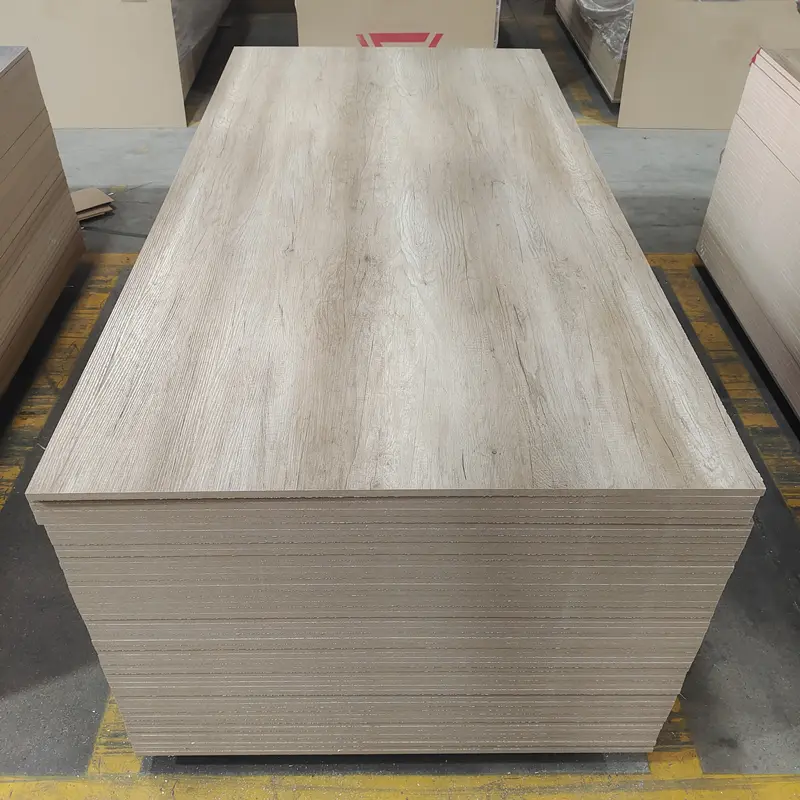
The Backbone of Furnishings: How is Laminated MDF Board Utilized in Furniture and Cabinet Manufacturing?
Laminated MDF board has become a cornerstone material in modern furniture manufacturing and cabinet construction, largely due to its blend of versatility, performance, and cost-effectiveness. Its smooth and stable surface makes it an ideal substrate for the diverse range of laminates available, allowing manufacturers to produce furniture that caters to a wide spectrum of styles and price points. From sleek, contemporary office desks to ornate wardrobe doors and functional kitchen cabinets, laminated MDF provides the foundation.
In cabinet manufacturing, laminated MDF board is commonly used for cabinet boxes (carcasses), doors, drawer fronts, and shelves. Its dimensional stability means that doors and drawers are less likely to warp or twist compared to solid wood, especially in environments with fluctuating humidity. The ease with which MDF board can be machined allows for precise joinery, cutouts for hardware, and decorative routing, which can then be flawlessly covered by the laminate. This adaptability streamlines the furniture manufacturing process, enabling efficient production of both custom and mass-produced items. You can find excellent examples like our specific MDF for furniture cabinet wardrobe designed for these applications.
For other types of furniture, such as table tops, bookcases, and display units, laminated MDF board offers a durable and attractive solution. The laminate surface is easy to clean and can withstand the rigors of daily usage, making it practical for both residential and commercial furniture. The ability to achieve a high-end look, such as that of expensive hardwood or exotic veneer, at a fraction of the cost, makes laminated MDF an economically smart choice for manufacturers looking to deliver value to their customers. Its consistent quality also reduces material waste, further enhancing its cost-effectiveness in large-scale furniture manufacturing.
A World of Finishes: Are There Different Types of Laminate Finishes Available for MDF Board?
Indeed, the variety of laminate finishes available for MDF board is truly extensive, contributing significantly to its popularity in design and furniture manufacturing. These laminates can broadly be categorized by their material composition, application process, and the resulting aesthetic and performance characteristics. Understanding these differences helps in selecting the perfect finish for any given project using an MDF board as its core.
One of the most common types is Low-Pressure Laminate (LPL), often referred to as melamine faced board. This involves a decorative paper impregnated with melamine resin, which is then thermally fused (bonded under heat and pressure) directly to the MDF board substrate. LPLs are known for their durability, scratch resistance, and wide range of colors and patterns, including realistic wood grain finishes. High-Pressure Laminates (HPLs) offer even greater durability and impact resistance. HPLs consist of multiple layers of kraft paper impregnated with phenolic resin, a decorative paper layer, and a clear protective overlay, all fused together under higher pressure and temperature than LPLs. HPLs are often used for high-wear surfaces like countertops and commercial table tops.
Beyond these, there’s also the option of real wood veneer laminate. This involves applying a thin layer of actual hardwood, such as oak, walnut, or maple, to the surface of the mdf. This provides the authentic look and feel of solid wood while benefiting from the stability and cost-effectiveness of an MDF board core. Other laminate options include vinyl films, which can offer unique textures and finishes, and various specialty paper laminates. Each type of laminate provides a different balance of durability, aesthetic appeal, and cost, allowing for tailored solutions to meet specific design and performance requirements for any MDF board application.
Our Commitment to Quality: How Do We, as a Factory, Ensure Consistent Excellence in Laminated MDF Board Production?
As someone who’s been in the wood panel manufacture business for years, specifically here in China, I, Allen, understand that for customers like Mark Thompson, consistent quality isn’t just a preference – it’s a necessity. At our factory, ensuring the excellence of every laminated MDF board that leaves our production line is a multi-faceted process, built on stringent controls from raw material sourcing to final inspection. It begins with the very core: the raw MDF. We meticulously select high-quality wood fibre, ensuring it’s clean and uniform. This, combined with precise control over the resin binder formulation and the pressing together process at optimal heat and pressure, results in an MDF board of consistent medium density and superior stability. This foundational quality is crucial for the subsequent lamination process.
When it comes to the laminate itself, whether it’s melamine papers or other decorative printed papers, we maintain rigorous standards. We work with trusted suppliers of decorative melamine impregnated paper and ensure that every design, color, and texture meets our clients’ specifications and our own quality benchmarks for print accuracy and color consistency. The lamination process itself is a critical stage. We utilize advanced machinery that applies the laminate to the MDF board under carefully controlled temperature and pressure, ensuring a strong, bubble-free bond that resists peeling and chipping. The goal is a flawless surface of the mdf that is both beautiful and durable.
Regular quality checks are integrated throughout our production. This includes inspecting the MDF board core for density and thickness, examining the laminate for any defects before application, and rigorously testing the finished laminated MDF board for bond strength, scratch resistance, and dimensional accuracy. We adhere to international standards, including CARB P2 and E0/E1 formaldehyde emission levels, ensuring our products are safe and environmentally responsible. Our Custom Raw Plain MDF Board 0.8mm-25mm is a testament to our base material quality. This commitment to excellence in every board allows us to build long-term trust with our clients worldwide.
Eco-Chic: Understanding the Environmental Aspects and Advantages of Laminated MDF Board
In today’s world, the environmental impact of materials is a growing concern for both manufacturers and consumers. Laminated MDF board offers several environmental advantages and disadvantages that are worth considering. One of the key benefits of MDF board production is its efficient use of wood resources. It’s often manufactured using wood fibres derived from sawmill byproducts, forest thinnings, or recycled wood, meaning it reduces waste and lessens the demand for virgin timber compared to solid wood products. This makes it a more sustainable choice in terms of raw material sourcing.
The laminate surface also contributes to the product’s environmental profile by enhancing its durability. A robust laminate protects the MDF board core from damage, extending the lifespan of the furniture or panel it’s used in. Longer-lasting products mean less frequent replacement, which in turn reduces waste and the consumption of resources over time. This focus on durability is an important aspect of sustainable design.
However, it’s important to address concerns related to formaldehyde emissions, historically associated with the resin binders used in MDF board. Reputable manufacturers, including ourselves, now adhere to strict low-formaldehyde emission standards like E0, E1, and CARB P2. Choosing laminated MDF board that meets these standards is crucial for ensuring good indoor air quality and minimizing health risks. Furthermore, looking for products with FSC (Forest Stewardship Council) certification can provide assurance that the wood fibre originates from responsibly managed forests. By selecting high-quality, certified laminated MDF board, you can make an "eco-chic" choice that balances aesthetics, performance, and environmental responsibility.
Beyond the Basics: Exploring Advanced Applications and Customization of Laminated MDF Board in Modern Design
While laminated MDF board is a staple for standard furniture and cabinets, its versatility extends to more advanced and specialized applications in modern interior design. Architects and designers are increasingly leveraging its properties to create innovative and functional spaces. For instance, laminated MDF is used to construct sophisticated architectural panel systems for walls and ceilings, offering both aesthetic appeal and acoustic properties when designed appropriately. In retail environments, it’s a go-to material for creating eye-catching displays, custom shelving units, and branded fixtures, thanks to the wide design flexibility offered by various laminates.
The potential for customization with laminated MDF board is vast. Beyond the standard range of colors and patterns, many factories, including ours, offer services like cut-to-size panels, edge banding, and even CNC routing to create intricate designs or prepare components for easy assembly. Digital printing technology has further expanded the horizons, allowing for custom graphics, photographs, or unique artistic designs to be incorporated directly onto the laminate layer before it’s applied to the MDF board. This opens up endless possibilities for personalized furniture, branded installations, and unique interior decor elements. The precise nature of MDF board makes it an excellent substrate for these advanced customization techniques.
This adaptability makes laminated MDF a key player in creating bespoke kitchen cabinets with unique finishes, highly tailored office furniture systems, and even components for the transportation industry. The ability to combine different laminate textures and colors on a single project, or even a single piece of furniture, allows for a high degree of creative expression. As a factory, we are always excited to collaborate on projects that push the boundaries of how laminated MDF board can be used, demonstrating its ongoing relevance and expanding usage in cutting-edge design. The material’s consistent quality and machinability are fundamental to these innovative applications.
Key Takeaways: Why Laminated MDF Board is a Smart Choice
To wrap up our deep dive into the world of laminated MDF board, here are the most important points to remember:
- Versatile Aesthetics: Laminated MDF offers an enormous range of design options, from realistic wood grains and stone effects to solid colors and custom prints, suitable for any interior decor style.
- Smooth and Stable: The MDF board core provides a perfectly smooth surface ideal for lamination, resulting in a flawless finish. It’s more stable than solid wood in many conditions.
- Cost-Effective Quality: It provides a high-end look and good durability at a more accessible price point than solid wood or some grades of plywood, making it excellent for furniture and cabinets.
- Enhanced Performance: The laminate layer adds significant durability, scratch resistance, and moisture resistance (when edges are sealed) to the MDF board.
- Ease of Fabrication: MDF board is easy to cut, machine, and finish, simplifying the manufacture process for items like kitchen cabinets, shelves, and complex furniture designs.
- Sourcing Matters: Prioritize quality inspection (surface, core, bond), certifications (CARB P2, E0/E1), and a reliable factory supplier for the best results.
- Eco-Considerations: Opt for low-emission MDF board and products from sustainable sources (FSC certified) to make an environmentally conscious choice. The durability of laminate also contributes to longer product life.
As Allen, I hope this comprehensive overview has been insightful for professionals like Mark. Laminated MDF board truly is a remarkable material, and understanding its properties and potential can lead to exceptional results in your projects. If you have any further questions or specific needs for laminated mdf, raw mdf, melamine papers, or other wood panel products, don’t hesitate to reach out. We’re here to help you build better.
Post time: 05-28-2025