Finishing the edge of plywood, MDF, or particleboard is crucial for professional-looking woodworking projects. Exposed cores are not just unsightly; they’re prone to damage and moisture absorption. This is where edge band comes in – a simple yet transformative material. Whether you’re crafting bespoke cabinet units, designing furniture, or involved in large-scale manufacturing, understanding edge banding is key. This guide dives deep into everything you need to know, from types and applications to quality consideration and sourcing, helping you achieve that flawless solid wood look without the associated cost or complexity. Discover why mastering the edge is essential for quality and durability.
What Exactly is Edge Banding and Why Do Woodworking Professionals Need It?
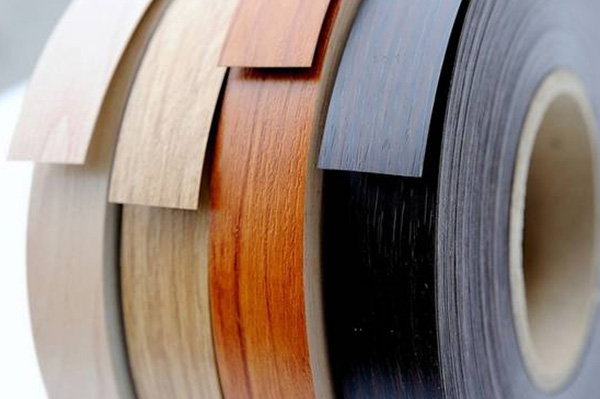
Edge banding is a narrow strip of material used to create durable and aesthetically pleasing trim edges during woodworking. Its primary function is to cover the exposed sides, often called the rough edges or unfinished edges, of man-made wood panels like plywood, particleboard, and MDF (Medium Density Fiberboard). Think of it as a finishing touch that seals and protects the core material while providing the appearance of solid wood or a desired decorative finish. For professionals, using edge band is not just about looks; it’s about quality and longevity.
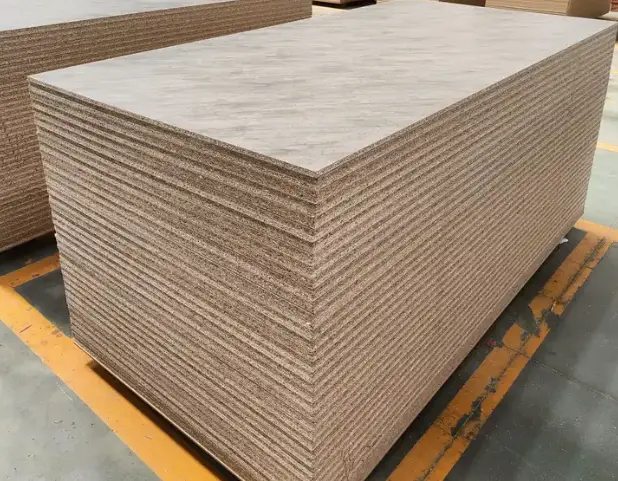
The need arises because materials like plywood or other composite materials have layered or composite cores that are visually distinct from their surfaces. Leaving these edges exposed can lead to several problems:
- Aesthetics: The core material often looks raw and unfinished, detracting from the overall quality perception of the furniture or cabinetry.
- Durability: Exposed edges are vulnerable to chipping, splitting, and general wear and tear, especially in high-use areas.
- Moisture Resistance: The core materials can absorb moisture more readily through their edges, potentially leading to swelling, delamination, or warp over time. Edge banding provides a crucial barrier against this.
As Allen, from a factory perspective here in China, we see firsthand how crucial a clean, well-applied edge is for our clients – furniture manufacturers, cabinet makers, and designers across the USA, Europe, and Australia. A proper edge band application signifies attention to detail and enhances the perceived value of the final product significantly. It transforms a basic panel into a polished component, ready for assembly. Edge banding improves not just the look but the structural integrity of the panel’s edge.
How Does Edge Banding Compare to Using Solid Wood Edges?
Traditionally, woodworkers might use solid wood strips, often milled from the same types of wood as the main surface veneer, to finish the edges of plywood or other panels. While this method yields a genuine solid wood edge, it comes with its own set of considerations compared to using manufactured edge band. The choice often boils down to project requirements, budget, and production efficiency.
Here’s a comparison:
| Feature | Edge Banding (Especially Wood Veneer Edge Banding) | Solid Wood Edges |
|---|---|---|
| Cost | Generally less expensive, especially for exotic woods. | More expensive, requires more material. |
| Application | Faster, often using hot-melt adhesive and machinery. | Slower, requires milling, glue, clamping. |
| Appearance | Can closely mimic solid wood; consistent grain/color. | Authentic solid wood; natural variation. |
| Flexibility | Can conform to curves more easily (depending on type). | Can be shaped, but complex curves are hard. |
| Durability | Good, especially thicker PVC or ABS; wood veneer is decent. | Excellent, can be sanded/repaired more. |
| Material Use | Efficient, minimal waste. | Less efficient, generates more offcuts. |
| Consistency | High consistency in thickness and width. | Dependent on milling accuracy. |
For manufacturers focused on efficiency and cost-effectiveness, like many of our B2B clients (think Mark Thompson), edge banding is often the preferable solution. It allows them to achieve the same look as solid wood on panel edges much faster and more economically. While a piece of solid wood offers maximum durability and repairability, modern edge banding, particularly quality wood veneer edge banding or robust PVC edge band, provides excellent performance for most applications, from kitchen cabinet doors to office furniture. Using edge band instead of solid wood significantly speeds up production lines.
What Are the Main Types of Edge Banding Materials Available?
The world of edge banding offers several material choices, each with unique properties suited to different applications, aesthetics, and budgets. Understanding these options helps in selecting the best fit for your woodworking project. As a manufacturer, we work extensively with various types, particularly melamine and related paper products.
Here are the most common types:
- Wood Veneer Edge Banding: This is made from thin slices of real wood, such as maple, oak, walnut, cherry, or even exotic species like mahogany. It provides the most authentic appearance of solid wood and can be sanded, stained, or finished just like solid wood. It’s often available pre-glued with a hot-melt adhesive backing or non-glued for use with separate glue systems. It’s a favorite for high-end furniture and cabinetry.
- PVC (Polyvinyl Chloride) Edge Banding: A durable plastic edge band known for its resistance to impact, scratches, and chemicals. PVC edge comes in a vast array of colors, patterns (including wood grains), and textures. It’s very durable, making it suitable for high-use applications like office furniture, institutional settings, and kitchen cabinets. It’s often thicker (e.g., 3mm) for added durability.
- Melamine Edge Banding: This is essentially a decorative paper saturated with melamine resin, often pre-glued. It’s generally the most inexpensive option and it’s inexpensive, available in solid colors and wood grain prints. While less durable than PVC or wood veneer edge banding, it’s suitable for low-wear applications or budget projects. We produce melamine impregnated paper which forms the basis of this type of edge band.
- ABS (Acrylonitrile Butadiene Styrene) Edge Banding: Similar to PVC but considered more environmentally friendly as it doesn’t contain chlorine. ABS offers good durability and impact resistance and is available in various colors and finishes.
- Laminate Edge Banding: Sometimes available, matching high-pressure laminate (HPL) sheets used for surfaces, ensuring a perfect match for countertops and commercial fixtures.
Choosing the right material involves balancing cost, desired appearance, durability requirements, and the application environment. For instance, a children’s furniture manufacturer might prefer impact-resistant PVC, while a maker of fine cabinetry would likely opt for wood veneer edge banding.
Why is Wood Veneer Edge Banding a Popular Choice for a Natural Look?
For woodworking projects aiming for the warmth, beauty, and authenticity of real wood, wood veneer edge banding is often the top choice. It bridges the gap between using cost-effective panel products like plywood or MDF and achieving a premium, solid wood aesthetic. Its popularity stems from several key advantages that resonate with both craftspeople and manufacturers.
The primary appeal is authenticity. Because it is real wood, wood veneer edge banding exhibits the natural grain patterns, textures, and color variations inherent in the specific types of wood species it’s cut from – be it oak, maple, walnut, or cherry. This allows for a seamless visual transition from the veneered surface of a panel to its edge. You can stain or apply a clear finish to wood veneer edge banding to perfectly match the main surface, something not easily achievable with plastic edge band alternatives.
Furthermore, wood veneer edge banding offers versatility. It can be applied to straight edges as well as gentle curves, making it suitable for a wide range of furniture designs. While it might not be as impact-resistant as thick PVC, its durability is generally sufficient for most furniture and cabinetry applications. Minor damage can often be repaired similarly to solid wood, involving light sanding and refinishing. For clients like Mark Thompson, who value quality and appearance but need cost-effective solutions, wood veneer edge banding provides an excellent balance, delivering that sought-after high-end look on MDF or particleboard substrates. Using wood edge banding significantly enhances the final product’s appeal.
How Do You Choose the Right Edge Banding Thickness and Width?
Selecting the appropriate thickness and width for your edge band is crucial for both aesthetics and functionality. It’s not just about covering the edge; it’s about ensuring a durable, well-integrated finish that complements the overall design and withstands use. Getting these dimensions right ensures a professional result and avoids potential issues down the line.
Width: The width of the edge band should be slightly wider than the thickness of the panel (substrate) it’s being applied to. This slight overhang (typically 1/16" to 1/8" on each side) allows for trimming after application, ensuring the edge banding sits perfectly flush with the panel surfaces. For example, for a 3/4" (19mm) thick plywood panel, you would typically use edge band that is 7/8" (22mm) or 1" (25mm) wide. Always measure your panel thickness accurately, as it can vary slightly.
Thickness: Edge banding comes in various thicknesses, impacting its durability and appearance:
- Thin (approx. 0.5mm): Standard wood veneer edge banding and melamine edge band often fall into this range. They are flexible and easy to apply but offer less impact resistance. Suitable for most standard furniture and cabinetry.
- Medium (1mm – 2mm): Often found in PVC and ABS edge band. Offers increased durability and a slightly more pronounced edge profile. Good for moderate-use applications.
- Thick (3mm): Typically PVC or ABS. Provides maximum durability and impact resistance, often used for commercial furniture, countertops, cabinet doors, and applications prone to heavy wear. Creates a distinct, slightly rounded edge profile after trimming.
The choice of thickness depends on the application. For a delicate piece of furniture, thin wood veneer edge banding might be ideal. For a busy office desk or kitchen cabinet edge, a thicker PVC edge band (like a 3mm edge band) might be necessary for longevity. Consider the expected wear and tear, the desired aesthetic (a thin edge vs. a more robust one), and the substrate material when making your selection. We, as suppliers, offer various options to meet these diverse needs, ensuring our clients get the right edge protection.
What Should You Know About Edge Banding Adhesives and Application?
The success of any edge banding application heavily relies on the adhesive used and the application method. Proper adhesion ensures the edge band stays firmly in place, resisting peeling or delamination over time. Understanding the different adhesive options and application techniques is key for woodworkers and manufacturers.
There are two main approaches regarding adhesive:
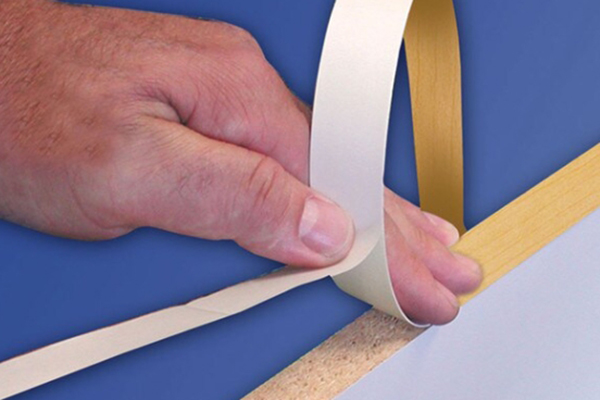
- Pre-Glued Edge Banding: This type comes with a layer of hot-melt adhesive already applied to the back. It’s activated by heat, typically using a dedicated edge banding iron or a hot air gun for manual application, or through the heating elements in automated edgebanding machinery. Pre-glued edge band is convenient, especially for smaller shops or amateur woodworkers, as it eliminates the need for separate glue application equipment. Achieving consistent heat and pressure is vital for good adhesion.
- Non-Glued (Automatic) Edge Banding: This edge band requires a separate adhesive to be applied during the application process, usually within an automated edge bander machine. These machines apply hot-melt adhesive (EVA, PUR, or polyolefin based) directly to the panel edge or the edge banding just before they are pressed together. PUR (Polyurethane Reactive) adhesives offer superior heat and moisture resistance but require additional care in handling and machinery cleaning. This method is standard in medium-to-large scale manufacturing for its speed, efficiency, and potential for stronger bonds.
Key factors for successful adhesion:
- Cleanliness: The panel edge must be clean, dry, and free of dust or oils.
- Temperature: Hot-melt adhesives require specific temperatures to melt properly and bond effectively. Follow manufacturer recommendations.
- Pressure: Sufficient pressure must be applied immediately after heat activation or glue application to ensure intimate contact between the edge band and the substrate.
- Glue Spread: For non-glued applications, ensuring an even, consistent layer of adhesive is crucial for better adhesion across the entire width and length of the edge.
From our experience supplying materials like Melamine MDF boards, we know that the quality of the edge preparation on the MDF or particleboard itself significantly impacts edge band adhesion. A smooth, solid edge provides the best surface for the glue to bond to. Poor adhesion can lead to the edge band starting to peel away from the edge, compromising the look and function.
What is the Best Process for Applying Edge Banding Effectively?
Applying edge banding correctly ensures a clean, durable, and professional finish on your woodworking projects. Whether you’re using a simple household iron or a sophisticated edge bander machine, the fundamental steps and principles remain similar. Precision and attention to detail are key to achieving a seamless look.
Here’s a general process for applying edge band, particularly pre-glued wood veneer edge banding:
- Preparation: Ensure the panel edge (substrate) is clean, smooth, and square. Any bumps or inconsistencies will show through the thin edge band. Lightly sand the edge if necessary, and remove all dust. Cut the edge banding slightly longer than the panel edge.
- Application (Manual – Iron):
- Position the edge band carefully onto the panel edge, ensuring even overhang on both sides and ends.
- Set a household iron to a medium-high heat setting (typically "Cotton," no steam). Test on a scrap piece first.
- Slowly move the hot iron along the edge band, applying moderate, consistent pressure. The heat activates the hot-melt adhesive. Keep the iron moving to avoid scorching the wood veneer.
- Immediately after heating, use a smooth block of wood or a specialized roller to press the edge band firmly onto the substrate, ensuring good adhesion and squeezing out any air bubbles. Work from the center outwards.
- Application (Machine): Automated edge banders handle heating, application, and pressure application in one continuous process, using either pre-glued material or applying hot-melt adhesive during the run. These machines offer speed and consistency for production environments.
- Trimming: Once the adhesive has cooled and set (usually within minutes), the excess edge band needs to be trimmed flush with the panel surfaces.
- Ends: Use a sharp utility knife, a specialized end trimmer, or a chisel to carefully cut the overhanging ends flush with the panel ends. Cut slightly into the edge band from the surface towards the core to prevent tearing the wood veneer.
- Sides: Use a specialized edge banding trimmer. These tools typically have blades that run along the panel surface, precisely trimming the edge band overhang. Multiple passes might be needed, especially for thicker edge band. Alternatively, a sharp block plane held at a low angle or a router with a flush-trim bit can be used carefully.
- Finishing: Gently sand the trimmed edges with fine-grit sandpaper (e.g., 220-grit) to smooth any sharpness or imperfections. Be careful not to sand through the thin wood veneer. Angle the sandpaper slightly towards the core. The edge is now ready for stain or a final finish to match the panel surface.
Following these steps helps avoid common issues like poor adhesion, bubbling, or damaging the edge band during trimming. Proper application turns potentially unsightly edges into clean, professional lines, significantly enhancing the final piece. It’s a skill worth mastering for any serious woodworker or furniture maker.
How Can Edge Banding Elevate Plywood and MDF Projects?
Using edge banding is arguably one of the most impactful ways to elevate the quality and appearance of projects made from plywood, MDF, or particleboard. These engineered wood panels offer numerous advantages in terms of stability, cost, and consistency, but their exposed edges often betray their composite nature. Edge banding masterfully conceals these unfinished edges, transforming the piece.
The primary benefit is aesthetic enhancement. Applying a matching wood veneer edge banding to a veneered plywood or MDF panel creates the convincing appearance of solid wood. This allows designers and manufacturers to achieve a high-end look using more economical and stable materials. Similarly, using a solid color or patterned PVC or melamine edge band can create clean, modern lines or coordinate with laminate surfaces, covering the often less attractive core of the substrate. It hides the layers in plywood or the fibrous texture of MDF, presenting a uniform, finished look.
Beyond aesthetics, edge banding improves the durability and longevity of the project. It seals the panel edge, providing protection against:
- Impact: Prevents chipping and denting of vulnerable corners and edges. Thicker edge band offers more protection.
- Moisture: Reduces the risk of moisture ingress, which can cause swelling, delamination, and material degradation, especially critical for MDF and particleboard.
- Wear and Tear: Provides a more resilient surface compared to the raw panel core, especially important for frequently handled items like doors, drawers, and desktops.
For manufacturers producing items like kitchen cabinets using melamine boards or furniture from MDF, consistent and high-quality edge banding application is non-negotiable. It’s a detail that separates professional-grade work from amateur efforts and directly impacts customer satisfaction and the product’s lifespan. It allows for the efficient use of panel materials without compromising the final finish.
What Key Quality Considerations Matter When Sourcing Edge Banding?
As a manufacturer (Allen here!), supplying consistent, high-quality edge banding and related materials is paramount. For buyers like Mark Thompson, ensuring the quality of sourced edge band is crucial to avoid production issues and maintain the standard of their finished products. When sourcing edge band, especially internationally, several key quality considerations should be top of mind.
- Material Consistency: The edge band should be uniform in thickness, width, color, and texture along its entire length and from roll to roll. Variations can cause problems with machinery setup and result in an inconsistent finish. For wood veneer edge banding, consistent grain matching (where applicable) and defect-free veneer are important.
- Color and Pattern Match: For wood grain or colored edge banding, achieving an accurate and consistent match to the panel surface (melamine, laminate, or wood veneer) is critical. Suppliers should offer reliable color-matching services or adhere to industry standards. Mismatched edges drastically reduce the perceived quality. We pay close attention to this for our melamine paper products, ensuring good matches with our edge band offerings.
- Adhesive Quality (for Pre-Glued): The hot-melt adhesive backing must be consistently applied and of high quality to ensure strong, reliable adhesion. Poor adhesive can lead to edge band failure, requiring rework (easy to fix sometimes, but costly in production). The glue should have an appropriate melting point for standard application methods.
- Durability and Flexibility: The edge band must possess the required durability for its intended application (e.g., scratch resistance for PVC). It also needs sufficient flexibility to be applied without cracking or breaking, especially around corners or slight curves, but not so soft that it’s easily damaged during trimming or handling.
- Trimming Performance: Quality edge banding should trim cleanly without chipping, fraying (for wood veneer edge banding), or excessive "stress whitening" (for plastics). This depends on the material composition and quality control during manufacturing.
- Certifications and Standards: While less common for the edge band itself, ensure the related panels (MDF, particleboard) meet necessary environmental standards and certifications (like CARB P2 or E1 formaldehyde emissions) relevant to the target market (e.g., USA). This is a key concern for buyers like Mark.
Reliable suppliers implement stringent quality control checks throughout the production process, from raw material inspection to final product testing. Open communication about quality expectations and thorough inspection upon receipt are vital steps for buyers to minimize quality-related issues.
Where Can Businesses Find Reliable Edge Banding and Panel Suppliers?
For businesses like Mark Thompson’s, sourcing reliable suppliers for edge banding, MDF, melamine boards, and other decorative materials is crucial for maintaining production schedules and product quality. Finding partners who understand the needs of the North American or European markets, offer competitive pricing, and deliver consistently is key. There are several established channels for finding these suppliers.
- Industry Exhibitions: Trade shows dedicated to woodworking, furniture manufacturing, and materials (like IWF Atlanta, Interzum Cologne, or KBIS) are prime locations. They allow face-to-face meetings, direct product inspection, and comparison of multiple suppliers. This is a preferred method for many buyers, including Mark, to discover new partners and assess capabilities. We, Demeter Decorative Materials, regularly participate in such events to connect with clients.
- Online B2B Marketplaces: Platforms like Alibaba, Made-in-China, or industry-specific directories list numerous manufacturers. While convenient for initial searching, thorough vetting is essential. Look for verified suppliers, trade assurance, and detailed company profiles.
- Google Search & Supplier Websites: Targeted searches using keywords like "edge band manufacturer China," "melamine MDF supplier," or "wood veneer edge banding wholesale" can yield direct results. A professional website detailing products, capabilities, certifications, and contact information is a good sign. Explore potential suppliers’ websites (like ours!) to understand their offerings.
- Referrals and Networks: Recommendations from industry peers or consultants can be invaluable. Leveraging existing business networks can lead to trusted suppliers.
- Sourcing Agents: Companies sometimes use local sourcing agents in manufacturing hubs (like China or Vietnam) to identify and vet potential suppliers, manage communication, and oversee quality control.
When evaluating potential suppliers, consider factors beyond just price:
- Communication: Responsiveness, clarity, and understanding of technical requirements are crucial, especially when dealing across time zones and language barriers. This addresses a key pain point for buyers like Mark.
- Quality Control: Inquire about their QC processes, certifications (ISO, CARB P2, E1, FSC), and willingness to provide samples or accommodate third-party inspections.
- Production Capacity & Lead Times: Ensure they can meet your volume requirements and provide realistic production and shipping timelines. Discuss logistics and shipment terms clearly.
- Product Range: A supplier offering a wide range of related products (e.g., edge banding, MDF, melamine boards, decorative papers) can simplify procurement.
- Experience: Look for suppliers with experience exporting to your country (USA, Europe, etc.) as they will be familiar with market standards, regulations, and shipping procedures.
Building a strong relationship with a reliable supplier takes effort but pays off in smoother operations and consistent product quality.
Key Takeaways on Edge Banding:
- Purpose: Edge banding covers exposed, unfinished edges of plywood, MDF, and particleboard, enhancing aesthetics and durability.
- Materials: Common types include wood veneer edge banding (for a real wood look), PVC (durable plastic), Melamine (economical), and ABS.
- Wood Veneer: Offers authentic wood appearance, can be sanded and finished, ideal for high-end furniture or cabinetry.
- Comparison: Edge banding is often faster and less expensive to apply than solid wood edges, making it efficient for production.
- Sizing: Choose edge band slightly wider than the panel thickness for trimming; select thickness (0.5mm to 3mm) based on durability needs.
- Adhesion: Use pre-glued (hot-melt adhesive activated by heat) or non-glued edge band with automated machinery and separate glue. Proper heat, pressure, and clean surfaces are vital for good adhesion.
- Application: Prepare the edge, apply heat/pressure, trim excess flush using specialized tools (banding trimmer, knife, chisel), and sand lightly.
- Benefits: Edge banding improves the look by hiding unsightly edges, protects against moisture and impact, and provides a professional finish.
- Quality: Look for consistency in color, dimension, adhesive, and material quality when sourcing edge band. Ensure suppliers meet relevant environmental standards.
- Sourcing: Find reliable suppliers through exhibitions, online searches, B2B platforms, and referrals, focusing on communication, quality control, and experience.
Mastering the use and sourcing of edge banding is a fundamental aspect of modern woodworking and furniture manufacturing, turning functional panels into beautifully finished products.
Post time: 04-22-2025