In the vast world of materials for furniture, cabinetry, and interior design, the choice can often be overwhelming. As a manufacturer named Allen, I’ve spent years on the factory floor in China, overseeing the production of wood-based panels that are shipped globally. I speak daily with professionals like Mark Thompson, a company owner in the USA, who needs materials that are not only cost-effective but also meet rigorous standards for quality and performance. The debate often comes down to a few key players: the versatile MDF board, timeless natural wood, elegant wood veneers, and durable laminate. Understanding the distinct characteristics and benefits of MDF and its counterparts is crucial for making the right decision for your project. This guide will give you an insider’s perspective, breaking down the pros and cons of each material to help you choose with confidence.
What Exactly is MDF Board and How is It Made?
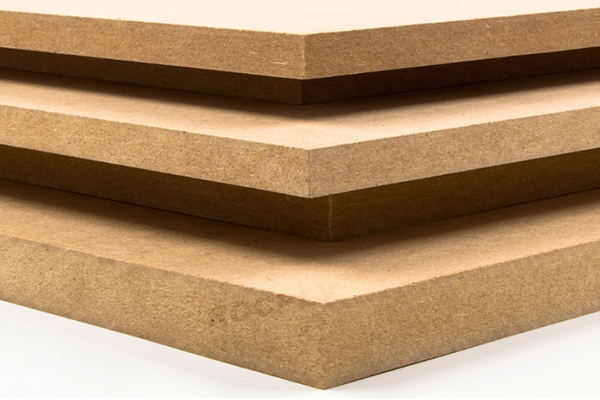
Let’s start with the foundation: what is Medium Density Fiberboard (MDF)? Unlike solid wood, which is harvested directly from trees, MDF is an engineered wood product. The process of making an MDF board is a marvel of modern manufacturing. MDF is made by breaking down hardwood or softwood residuals—essentially, recycled wood fibres—into very fine particles. These wood fibers are then combined with wax and a special thermosetting resin binder. This mixture is formed into large mats and subjected to intense heat and pressure.
This process creates an MDF board that is incredibly consistent. It has a uniform medium density throughout the panel, with no knots, voids, or grain patterns. This results in a product with an exceptionally smooth surface, making it an ideal substrate for a variety of finishes. From our production lines, we see a vast range of MDF panels being created, each engineered for a specific purpose. This consistency is a major reason why MDF is widely used in both automated and manual manufacturing settings; you know exactly what you’re getting with every single MDF board.
The Timeless Appeal of Natural Wood: What Are Its Pros and Cons?
There is no denying the beauty of real wood. Each piece of solid wood is unique, with its own distinct grain, color, and character. It brings warmth and a sense of timeless quality to any space, which is why it’s highly sought after for high-end furniture and architectural details. It is strong, durable, and can be repaired and refinished multiple times over its long life.
However, natural wood also has its challenges. Firstly, it is significantly more expensive than engineered wood options like MDF. Secondly, it is susceptible to changes in humidity and temperature. Solid wood expands and contracts, which can cause it to warp, cup, or even crack over time. This makes it less suitable for applications like large cabinet doors in a humid environment like a kitchen. Furthermore, the natural variations, while beautiful, can make it difficult to achieve a uniform look across a large project. The stability and predictability of an MDF board offer a compelling alternative in many modern applications.
Wood Veneers: Achieving the Real Wood Look on an MDF Core
What if you want the aesthetic appeal of solid wood without its instability and high cost? This is where wood veneers come in. A veneer is a thin sheet of real wood that is sliced from a log. These thin sheets, often less than 3mm thick, are then bonded to a stable substrate, which is very frequently an MDF core.
This combination is a winning formula for high-quality cabinetry and furniture. You get the best of both worlds:
- The surface is genuine wood, showcasing its natural beauty and grain.
- The core is a stable, flat MDF board that will not warp or twist.
This method allows manufacturers to create furniture that has the luxurious appearance of solid wood but with superior dimensional stability and at a more accessible price point. Using veneer on an MDF core is a sustainable practice as well, as a single log can produce many square meters of veneer, making much more efficient use of a valuable wood product. This technique is a cornerstone of modern high-end furniture production.
Understanding Laminate: A Durable and Decorative Surface for MDF
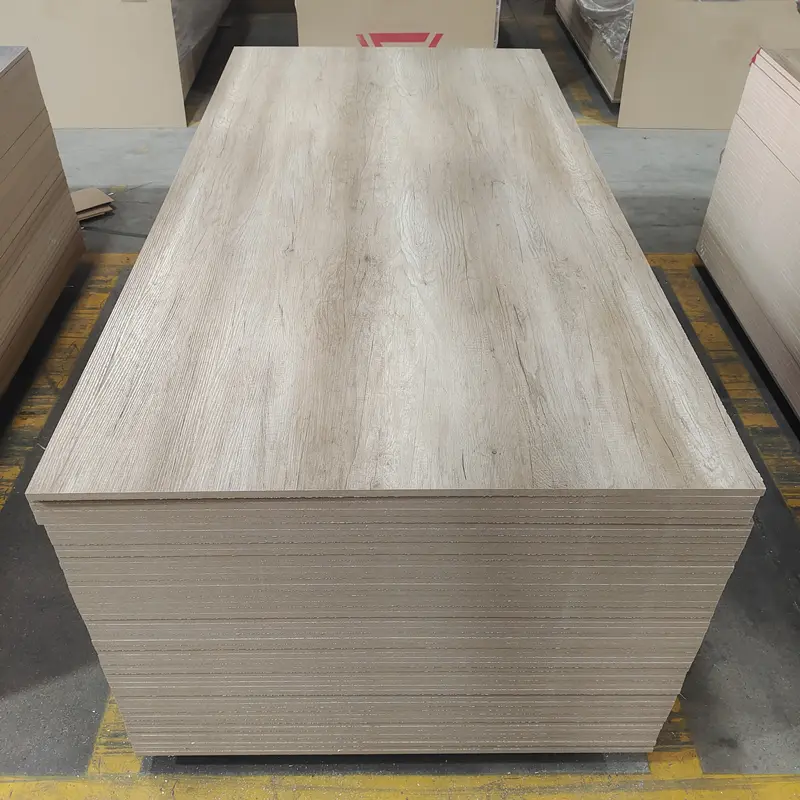
Another popular way to finish an MDF board is with laminate. Unlike veneer, which is real wood, laminate is a synthetic, multi-layered product. It typically consists of a base layer, a printed layer with a design (which can be a wood grain, a solid color, or a pattern), and a tough, clear protective layer on top. Melamine is a type of laminate where the decorative paper is saturated with a resin and thermally fused to the MDF core, creating a hard, durable surface.
The key advantage of laminate is its exceptional durability. The top coating is highly resistant to scratches, stains, and heat, making it a perfect choice for high-traffic applications. This is why laminated MDF is widely used for kitchen cabinets, countertops, office furniture, and retail displays. The versatility of laminate is another huge benefit. It is available in a variety of colors, patterns, and textures, giving designers incredible freedom. An MDF core provides the perfect, flawlessly smooth surface for the laminate to be applied, ensuring a bubble-free, perfect bond.
Head-to-Head Comparison: MDF Board vs. Plywood
In the world of engineered wood, the most common comparison is between MDF and plywood. While they are sometimes used interchangeably, they have distinct differences. Plywood is made by gluing together thin layers of wood veneer. This cross-grain construction gives plywood superior structural strength and screw-holding ability compared to MDF.
However, MDF has several advantages over plywood. The edges of a plywood board show the layers and can have voids, requiring edge banding for a clean look. An MDF board, on the other hand, has a solid, consistent edge that can be machined into decorative profiles and painted smoothly. The surface of MDF is also significantly smoother and more consistent than plywood, making it a far superior choice for projects that require a high-quality painted smooth finish. While you might choose plywood for a structural subfloor, you would choose MDF for the cabinet doors in your kitchen.
| Feature | MDF Board | Plywood |
|---|---|---|
| Surface | Perfectly Smooth, Consistent | Wood Grain Texture, Potential Voids |
| Edge | Solid, machinable | Layered, can splinter |
| Strength | Good, but less structural | Very Strong, high screw-holding |
| Best For | Painted Finishes, Cabinet Doors | Structural Use, Cabinet Boxes |
| Cost | Generally Lower | Generally Higher |
What are the Key Benefits of MDF in Modern Construction and Furniture Making?
Due to its versatility, MDF offers a range of benefits that have made it a staple material for manufacturers and builders worldwide. It’s not just about affordability; the technical advantages are significant.
- Cost-Effectiveness: Without a doubt, MDF is more affordable than both solid wood and high-grade plywood, allowing for beautiful results on a tighter budget.
- Exceptional Surface Finish: The lack of grain and its high density give MDF an incredibly smooth surface that is perfect for painting, lacquering, and applying veneer or laminate.
- Stability: MDF is dimensionally stable. It expands and contracts much less than solid wood, making it resistant to warping and cracking. This is a huge advantage for large panels like mdf doors.
- Design Flexibility: Because it’s composed of fine fibers, MDF can be easily machined and cut into intricate designs and detailed profiles without splintering, unlike solid wood.
- Consistency: Every MDF board is uniform, with no knots or imperfections. This consistency simplifies manufacturing processes and reduces waste.
- Eco-Friendly: MDF is made primarily from recycled wood fibres, making it an environmentally conscious choice.
These combined benefits of MDF make it an intelligent choice for a massive range of applications, from bespoke furniture pieces to large-scale commercial fit-outs.
Where is MDF Commonly Used in Interior Design?
If you look around your home or office, you’re almost guaranteed to find MDF. Its adaptability means MDF is commonly used in a huge variety of applications.
- Kitchen Cabinetry: This is one of the biggest markets for MDF. It is the perfect material for shaker-style doors, flat-panel doors with a high-gloss paint finish, and as a core for veneer and laminate cabinet doors. Its stability is a major asset in the fluctuating temperatures and humidity of a kitchen.
- Furniture: MDF is a popular choice for all sorts of furniture, including bed frames, desks, bookcases, and entertainment centers. Its ability to be easily shaped and finished makes it ideal for both modern and traditional designs.
- Shelving: The rigidity of an MDF board makes it an excellent material to shelve books and display items. It’s strong and less likely to sag over time compared to other particleboards.
- Decorative Paneling and Molding: MDF is often used for decorative wall paneling, wainscoting, and architectural molding. It’s easy to create detailed profiles, and the smooth surface results in a flawless paint finish.
- Flooring: MDF or a higher-density version (HDF) often forms the core layer of laminate flooring, providing stability and impact resistance.
Are There Different Types of MDF Board for Specific Applications?
The standard MDF board is incredibly versatile, but we also manufacture specialized types of MDF to meet specific performance requirements. Understanding these options can significantly improve the longevity and safety of your project.
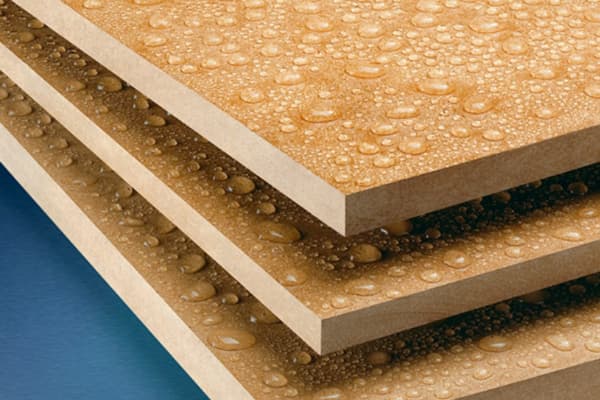
- Moisture-Resistant MDF (MR-MDF): This high-grade MDF is made with a special moisture-repellent resin. While not fully waterproof, it is far more resistant to humidity and moisture than standard MDF. This makes it the ideal choice for applications in kitchen and bathroom areas, such as kitchen cabinets and bathroom vanities.
- Fire-Retardant MDF (FR-MDF): For residential and commercial projects that require adherence to strict building codes, FR-MDF is essential. It is treated with a fire-retardant substance during manufacturing that slows the rate of combustion, increasing fire resistance and safety.
- Ultralight MDF: This is a lower-density version of MDF that is significantly lighter than the standard wood product. It’s perfect for applications where weight is a concern, such as trade show exhibits, film sets, and certain types of decorative pieces.
These different types of MDF are available in various thicknesses, allowing for precise specification for any project. As a supplier, we ensure our clients like Mark can access the exact type of MDF they need.
The Power of Combination: Why Veneer and Laminate on an MDF Board is a Winning Formula
By now, it should be clear that the true power of MDF is often realized when it’s used as a core material. The debate isn’t always MDF versus other finishes; it’s often about MDF with other finishes. An MDF board provides the perfect, stable, and cost-effective foundation. By adding a surface layer of wood veneer or a durable laminate, you create a composite panel that combines the best qualities of each material.
With veneer, you get the authentic beauty of real wood on a substrate that won’t move or warp. This is how the most beautiful and durable high-end furniture is often made. With laminate, you get a surface with incredible durability and endless design possibilities, perfect for the rigors of modern living spaces. Our Factory Price Wood Grain Melamine MDF Board is a perfect example of this synergy, providing the look of wood with the performance of melamine on a reliable MDF core. This combination of an MDF substrate with a high-performance surface is the key to creating beautiful, functional, and long-lasting products for cabinetry, furniture, and interior design. The versatility of MDF makes this possible.
Key Takeaways for Choosing Your Material
- MDF is the King of Stability and Smoothness: An MDF board offers a perfectly smooth, grain-free surface ideal for flawless painted finishes and provides excellent dimensional stability compared to solid wood.
- Natural Wood is Uniquely Beautiful but Costly: Choose real wood for its timeless aesthetic and strength, but be prepared for a higher cost and its natural tendency to warp or move with humidity changes.
- Veneer Offers the Best of Both Worlds: For the look of solid wood without the stability issues, a real wood veneer applied to an MDF core is the professional choice for high-end furniture.
- Laminate Provides Ultimate Durability: For high-traffic areas like kitchens and commercial spaces, a laminate or melamine surface on an MDF board delivers superior resistance to scratches and stains with endless design options.
- The Core Matters: The success of veneer and laminate surfaces is highly dependent on the quality of the substrate. A high-quality MDF board provides the flat, stable, and reliable core needed for a perfect finish.
- Choose the Right Type of MDF: Don’t use a standard MDF board in a moist environment. Opt for moisture-resistant MDF for kitchens and bathrooms to ensure longevity.
Post time: 11-12-2025