In the bustling world of global furniture manufacturing, the terminology can be as dense as the wood itself. As a factory owner in China, I, Allen, oversee the production of thousands of panels every day. I see the raw sawdust enter one end and finished, beautiful boards leave the other, destined for markets in the USA, Europe, and beyond. My clients, like Mark Thompson—a seasoned procurement officer in the USA—often grapple with a critical decision: distinguishing between MDF, chipboard, and melamine products. Making the wrong choice can affect the durability, cost, and final look of a project.
This guide is worth reading because it clears the fog. We will dissect the differences between Melamine Faced Chipboard (MFC) and Melamine Faced MDF, exploring why these engineered wood products are the backbone of modern interior design. Whether you are building kitchen cabinets, office furniture, or commercial fit-outs, understanding the nuance of durability and strength versus cost is essential. I want to share my factory-floor expertise to help you make the most cost-effective and high-quality decisions for your business.
What Exactly is Melamine and Why is it Used in Many Industries?
First, let’s clarify a common misconception. People often refer to a "melamine board" as if melamine is the wood itself. It is not. Melamine is a synthetic resin used to impregnate decorative paper. When we talk about melamine board, we are actually talking about a substrate (core) covered with a melamine paper.
Melamine is a protective coating. In my factory, we take printed paper—which can look like solid wood, stone, or a solid color—and soak it in melamine resin. Under high heat and pressure, this paper is fused onto a board. The result is a hard, non-porous, and scratch-resistant surface.
This melamine surface is widely used because it is incredibly tough. It resists heat, moisture, and stains better than many paints or varnishes. It is a synthetic resin-based product that acts as armor for the wood underneath. Whether applied to MDF or chipboard, the melamine layer ensures the panel is ready for the rigors of daily life without needing further finishing like staining or painting.
The Core Difference: How is MDF Made Compared to Chipboard?
To choose the right product, you must understand what lies beneath the melamine. MDF and melamine are two different things; one is the core, the other is the face. The two main cores we use are MDF and Chipboard (also known as particleboard).
MDF is made from fine wood fibers. We break down hardwood or softwood residuals into fibers, mix them with wax and a resin binder, and form panels by applying high temperature and pressure. This results in a panel with a higher density and a very smooth surface. It is uniform throughout, with no knots or grain.
Chipboard, on the other hand, is made from wood chips and sawmill shavings. These wood particles are mixed with resin and pressed into sheets. Chipboard is generally lighter and has a coarser structure than MDF. While MDF is dense and smooth, chipboard is more porous. However, when manufacturing furniture, specifically carcasses (the box part of a cabinet), chipboard is often the structural hero because it is lighter and holds screws well in certain applications.
MFC Defined: What Makes Melamine Faced Chipboard the Ideal Choice for Panel Furniture?
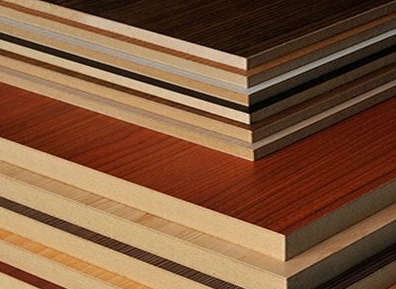
Melamine Faced Chipboard, or MFC, is simply raw chipboard that has decorative melamine paper fused to both sides. It is the most popular material for office furniture and kitchen cabinets globally. Why? Because it is the ultimate choice for panel furniture in terms of economy and performance.
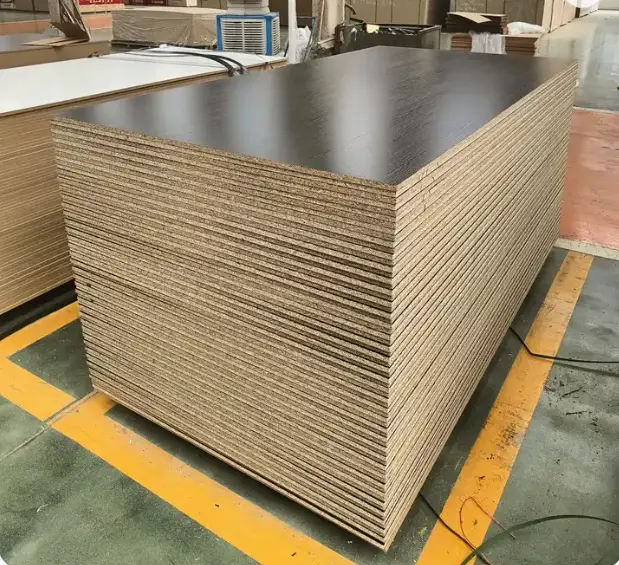
MFC comes in a vast array of thicknesses, but 18mm is the standard for cabinets. The melamine laminate seals the wood chips inside, making the board rigid and flat. Because chipboard is inexpensive to produce (using waste wood), MFC is a highly cost-effective solution.
For clients like Mark in the USA, importing Wholesales Melamine chipboard wood grain solid color allows them to produce huge volumes of furniture at a competitive price point. It doesn’t need to be sanded or painted; it is cut, edged, and assembled. It is a "finished" product the moment it leaves the press.
Melamine vs MDF: Which Engineered Wood Product Offers Better Durability and Strength?
When we compare Melamine Faced MDF against MFC, the "better" option depends on the application.
MDF boards are denser and heavier. In terms of strength, MDF has higher internal bond strength. If you need a board that can be routed (having grooves cut into the face) or shaped with a curved edge, MDF is the only choice. MFC cannot be routed because the wood chips inside will tear out and look rough.
However, for vertical applications like doors and cabinet sides, MFC is often preferred because it is lighter. A heavy MDF door might put too much strain on hinges over time. Furthermore, the melamine surface on both is equally durable. It is the core that changes. MDF is more stable in changing humidity than solid wood, but raw MDF acts like a sponge with water. MFC, while also susceptible to water, is often used for carcasses because if the banding is good, it performs exceptionally well.
So, vs MDF, MFC is generally the winner for standard box construction, while melamine faced MDF is the winner for doors that need a routed profile or a smoother, glass-like finish (especially for high-gloss applications).
Is Melamine Faced Board a Cheaper Alternative to Solid Wood and Plywood?
Absolutely. Both MFC and Melamine Faced MDF are significantly less expensive than solid wood or even high-grade plywood.
Solid wood is expensive to harvest, dry, and process. It can warp, crack, and requires finishing (staining/varnishing). Plywood is strong and lighter than MDF, but good quality plywood (like Baltic Birch) has become very pricey.
MFC is a cheaper alternative that does not compromise on the visual appeal. With modern printing technology, our melamine papers can mimic the look and feel of solid wood grain so perfectly that it is hard to tell the difference. This makes melamine board an excellent choice for budget-conscious projects that still require a high-end look. It allows developers to furnish apartment complexes or offices with durable, beautiful furniture at a fraction of the cost of solid wood.
Kitchen Cabinets and Wardrobes: Why is MFC Commonly Used in Kitchen Design?
MFC is commonly used in kitchen design for one main reason: durability in a harsh environment. A kitchen is a place of heat, moisture, and impact.
The melamine surface is highly resistant to hot pots, spills, and cleaning chemicals. It is easy to wipe clean, ensuring high hygiene standards. Furthermore, MFC is stable. Solid wood doors can expand and contract with the humidity changes in a kitchen, leading to doors that stick or warp. MFC stays flat.
For the wardrobe, MFC allows for massive sliding doors and intricate internal shelving systems that are sturdy and scratch-resistant. The vast range of colors and finishes means a designer can have a matte grey kitchen and a wood-grain wardrobe using the exact same underlying material technology. It is the ideal choice for consistency throughout a home.
The Aesthetics of Melamine: How Do Colors and Finishes Transform Interior Design?
One of the biggest advantages of melamine board is versatility. Unlike real wood, where you are limited to the species you buy, melamine offers unlimited design potential.
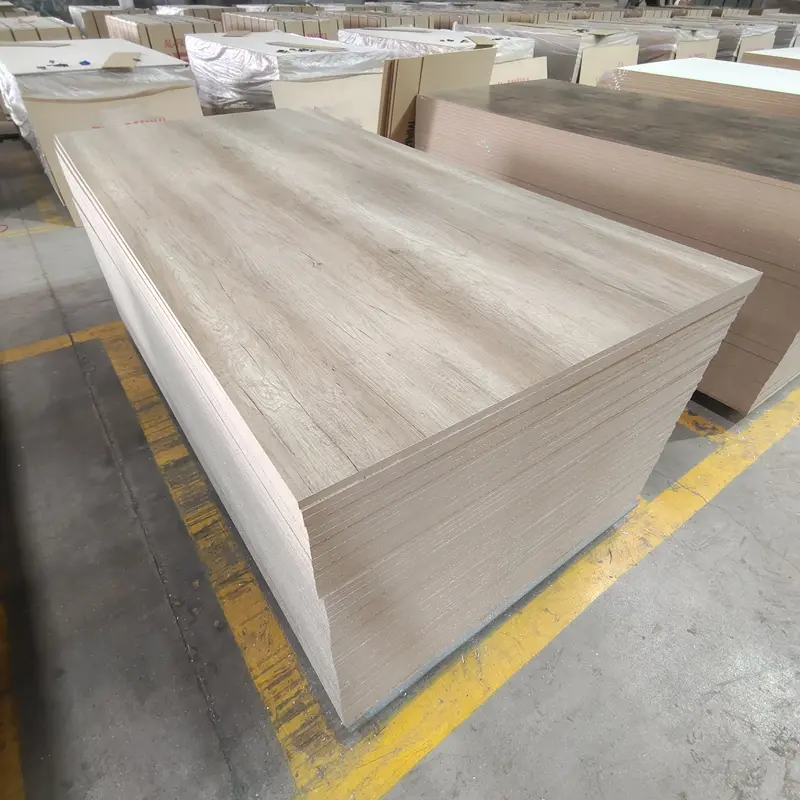
We can produce Factory Price Wood Grain Melamine MDF Board that looks like Oak, Walnut, or Teak. We can also produce solid colors, fabric patterns, stone effects, and even metallic looks. The surface texture can also be manipulated—we can press steel plates into the board during manufacturing to create a wood-grain texture you can feel (synchronized grain), or a high-gloss smooth finish.
This allows modern interior design to flourish. Designers can spec a specific pantone color or a rare wood grain without worrying about sourcing the actual timber. The aesthetics of melamine have advanced so much that it is no longer seen as just a "cheap" substitute, but a premium decorative surface in its own right.
Moisture Resistance and Maintenance: Which Board Handles Wear and Tear Better?
Maintenance is key for the end-user. Melamine surfaces are incredibly low maintenance. They don’t need polishing or oiling. A damp cloth is usually all that is needed to clean a cabinet.
regarding moisture resistance, both MDF and chipboard cores are vulnerable to water if exposed. If water gets into the core, the fibers or chips will swell and blow out the laminate. This is why edge banding—applying a matching plastic or veneer strip to the raw edges—is critical.
However, generally speaking, MDF acts like a denser sponge and can be harder to repair if water damaged. Chipboard is also vulnerable but often uses moisture-resistant glues (look for green-colored cores in MR grade chipboard) which helps. Compared to MFC, standard MDF is slightly more prone to swelling on the edges if not sealed perfectly. But for the face surface, both are non-porous and withstand spills excellently.
Machinability: Is MDF a Less Expensive Material to Cut and Shape Compared to MFC?
When we talk about processing these boards in a factory, machinability matters. MDF is a dream to cut. Because it is homogenous (uniform), you can cut it in any direction. You can rout decorative profiles into the face, drill clean holes without tear-out, and create smooth curves. This makes it an excellent choice for painted furniture or doors with a shaker style design.
MFC, however, is harder to machine in terms of detail. You cannot rout into the face of MFC because you will cut through the thin melamine layer and expose the ugly wood chips. MFC is strictly for flat panel processing—cut to size, edge band, and drill.
While MDF is a less expensive material to shape into complex forms, MFC is cheaper to process for standard rectangular components because it requires fewer steps (no painting or sanding required). Our Factory Best price High Quality Melamine Chipboard board Laminated sheet is designed for this high-speed, flat-panel manufacturing.
Final Verdict: How to Make the Right Choice for Your Residential and Commercial Projects?
So, how do you choose? If you are building high-volume, box-shaped furniture like kitchen cabinets, office desks, or wardrobes, MFC (Melamine Faced Chipboard) is the industry standard. It offers the best balance of durability, cost-effective production, and aesthetic variety. It is lighter and strong enough for these applications.
If you need to create painted doors with routed designs, curved reception desks, or require a super-smooth substrate for high-gloss laminates, then MDF (or Melamine Faced MDF) is your winner. It provides the density and smoothness that chipboard lacks.
Ultimately, both are engineered wood marvels that have allowed high-quality furniture to become accessible to everyone. By understanding the core differences, buyers like Mark can ensure they are importing the right product for the right job, ensuring satisfaction for the final customer.
Key Takeaways for Melamine, MDF, and Chipboard
- Understanding the Terms: Melamine is the resin-impregnated paper surface; MDF and Chipboard are the structural cores.
- MFC Dominance: Melamine Faced Chipboard (MFC) is the most common and cost-effective choice for carcasses, shelves, and flat doors in kitchens and offices.
- MDF Strength: MDF offers superior machinability and smoothness, making it the ideal choice for routed doors and high-gloss finishes.
- Durability: Both surfaces are highly durable and scratch-resistant, but edge sealing is vital to prevent water damage to the core.
- Cost vs. Solid Wood: Both options are significantly less expensive than solid wood or plywood, offering a stable, uniform alternative to solid wood.
- Design Freedom: Modern melamine offers indistinguishable wood grains and vast color options, suitable for any interior design style.
Post time: 12-04-2025