Are you building a massive residential project? Maybe you are buying materials for a big modular setup. Picking the perfect core panel is a huge deal. Making a mistake costs time and money. If you choose a heavy substrate for a hanging cupboard, it might rip right off the wall. If you choose a weak board for a heavily used door, the hinges will strip out in months. This guide dives deep into exactly what sets these common boards apart. We will explore costs, strengths, and smart architectural applications. By the end of this read, you will know exactly which core to specify for your next big job.
What Is MFC and How Does It Compare to MDF?
Let’s define the basics. First, mfc stands for melamine faced chipboard. This is a material made heavily from recycled wood chips. The factory takes these pieces, mixes them with strong binders, and squashes them flat under immense heat. You often see it used to make interior boxes and basic shelving. It helps factories make furniture quickly and affordably. It acts as an excellent, budget-conscious alternative to solid wood.
On the other side of the factory floor, mdf also serves the industry well. But the denser fiberboard is entirely different on the inside. The true difference between mdf and mfc lies right in the very center of the core. While the lighter board uses chunky pieces, the heavier board uses microscopic, pulverized wood fibers. Both are highly popular wood products, but they serve very different structural goals when you build a cabinet or plan a huge interior space. In fact, mfc boards are widely used globally because they are incredibly fast to produce and incredibly easy to transport.
How Does Density Affect the Core Performance?
Everything physically depends on the density. When you pick up a piece of the fiberboard, it feels incredibly heavy. It is tightly packed. A medium density core gives you a completely smooth surface. It cuts beautifully. A sharp spinning router blade glides right through it like butter, leaving crisp, sharp edges behind.
However, the density of the board drops significantly when you look at a standard piece of particleboard. Because the chunky core uses larger wood pieces, it holds a lot more empty air inside the panel. This open structure makes it quite lightweight. If you are installing large hanging units high up on a wall, that lighter weight is a massive, undeniable advantage for the installers. Both options fall firmly under the umbrella of an engineered wood product, meaning factories engineer them to behave predictably. There are no unexpected knots. There are no hidden natural splits.
Why Is a Melamine Surface So Crucial for MFC?
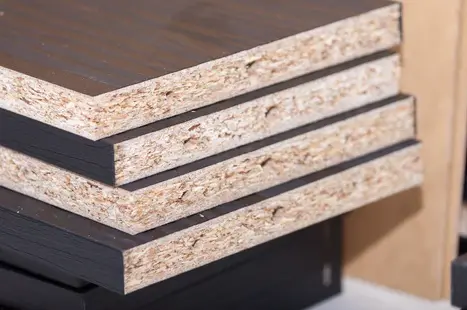
Let’s talk about the protective outer layer. You rarely ever see a raw, unfinished chipboard face in a modern kitchen. Instead, you see a tough, decorative melamine surface. Factories take thin, printed decorative paper and soak it entirely in a tough liquid called melamine resin. The beautiful design, which often perfectly mimics a real wood grain, is printed onto a melamine film. Sometimes, the pattern is repeatedly printed onto a melamine paper layer to ensure vibrant, rich, and completely opaque colors.
Once the paper is fully soaked and cured, heavy hydraulic machines press it directly onto a sheet of chipboard using extreme, blistering heat. This thin coating fuses permanently to the raw core. It creates a seamless, unbreakable melamine laminate layer. Because of this hardened protective shell, high-quality mfc resists daily abuse easily. It becomes a beautiful, fully finished panel that is ready to cut, edge, and ship. You can see great examples of this seamless finish when you explore our beautiful melamine faced chipboard options.
What Is Medium Density Fiberboard Actually Made Of?
It sounds highly technical, but the manufacturing process is actually very simple. This heavy board is made from wood residuals. Giant lumber mills take raw wood waste—like loose sawdust and rough offcuts—and grind it down into a fine, fluffy powder. Every single tiny particle is thoroughly mixed with synthetic wax and strong glue. Then, giant heated presses smash the fluffy mixture into perfectly flat, rigid sheets.
This intense pressing creates a wonderful, uninterrupted smooth texture. If you want to carve intricate shapes, deep grooves, or classic shaker panels into a door front, you absolutely must use this material. It holds sharp, fragile edges perfectly without crumbling. You will very often see it covered in spray paint or wrapped in heated vinyl. It acts as the ultimate, flawless backbone for high-end painted doors. It offers incredible versatility for highly complex, 3D shapes.
Does MFC Outperform MDF in Wet Environments?
Water is the absolute worst enemy of all indoor wood. It destroys everything it touches. If you leave a standing puddle on raw timber, it will drink it up and swell. Neither engineered board loves standing water. However, the outer protective layer makes a massive difference in an unpredictable, messy environment. In a busy culinary space, a massive liquid spill happens every single day. A tough plastic face acts like a waterproof shield. You just wipe the mess away instantly with a simple damp cloth.
But beware the exposed edges. If water sneaks past the glued edge banding, both materials will quickly warp and bubble. For areas with constant high humidity, you might need to hunt down special green-tinted moisture-resistant grades. Standard commercial boards generally have very low moisture resistance. Always seal the edges perfectly! Especially in kitchens, keeping moisture out of the hidden seams is the absolute number one rule for a long-lasting, successful installation.
"Picking the wrong substrate for a humid room guarantees a total failure within three years. Always seal those edges tightly!"
How Do You Choose Between MDF and MFC for Cabinets?
Choosing the right core material often feels confusing and overwhelming. But let us keep it extremely simple. If you are building the hidden internal box of the cabinet—the carcass that nobody really sees—you want something affordable, strong, and light. That makes the lighter core the absolute right choice. It holds assembly screws well, it stays square, and the inside cleans easily. It is highly budget-friendly.
If you are building the highly visible front doors that need complex routing or a high-gloss painted finish, you need the heavy guy. You need the denser, smoother board. Many professional builders use a clever combination of both. They build the hidden boxes from the lighter chip core, and they build the elegant, show-stopping doors from the denser fiber core. For massive commercial jobs or tiny diy projects, this combination maximizes overall affordability without ever sacrificing style. A determined, handy homeowner can easily tackle a weekend diy upgrade using these exact same industry-standard tricks.
Is MFC Lighter Than Medium Density Panels?
Yes, it absolutely is lighter. And weight matters tremendously on a job site. If you build a massive reception desk or heavy office furniture, you eventually have to move it. You have to ship it across the country. A standard 18mm sheet of the dense fiber core is incredibly heavy. It will absolutely break your back if you try to carry it alone.
The lighter chip core makes building a tall room partition or a wide, spanning shelve much easier on the arms. You drastically reduce expensive shipping costs. You drastically reduce installer fatigue. For general everyday furniture, you do not always need maximum crushing density. You just need structural stability. And a lighter board provides exactly that. This makes it highly cost-effective for large production runs. Check out a quality 18mm thickness laminated particle board to see exactly how smart builders brilliantly balance weight and strength.
Can You Paint MFC Like You Paint MDF?
Not easily! The protective plastic face chemically repels liquid. Normal spray paint will simply slide off or peel away terribly later. If you desperately want a custom painted finish, you must use the denser fiber core. It absolutely loves paint. It drinks in the liquid primer and leaves a flawless, glass-like surface finish once sanded.
But here is the real industry trick: you usually do not need to paint the chip core at all. mfc is available in literally hundreds of pre-finished, gorgeous looks. It comes available in a wide range of modern styles. The factory permanently bakes the colour and the realistic texture right into the board. You get massive, instant design flexibility immediately upon delivery. Whether you want a deep, rustic wood look or a bright, clinical solid color, the textures and finishes are already perfect. This instant aesthetic saves days of smelly, messy labor in the spray booth.
Why Do Factories Love Melamine Finishes?
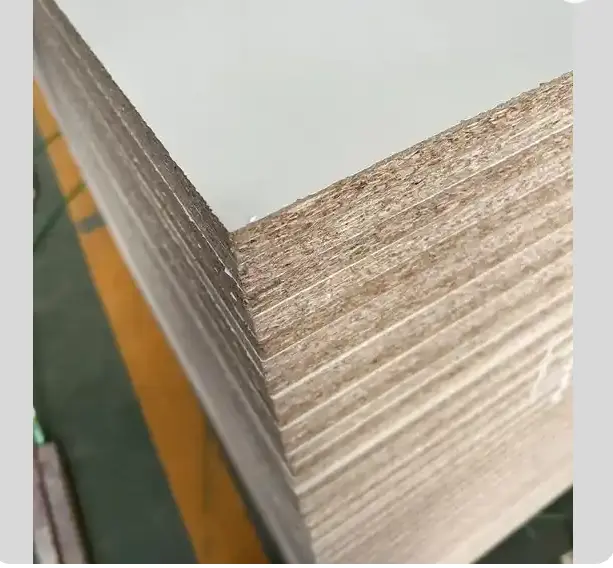
Factories absolutely love speed. They love raw materials that do not require extra, time-consuming steps. A pre-finished board skips the messy, toxic painting room entirely. The workers just cut it on a saw, edge it with PVC tape, and ship it out the door. This drastically speeds up the entire manufacture process.
Beyond sheer speed, factories love the intense durability. The hard plastic face is heavily scratch-resistant. It is remarkably tough and highly resistant to daily, heavy wear. It acts as an invisible shield against a nasty, sharp scratch or a dark, spilled coffee stain. When you build a retail store fixture or a busy commercial front desk, you need a hard surface that survives angry customers and careless employees. A durable plastic face delivers that protection effortlessly, day after day.
Which Density Level Provides the Best Value?
Value is all about matching the exact right board to the exact right job. You can easily compare mfc and mdf using a simple checklist. Actually, when you look at mdf and mfc side by side in a workshop, they both clearly win in their own specific categories. If you need cheap, strong, straight, and light, the chip core wins every time. If you need flawless, heavy, shapeable, and paintable, the fiberboard core wins every time.
Do not waste good money on a heavy fiber core for hidden internal shelving where nobody will ever look. Do not use a chip core if you want to carve a fancy corporate logo deeply into a front door. Understand your exact design preference. Both materials are vastly cheaper and more predictable than solid wood. Both are incredibly versatile. They are the twin, unbreakable pillars of modern cabinetry and whole-house renovation.
Whether you are capping thick kitchen countertops with a durable laminate or building out sprawling furniture and interior spaces, picking the correct core saves you massive amounts of cash. You can always grab a double sides white melamine chipboard for quick, clean, and highly professional carcass construction. If you want to elevate the outside, explore a richwood grain melamine MDF board for the highly visible doors.
Summary
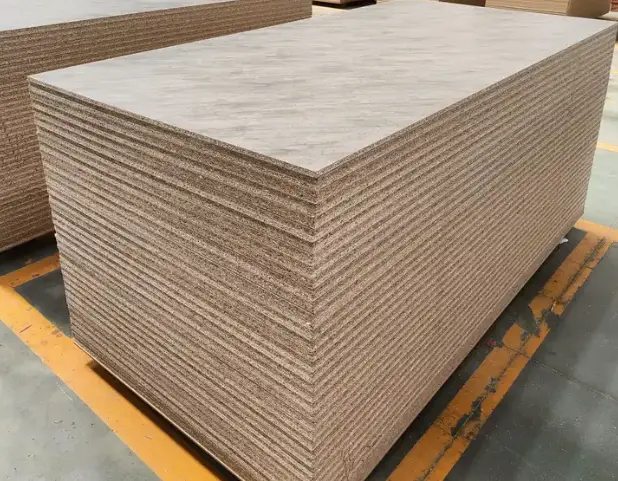
- The true difference between mdf and mfc is the core material: fluffy wood fibers versus chunky wood pieces.
- A lighter chip core is fantastic for hidden cabinet boxes, reducing overall weight and saving money.
- The denser fiber core offers a flawless surface, making it perfect for complex routing and high-end painting.
- Protective surface layers provide a tough, wipeable shield against daily spills and heavy stains.
- Neither board survives standing water if the exposed edges are not perfectly sealed with edge banding.
- Pre-finished panels completely eliminate the need for painting, massively speeding up the building process.
- Mixing both materials—light cores for boxes and dense cores for doors—is the smartest way to balance strength, weight, and budget.
Post time: 03-20-2026