Medium-Density Fiberboard, or MDF, is a miracle material in the world of furniture manufacturing and interior design. It is stable, consistent, and affordable. However, as a factory owner here in China, I see a common problem. Many of our clients, even experienced business owners like Mark in the USA, struggle with the finishing process. They buy high-quality raw MDF, but the final result sometimes looks fuzzy or uneven.
Why does this happen? Because MDF is not solid wood. It is a composite of wood fibers and resin. If you treat it like standard lumber, you will fail. But if you treat it with respect and follow the right steps, you can achieve a glass-like surface that rivals high-end lacquered furniture.
In this guide, I will share the exact protocols we use and recommend. We will cover how to sand, seal, and paint MDF to get that flawless look. Whether you are building cabinets, shelving, or commercial displays, mastering mdf before painting is the secret to a premium product.
Why is Preparation Critical in Woodworking with MDF?
In woodworking, patience is money. This is especially true with MDF. Medium-density fibreboard is essentially a sponge made of wood fibers. Unlike natural wood, which has a grain structure that resists liquid to some extent, MDF has an open structure.
If you skip preparation, the MDF surface will drink up your expensive paint. You will apply coat after coat, and the board will just keep absorbing it. Worse, the moisture in the paint will cause the tiny fibers to stand up. This creates a rough, fuzzy texture that no amount of topcoat can hide. To get a professional result, the preparation phase—cleaning, sanding, and sealing—is actually more important than the painting itself.
At our factory, we ensure our Custom Raw Plain MDF Board 0.8mm-25mm is produced with a high surface density to help with this, but the end-user must still follow the correct steps to seal the surface effectively.
What are the Drawbacks of MDF if Not Prepared Correctly?
While MDF is fantastic, we must be honest about the drawbacks of mdf regarding finishing. The main issue is its porosity. Bare MDF is incredibly thirsty.
When you apply a water-based paint directly to raw MDF, three things happen:
- Absorption: The MDF will absorb the liquid instantly. This leads to uneven color and wasted paint.
- Swelling: The edges are the most vulnerable. They are significantly more porous than the face. If they absorb too much moisture, they can swell and crack, ruining the dimensional accuracy of the piece.
- Texture Issues: The moisture raises the "nap" or small fibers. Instead of a smooth surface, you get a texture like fuzzy cardboard.
To avoid this, you simply need to sand and seal effectively. It turns these drawbacks into a non-issue, leaving you with a stable, smooth substrate.
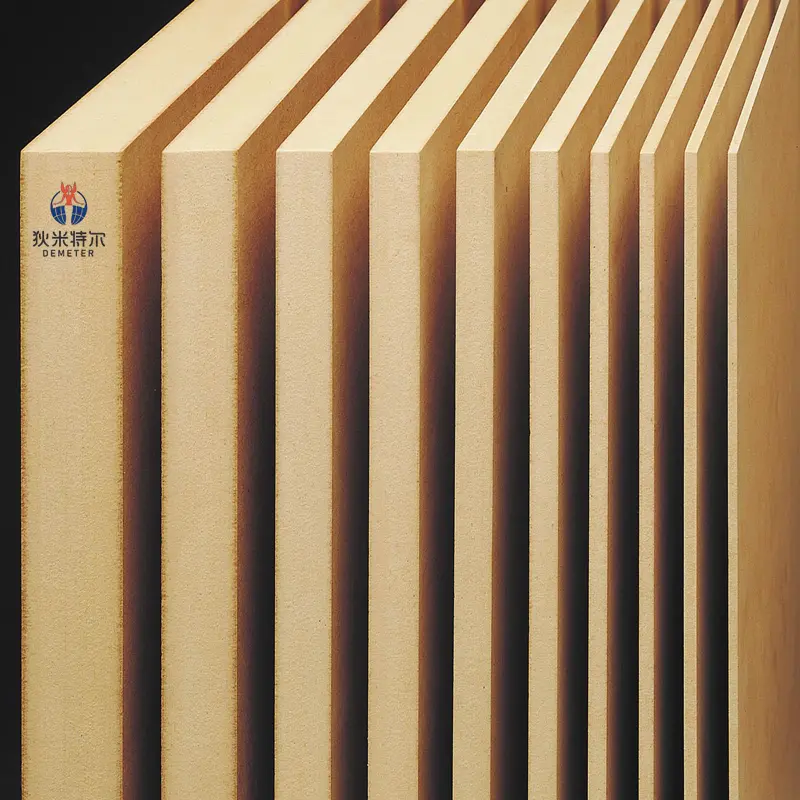
How Do You Sand MDF Before Painting for a Smooth Finish?
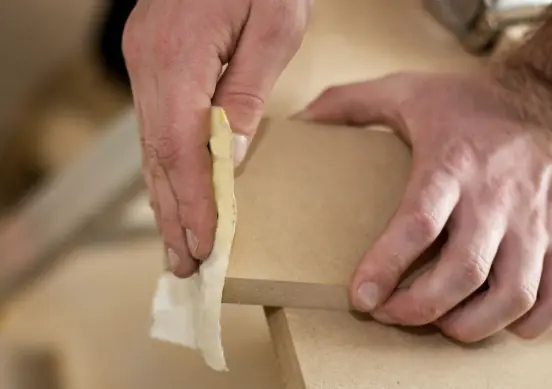
Sanding MDF is the foundation of a great finish. Even though MDF looks smooth from the factory, it often has a waxy coating used during pressing to prevent it from sticking to the machine plates. This wax can prevent paint from sticking.
Here is the process:
- Safety First: MDF dust is very fine and can irritate lungs. Always wear a mask.
- The Face: Use a sander (orbital is best) with 120 grit sandpaper. You want to cut through that waxy layer and give the surface some "tooth" for the primer. Don’t press too hard; you don’t want to create dips.
- The Edges: The mdf edges are rougher. Sand them well to knock down loose fibers.
- Finish Sanding: Switch to 240 grit for a final pass.
Lightly sanding the whole board ensures excellent paint adhesion. Wipe away all dust with a tack cloth before moving to the next step.
Why is Sealing the Edges of MDF Non-Negotiable?
If you look at the edge of mdf, you are looking into the core of the board. It is much less dense than the hard face. It is exceptionally porous. If you try to paint mdf without special attention to the edges, they will look darker and rougher than the rest of the piece. They soak up paint like a dry sponge.
Sealing the edges of mdf creates a barrier. It fills the gaps between the fibers so that the paint sits on top of the edge, rather than soaking into it. This ensures that the sheen on the edge matches the sheen on the face. Whether you use a specific sealer or a DIY method, this step prevents the "black hole" effect where the edges just absorb paint endlessly.
What are the Best Methods to Seal MDF Edges: Spackle, Wood Filler, or PVA Glue?
There are several ways to seal mdf edges. The best one depends on what you have on hand and your budget.
- PVA Glue: This is a classic woodworker trick. Mix white or yellow carpenter’s glue with a little water (about 80% glue, 20% water) to make it paintable. Brush it onto the edges. The pva glue soaks in and hardens the fibers. Once dry, sand it smooth.
- Drywall Compound / Spackle: You can smear a thin layer of drywall compound or spackle over the edge. It fills the pores instantly. It dries fast and sands very easily. This is great for getting a perfectly square edge.
- Wood Filler: For a harder edge, solvent-based wood filler works well. It is tougher than spackle but harder to sand.
- Shellac / Sealer: A dedicated sanding sealer or shellac-based primer is the professional choice. It dries fast and hard.
Whichever method you choose, applying this layer prevents the edges and ends from soaking up your topcoat.
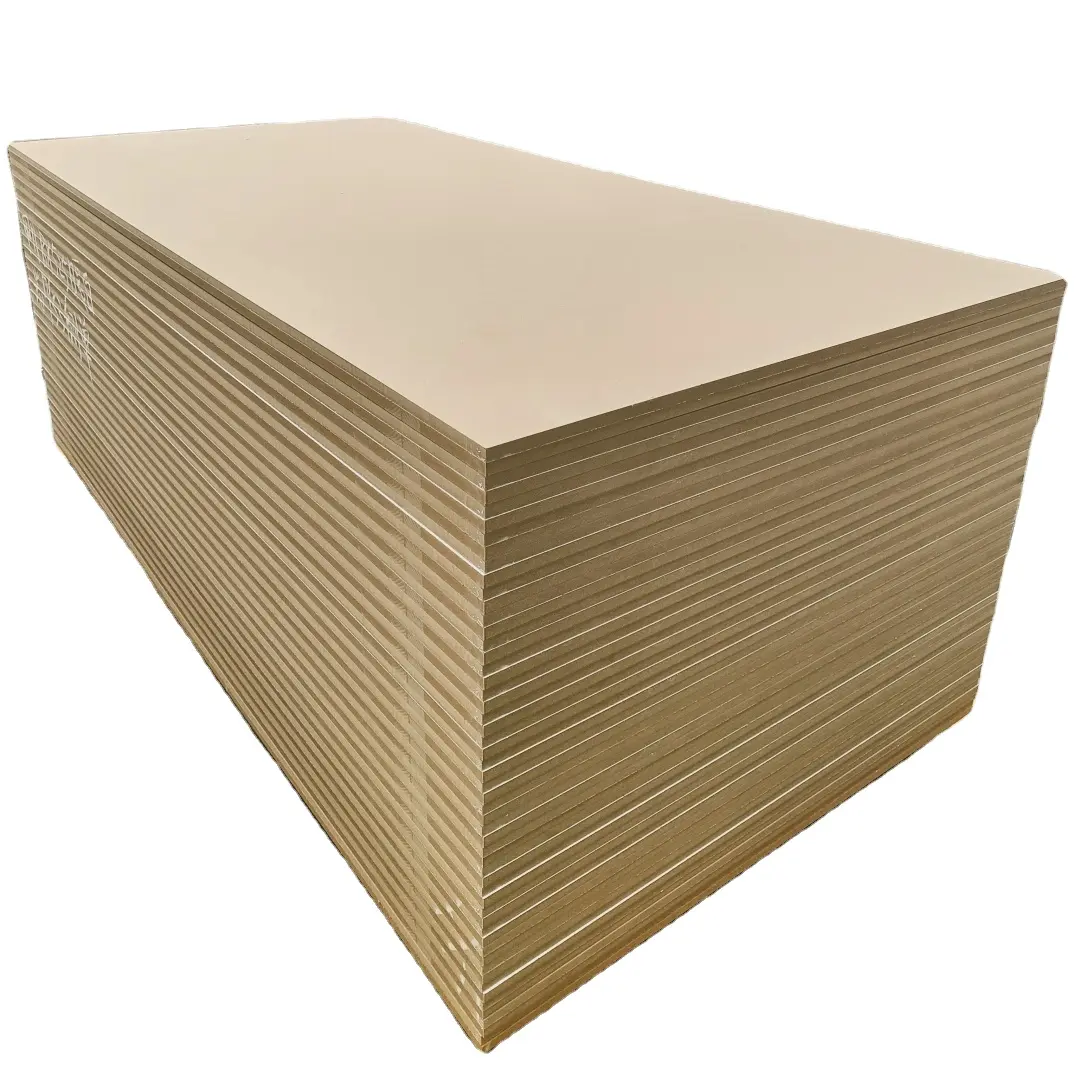
Is Edge Banding a Better Alternative for Cabinetry?
For professional applications, specifically cabinetry and shelving, painting edges can be too labor-intensive. This is where edge banding comes in.
Instead of sanding and sealing, we apply a strip of PVC, ABS, or melamine to the edge using a machine. This covers the porous core completely. If you are producing furniture in bulk, buying Factory wholesale cheap price High Quality melamine mdf board with matching edge banding is often smarter than trying to paint mdf edges manually.
However, for custom shapes, routed curves, or a seamless painted look (where you don’t want to see a seam), painting is still the superior option. Edge banding is for straight lines; sealing and painting is for artistic freedom.
Choosing the Right Primer: Oil-Based, Shellac, or Water-Based?
Choosing the right primer is critical. The primer acts as the bridge between the raw board and your paint.
- Solvent-Based / Shellac (Recommended): Products like BIN or Zinsser (shellac-based) or Kilz (oil-based) are the gold standard for mdf primer. Why? They are not water-based. They seal the fibers without raising the grain. Shellac dries incredibly fast and sands to a powder, creating a perfect base.
- Oil-Based Primer: excellent sealing properties and very durable. However, oil based products have strong fumes and a long drying time.
- Water-Based Primer: You can use water-based paints or primers, specifically modern "high-build" latex primers. However, be prepared to sand more, as the water will swell the surface fibers slightly.
For the best silky smooth finish, a solvent-based undercoat is highly recommended.
How to Apply Primer and Sealer for Maximum Adhesion?
Once you have your primer, application is key.
- Clean: Ensure the board is free of dust.
- First Coat: Apply the first coat of primer. You can use a roller or a brush. If using a brush, watch for drip marks.
- Sand: Once the primer is dry, it will feel rough. This is normal. Sand the primed surface with 240 grit sandpaper. This removes the raised fibers and brush marks.
- Second Coat: Apply a second coat. This coat should sit on top of the first one and look much smoother.
- Final Sand: Give it one last light sand with high-grit paper (320+).
This process of priming and painting ensures that the primer to seal the board does its job, stopping absorption and providing a uniform surface for the color.
What is the Best Technique to Paint MDF for a Silky Smooth Finish?
Now, the fun part: paint on mdf. You have a sealed, primed, and sanded surface. It is as smooth as glass.
- Paint Choice: Acrylic latex, enamel, or oil-based paints? For furniture, an enamel or a hard-wearing acrylic is best. Water-based enamels are popular because they don’t yellow like oil-based paints do.
- Application: Apply multiple thin coats rather than one thick one. Thick coats dry unevenly and leave brush strokes.
- Tools: A high-density foam roller is excellent for flat surfaces. It leaves no texture. If spraying, you get the absolute smoothest finish.
- Sanding: Yes, you need to sand again. Between coats of paint, lightly scuff the surface with very fine paper to remove dust nibs.
Typically, two coats of quality paint over two coats of primer will give you a deep, rich paint finish that looks professionally manufactured.
Troubleshooting: How to Fix Imperfections in Bare MDF?
Sometimes, raw mdf gets damaged during transport or cutting. A dent, scratch, or chipped corner can ruin the look.
Before you start priming mdf, inspect it.
- Small Holes/Dents: Use wood filler or spackle. Fill the hole slightly higher than the surface, let it dry, and sand it flat.
- Fuzzy Edges: If sanding didn’t fix a fuzzy edge, apply a layer of joint compound, let dry, and sand again.
- Deep Scratches: These can show through paint. You must fill them.
Remember, paint hides color, but it highlights texture. Any scratch in the bare mdf will be visible in the final glossy finish if not filled and sanded flat.
For those who want to skip all this work, we suggest looking into our Melamine MDF board panel or Good Quality melamine paper for plywood. These come pre-finished and ready to use!
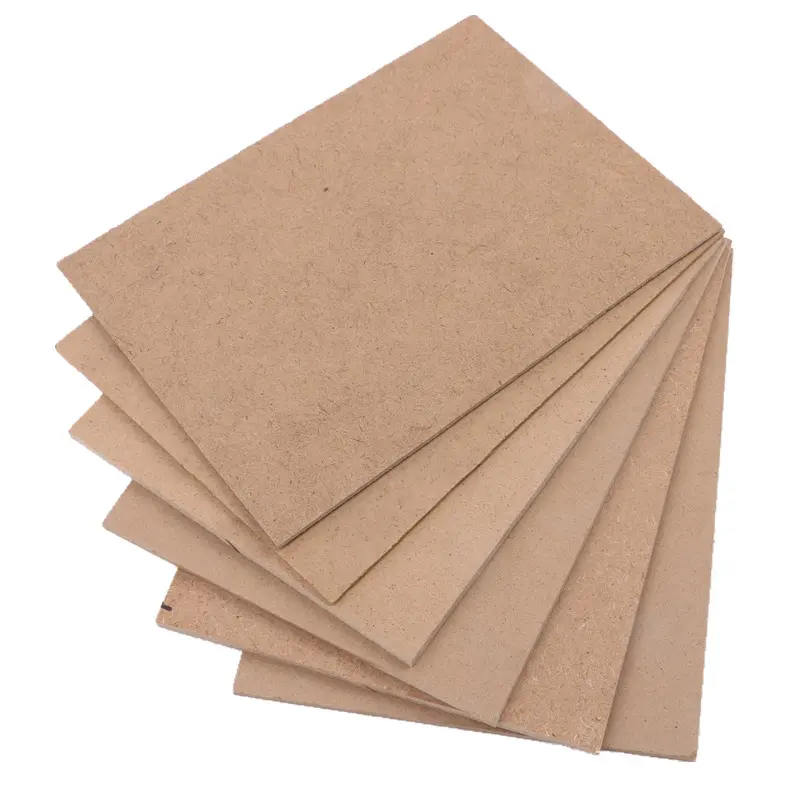
Key Takeaways for Painting MDF
- Preparation is Everything: MDF before painting must be clean and smooth. Don’t rush this step.
- Seal the Thirsty Edges: Use pva glue, drywall compound, or specific sealer to stop the edge of mdf from absorbing all your paint.
- Sand Frequently: Sand the raw mdf, sand between primer coats, and sand between paint coats.
- Use the Right Primer: Solvent-based or shellac primers are best to prevent fiber swelling. Water-based works but requires more sanding.
- Thin Coats: Apply multiple thin coats of paint for an even layer and a smooth finish.
- Safety: Always wear a mask when sanding mdf; the resin and dust are not good for your lungs.
Post time: 12-10-2025