Medium-Density Fiberboard, or MDF, is one of the most versatile and widely used materials in the world of furniture manufacturing, interior design, and construction. Its uniform density and smooth surface make it a favorite for everyone from large-scale cabinet makers to weekend DIY enthusiasts. However, unlocking its full potential begins with understanding a fundamental aspect: its dimensions. Choosing the wrong size or thickness can lead to wasted material, structural failures, and budget overruns.
This guide is designed to be your definitive resource for navigating the world of MDF sizes and thicknesses. As a manufacturer with years of first-hand experience producing and exporting these panels, I, Allen, will walk you through everything you need to know. We’ll cover standard sheet sizes, explore the applications for every thickness from a delicate 2mm to a robust 30mm, and discuss crucial quality factors to look for when sourcing your material. Whether you’re a procurement officer like Mark Thompson sourcing containers for a furniture factory or a designer specifying materials for a new project, this article will provide the clarity and confidence you need to make the right choice.
What Exactly is MDF and Why is it So Popular?
Before we dive into dimensions, let’s establish a solid foundation. What is MDF? Medium-Density Fiberboard is an engineered wood product created by breaking down hardwood or softwood residuals into fine wood fibers. These fibers are then combined with a wax and a resin binder and formed into panels by applying high heat and pressure. This process results in a material that is incredibly consistent, dense, and free of the knots, voids, and grain patterns found in natural wood or even plywood.
The popularity of MDF stems from a unique combination of benefits that make it suitable for a wide range of interior applications. Its most celebrated feature is its perfectly smooth surface, which is ideal for painting, lacquering, and applying veneers or laminates. Unlike plywood, the edges of an MDF panel are smooth and can be easily machined to create intricate decorative profiles without the risk of splintering or voids. This superior machinability makes it a top choice for projects requiring precision and a high-quality finish, such as cabinet doors, architectural mouldings, and detailed furniture components.
From a manufacturing perspective, the consistency of MDF is a massive advantage. Every sheet has a uniform density and thickness, ensuring predictable performance on CNC machines and production lines. This reliability streamlines the manufacturing process, reduces waste, and helps control costs. For end-users, this translates into durable, stable, and affordable furniture and decorative elements that maintain their form and finish for years. It’s this blend of workability, consistency, and affordability that has made MDF a cornerstone of the modern furniture and decor industry.
What are the Standard MDF Sheet Sizes? Is 8ft x 4ft the Only Option?
When it comes to sourcing MDF, the most common sheet size you’ll encounter is 2440mm x 1220mm, which is the metric equivalent of the imperial 8ft x 4ft. This size has become the industry standard because it offers a great balance between being large enough for most furniture and cabinetry projects and being manageable for handling, shipping, and cutting. It efficiently covers large areas for wall paneling or partitions while being easy to break down into smaller components with minimal waste.
However, the 2440mm x 1220mm sheet is by no means the only option available. As manufacturers, we understand that different projects have different requirements. To accommodate this, we produce a variety of other sizes. Oversized sheets are particularly useful for large-scale applications where seams are undesirable, such as long countertops, large wardrobe doors, or full-height wall panels. Using a larger initial sheet can significantly reduce labor time and improve the final aesthetic.
Here is a table of common MDF sheet sizes you might find from a comprehensive supplier:
| Metric Size (mm) | Imperial Size (Approx. ft) | Common Applications |
|---|---|---|
| 2440 x 1220 | 8′ x 4′ | The industry standard for almost all projects. |
| 2750 x 1220 | 9′ x 4′ | Taller cabinet doors, partitions. |
| 3050 x 1220 | 10′ x 4′ | Full-height wall panels, long desks, retail displays. |
| 3660 x 1220 | 12′ x 4′ | Large commercial installations, shopfitting. |
| 2440 x 1830 | 8′ x 6′ | Wider panels, tabletops, reducing waste on certain cutting patterns. |
It’s crucial to discuss your project’s specific dimension needs with your supplier. While the 8×4 sheet is a versatile workhorse, leveraging a different size might be the key to a more efficient and professional finish.
How Do You Choose the Right MDF Thickness for Your Project?
Choosing the correct MDF thickness is just as important as choosing the right sheet size. The thickness of the panel determines its strength, weight, and suitability for a particular application. Using a panel that’s too thin can lead to bowing or breaking, while using one that’s too thick adds unnecessary weight and cost. As a manufacturer, we produce a wide spectrum of thicknesses, each engineered for a specific purpose.
The most common thicknesses—6mm, 12mm, and 18mm—cover the majority of furniture and cabinet-making needs. A 12mm sheet is often a good middle-ground, providing decent strength without being overly heavy, making it useful for cabinet carcasses and shelving. The 18mm sheet is the go-to standard for structural components like furniture frames, desktops, and load-bearing shelves due to its excellent rigidity and stability.
Here’s a general guide to help you select the thickness best suited for your needs:
- Light-duty (2mm-6mm): Ideal for applications where weight is a concern and no structural load is required. This includes drawer bottoms, cabinet backs, door skins, and craft projects.
- Medium-duty (9mm-16mm): This is the versatile mid-range. A 12mm or 16mm board is perfect for general furniture construction, bookshelves, and internal cabinet components that don’t need to support extreme weight.
- Heavy-duty (18mm-30mm): When strength and durability are paramount, this is the range to use. 18mm is the workhorse for kitchen cabinets and furniture carcasses. 25mm is excellent for thick desktops, workbenches, and heavy-duty bookshelves. A 30mm
sheetprovides maximum rigidity for high-end furniture, deep shelves, and architectural elements.
Understanding this relationship between thickness and application is the first step in engineering a product that is both cost-effective and built to last.
Can You Get Thin MDF Sheets? Exploring 2mm, 3mm, and 4mm Options
Yes, you can absolutely get thin MDF sheets. While not suitable for structural use, these lightweight panels are essential for a variety of applications where a thin, stable, and smooth material is needed. The most common thicknesses in this range are 2mm, 3mm, and 4mm. These panels offer the same smooth surface and consistent density as their thicker counterparts but in a much more flexible and manageable format.
A 3mm MDF sheet is a staple in the furniture industry. Its primary use is for cabinet backing and drawer bottoms. It provides a solid, clean finish to the interior of a cabinet, adding rigidity to the overall structure without adding significant weight or cost. It’s a vast improvement over the flimsy hardboard often used in low-cost furniture. This thin MDF is also popular in the world of arts and crafts, model making, and as a substrate for laminating or veneering.
The thinnest options, like 2mm MDF, are often used for more specialized purposes. These include creating curved forms (when kerf-cut), as a skin for hollow-core doors, or as a balancing backer sheet when applying a veneer or laminate to a single side of a thicker panel to ensure stability and prevent warping. A 4mm MDF sheet offers a slight step up in rigidity from 3mm and is often used for picture frame backing, display boards, and other lightweight decorative applications.
When Should You Use Thicker MDF, like 18mm or 30mm?
While thin MDF excels in non-structural roles, thicker MDF panels are the backbone of durable, long-lasting furniture and fixtures. When your project demands strength, stability, and a substantial feel, you should turn to thicknesses of 18mm and above. These robust boards are engineered to handle significant weight and daily use without flexing or failing.
The 18mm MDF sheet is arguably the most common and versatile thickness in furniture making. It is the industry standard for constructing kitchen cabinet carcasses, wardrobe frames, and general furniture pieces. Its thickness provides excellent screw-holding strength (especially when using appropriate pilot holes) and enough rigidity to create stable structures. It’s the perfect balance of strength, weight, and cost for the vast majority of furniture applications, from a sturdy bookshelf to a reliable office desk.
For projects that require even greater strength or a more substantial aesthetic, 25mm and 30mm MDF are the best choices. A 25mm sheet is ideal for long bookshelves that need to support the weight of many books without sagging, thick kitchen countertops (which will be laminated or painted), and robust office furniture. The 30mm option is often reserved for high-end applications, such as executive desks, conference tables, deep shelves, and architectural mouldings where a chunky, solid profile is desired. These thicker panels offer exceptional stability and a premium feel that can elevate the quality of any piece.
What is the Difference Between Standard MDF and Moisture Resistant MDF?
A common question we receive from clients, especially those in the kitchen and bathroom industries, is about the difference between standard MDF and moisture resistant MDF (MR MDF). While they may look similar, their performance in damp environments is worlds apart. The key difference lies in the resin used to bond the wood fibers together during the manufacturing process.
Standard MDF uses a urea-formaldehyde (UF) resin, which provides a strong bond but is susceptible to swelling and breaking down when exposed to moisture. This makes it perfectly suitable for dry environments like living rooms and bedrooms. However, in areas with high humidity or the potential for occasional water contact, such as kitchens, bathrooms, laundry rooms, or boiler rooms, standard MDF will quickly fail.
Moisture resistant MDF, on the other hand, is made with a special moisture-repellent resin, typically a melamine-urea-formaldehyde (MUF) or a phenol-formaldehyde (PF) resin. This specialized resin dramatically reduces the amount of water absorption. If a sheet of MR MDF gets wet, it will not swell or degrade to the same extent as standard MDF, making it far more durable in humid conditions. It is important to note that MR MDF is "moisture resistant," not waterproof. It should still be sealed with a good quality paint, lacquer, or laminate to provide a fully protected surface. You can often identify MR MDF by a green dye that is added during manufacturing for easy identification, although clear MR MDF is also available.
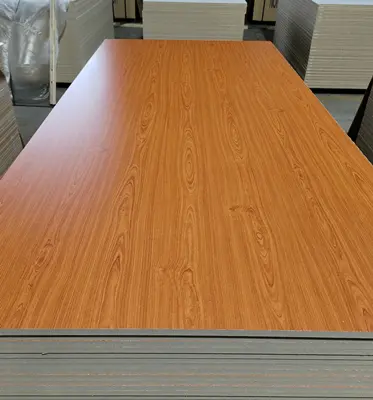
How Does Veneered MDF or Melamine MDF Affect Panel Dimensions?
When you add a decorative surface to MDF, such as a real wood veneer or a durable melamine paper, you are creating a value-added product like veneered MDF or melamine MDF. A common point of confusion is whether these finishes affect the overall panel dimensions. The answer is yes, but only very slightly, and it’s something a quality manufacturer accounts for.
The core of these products is a standard MDF sheet in a specific thickness, for instance, 18mm. A thin layer of material is then bonded to one or both surfaces.
- Veneered MDF: A thin slice of real hardwood, like oak or walnut, is bonded to the MDF core. This
veneeris typically only 0.5mm to 0.6mm thick. - Melamine MDF: A decorative paper saturated with
melamineresinis fused to the MDF core using heat and pressure. The paper and resin layer is even thinner.
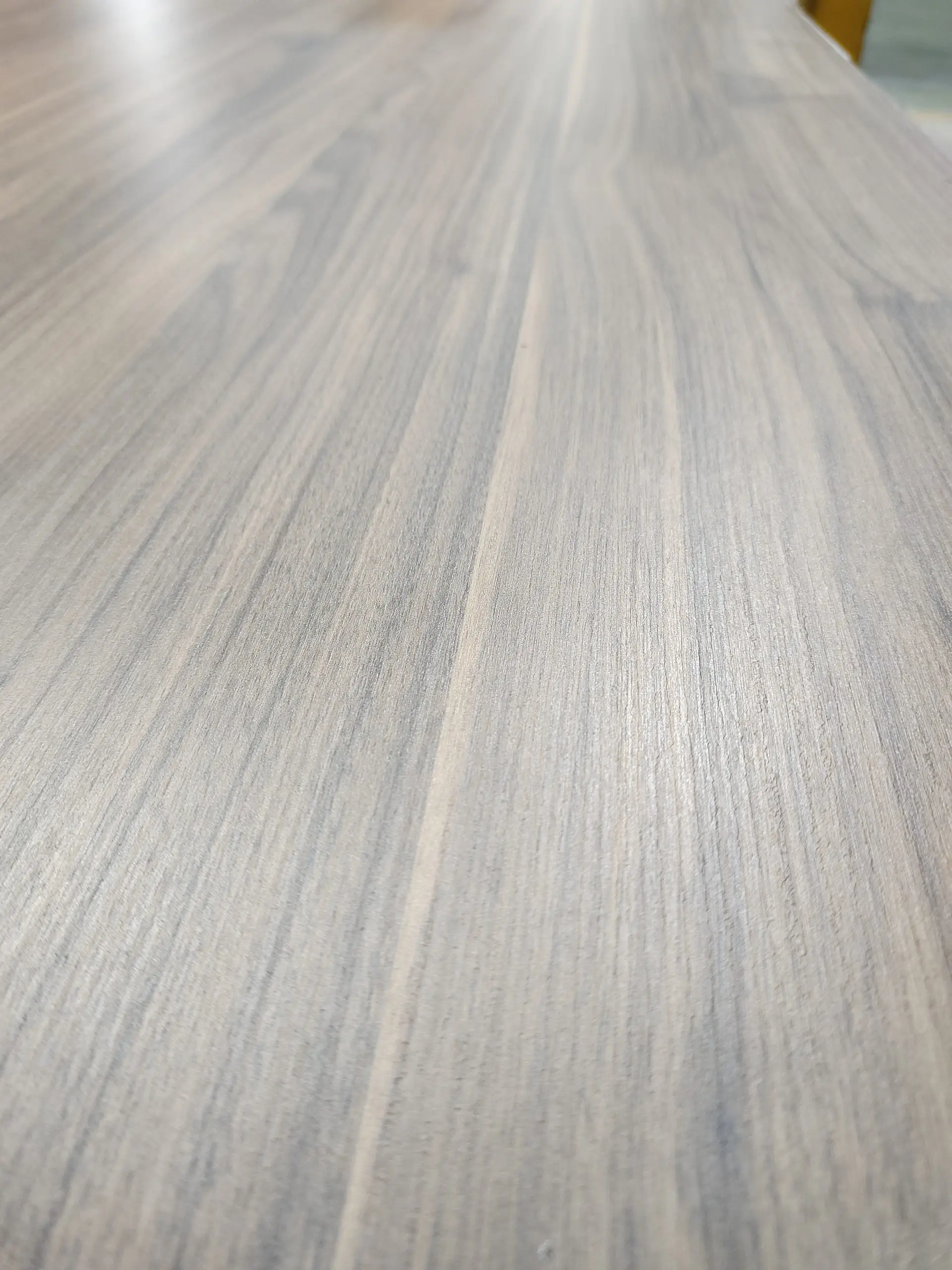
A reputable manufacturer will calibrate their processes to ensure the final product meets the specified nominal thickness. For example, to produce an 18mm melamine MDF board, we might start with a raw MDF panel that is slightly thinner than 18mm to accommodate the thickness of the two melamine surfaces. The final product is then sold as an 18mm panel. The overall sheet sizes, like 2440mm x 1220mm, remain unchanged. When you buy a high-quality finished board, you can be confident that it will conform to the stated dimensions, allowing for precise and consistent results in your project. These melamine MDF boards are an excellent choice for achieving a beautiful and durable finish with the reliability of an MDF core.
How Does MDF Compare to Plywood in Terms of Sizes and Machinability?
MDF and plywood are two of the most common sheet materials, and they are often considered for the same projects. While they share some similarities, their core differences in construction lead to distinct advantages in size consistency and machinability. Understanding these differences is key to choosing the right material.
In terms of size, both MDF and plywood are readily available in the standard 2440mm x 1220mm sheet, and both can be sourced in various other dimensions. However, MDF generally offers better dimensional stability and thickness tolerance. Because plywood is made from layers of wood veneer glued together, there can be minor variations in thickness across the sheet and between different boards. MDF, being an engineered product made under immense pressure, has a much more consistent thickness from edge to edge and sheet to sheet, which is critical for projects requiring high precision.
The biggest difference lies in machinability. The smooth, homogenous core of MDF makes it excellent for cutting, routing, and drilling. You can create clean, sharp edges and intricate profiles without worrying about splintering or revealing voids in the core. The layered nature of plywood, while giving it superior structural strength in some aspects, results in edges that can splinter (tear-out) and show the different layers. This makes plywood edges harder to finish cleanly, often requiring edge banding or solid wood edging. For cabinet doors, decorative moulding, or any component with a profiled edge, MDF is almost always the superior choice.
What Should You Look for When Sourcing MDF Cut to Size?
For many large-scale furniture manufacturers and construction companies, sourcing MDF cut to size directly from the factory is a game-changer. This service, where the manufacturer cuts the large sheets into the specific component sizes you need, offers significant benefits in efficiency, waste reduction, and cost savings. However, to ensure you get the quality you expect, there are several key factors to look for.
First and foremost is precision. The entire point of a cut-to-size service is to receive components that are ready for assembly. You must verify the supplier’s cutting tolerance. A reliable manufacturer should be able to guarantee a high degree of dimensional accuracy, typically within a fraction of a millimeter. Ask about the equipment they use; modern, computer-controlled beam saws and CNC routers are essential for achieving this level of precision.
Second, consider the quality of the cut edge. A clean, sharp cut without chipping or burning is crucial, especially for parts that will be edge-banded or painted. This is a direct reflection of the quality of their blades and the skill of their operators. Finally, discuss packaging and logistics. The cut components must be carefully stacked, protected, and labeled to prevent damage during shipping and to make them easy to identify and sort upon arrival at your facility. Sourcing a service like this can streamline your production, but only if you partner with a supplier who prioritizes quality control at every step, from the raw plain MDF board to the final packaged component.
What are the Key Quality Factors to Check in an MDF Sheet?
Whether you’re buying a single sheet for a DIY project or multiple containers for a production line, the quality of the MDF itself is paramount. As a buyer like Mark Thompson knows, not all MDF is created equal. A low-quality panel can lead to production issues, product failures, and unhappy customers. Here are the critical quality factors I always advise my clients to check.
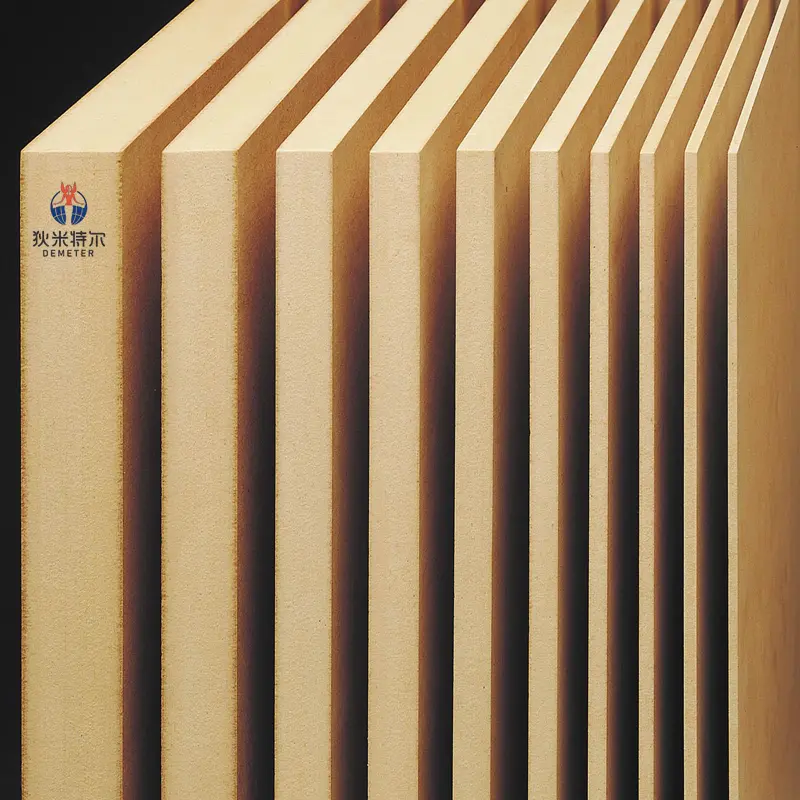
- Core Density and Consistency: This is perhaps the most important factor. A good MDF
sheetshould have a uniformdensitythroughout its core. Look at the edge of the board; it should appear tight and homogenous. There should be no lighter, softer patches, which indicate a poor press or an inconsistent mix of fibers. An inconsistent core leads to poor screw-holding and unevenmachinability. - Surface Quality: The surface should be perfectly smooth and flat, free from blemishes, fiber clumps, or sander marks. Run your hand over the surface to feel for imperfections. A high-quality surface is essential for achieving a flawless
finishwhen painting or laminating with a material like melamine impregnated paper. - Formaldehyde Emission Certification: This is a crucial health and safety consideration. Ensure your supplier provides MDF that complies with international standards like CARB P2 (for the USA market) or E1/E0 (for Europe and other regions). This certification guarantees that the level of formaldehyde off-gassing from the
resinis within safe limits. - Moisture Content: The ideal
moisturecontent for MDF is typically between 6-8%. If theboardis too dry, it can be brittle; if it’s too wet, it’s prone to warping and swelling. A reputable manufacturer will have strict quality control to managemoisturecontent. - Thickness Tolerance: Check that the
thicknessof theboardis consistent across the entiresheet. Use calipers to measure in several places. Significant variation can cause problems in assembly, especially when joining panels in acabinet.
By paying close attention to these factors, you can ensure that the MDF you source will perform reliably, providing the stability and high-quality foundation your projects deserve. Don’t hesitate to ask for technical data sheets and certifications from your supplier. A trustworthy partner will be transparent and proud to share this information.
Key Takeaways
Navigating the world of mdf sizes and thicknesses is simple once you understand the fundamentals. To ensure your project is a success, remember these key points:
- Standard Size: The most common MDF
sheetsize is 2440mm x 1220mm (8ft x 4ft), but oversized sheets are available for larger projects to minimize seams. - Thickness Matters: Choose your MDF
thicknessbased on the application. Use thin MDF (3mm-6mm) for non-structural parts like cabinet backs, and thick MDF (18mm-30mm) for load-bearing structures likeshelvesand furniture carcasses. - Specialized Types: For wet areas like kitchens and bathrooms, always opt for moisture resistant MDF. For a ready-to-use decorative finish, consider products like wood grain melamine MDF.
- MDF vs. Plywood: MDF offers a smoother surface and superior
machinabilityfor painted and profiled finishes, whileplywoodhas advantages in certain structural applications. - Quality is Non-Negotiable: Always inspect MDF for consistent core
density, a smooth surface, proper certifications (like CARB P2), and correctmoisturecontent to avoid future problems.
Post time: 06-26-2025