Hello, I’m Allen, a manufacturer specializing in wood-based panels and decorative materials here in China. Over the years, I’ve worked with countless professionals like Mark Thompson from the USA—decisive, knowledgeable, and always looking for the best balance of quality and value. I understand that for furniture manufacturers, interior designers, and construction companies, getting the right material specifications is not just a detail; it’s the foundation of a successful project. This guide is born from thousands of conversations and production runs, designed to demystify the world of MDF sizes and thicknesses. We’ll explore everything from standard dimensions to the nuances of specialty boards, ensuring you can make informed decisions that save time, reduce waste, and improve your final product.
What is an MDF Board and Why is it so Popular?
For anyone in the furniture, cabinetry, or interior design industry, Medium-Density Fiberboard, or MDF, is a household name. But what exactly is it? At its core, MDF is an engineered wood product. We create it by breaking down hardwood or softwood residuals into fine wood fibers, combining them with a wax and resin binder, and then applying intense heat and pressure to form a uniform panel. This process results in a material that is denser and more stable than particle board but more cost-effective than solid wood or most plywood.
The real magic of MDF lies in its remarkable consistency and smooth surface. Unlike natural wood, an MDF board has no knots, grain patterns, or voids. This creates a perfect, unblemished canvas that is incredibly easy to work with. The smooth texture allows for a flawless finish, whether you’re painting, lacquering, or applying a veneer or laminate. Its uniform composition means it can be cut, drilled, and machined with high precision without the risk of splintering or chipping, making it ideal for creating intricate designs, detailed mouldings, and sharp, clean edges. This machinability is a key reason why so many manufacturers prefer MDF for a wide range of interior applications.
What are the Standard MDF Sheet Sizes?
When you’re planning a project, whether it’s a large-scale commercial fit-out or a new line of kitchen cabinets, material yield is paramount. Wasted material is wasted money. This is why understanding standard MDF sheet sizes is crucial for efficient planning and costing. The most universally recognized and produced sheet size is 2440mm x 1220mm, which is the metric equivalent of the imperial 8 feet by 4 feet. This dimension is a global standard for a reason: it’s versatile enough for large components like wardrobes and wall panels, yet can be economically cut down for smaller parts with minimal offcuts.
However, the world of MDF doesn’t stop at 8×4. As a manufacturer, we often produce oversized or custom panels to meet specific industry needs. For instance, you might find sheets with a greater width, such as 2440mm x 1830mm, or longer sheets like 3000mm x 1200mm. These larger formats are particularly useful for projects requiring seamless surfaces, like long countertops, reception desks, or full-height wall partitions, as they eliminate the need for joining smaller panels. When you’re sourcing materials, it’s always a good idea to ask your supplier about their available size range. While the 2440mm x 1220mm sheet is the workhorse, having access to different dimensions can be a game-changer for design flexibility and production efficiency.
How is the Thickness of an MDF Board Determined?
The thickness of an MDF board is not an accident; it’s a precisely controlled aspect of the manufacturing process. Understanding this can give you confidence in the material’s consistency. The journey begins with a mat of wood fibers, wax, and resin being laid out on a conveyor belt. The amount of fiber in this mat is the first variable that influences the final thickness. This mat then enters a large, heated press.
Inside the press, two massive steel plates compress the mat under extreme heat and pressure. The distance between these plates is calibrated with incredible accuracy to achieve the target panel thickness. For example, to produce an 18mm MDF sheet, the press is set to that specific dimension. The heat activates the resin, which acts as a glue, bonding the fibers together permanently, while the pressure compacts them into a dense, solid sheet. After pressing, the board is cooled, trimmed, and sometimes sanded to ensure a perfectly uniform surface and precise final thickness. This highly controlled process is why a high-quality MDF panel from a reliable factory will have consistent thickness from edge to edge and from sheet to sheet.
What are the Common Thicknesses of MDF and Their Best Uses?
Choosing the right thickness is just as important as choosing the right sheet size. The thickness of the MDF panel directly impacts its strength, weight, and suitability for a specific application. As a procurement officer or a builder, matching the thickness to the job is key to both structural integrity and cost-effectiveness. There’s no point in using a heavy, expensive 25mm board where a lightweight 6mm sheet would suffice.
Here is a quick breakdown of common thicknesses of mdf and their typical uses, which can serve as a helpful guide for your next project:
| Thickness | Common Applications | Key Characteristics |
|---|---|---|
| 2mm, 3mm, 4mm | Drawer bottoms, cabinet backs, picture frame backing, lightweight craft projects, door skins. | Lightweight, flexible, easy to cut. |
| 6mm | Wall paneling, decorative cladding, temporary partitions, sturdy craft projects. | More rigid than thinner boards, still lightweight. |
| 12mm | Bookshelves with short spans, cabinet carcasses, interior joinery, simple furniture. | A good balance of strength and weight. |
| 16mm, 18mm | The industry standard for furniture making, kitchen cabinets, doors, high-quality shelving, desktops. | Strong, durable, excellent screw-holding ability. |
| 25mm | Heavy-duty shelving (bookshelf), thick countertops, robust furniture components, exhibition stands. | Very strong and rigid, provides a substantial look. |
This table covers the most common options, but MDF is available in many other different thicknesses. Always consider the load-bearing requirements of your project. For a simple decorative panel, a 3mm MDF sheet is perfect. But for a shelve that needs to hold heavy books, opting for a robust 18mm or 25mm board is essential for long-term durability.
Can I Source Thin MDF Sheets like 2mm or 3mm?
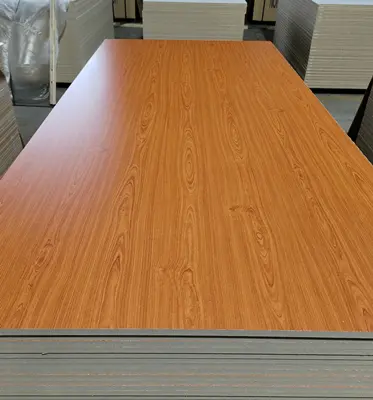
Yes, absolutely. Thin MDF panels, often in thicknesses of 2mm, 3mm, and 4mm, are a staple product for many manufacturers, including us. While thicker boards are valued for their structural strength, these thinner sheets are prized for their flexibility and lightweight nature. They are an economical and practical solution for applications where rigidity is not the primary concern. For example, a 3mm MDF sheet is the go-to material for the back panels of cabinets and bookcases. It provides stability to the structure without adding unnecessary bulk or weight.
The applications for thin mdf are surprisingly diverse. In furniture production, they are commonly used as drawer bottoms, providing a smooth and durable base. In the door manufacturing industry, thin MDF panels are used as "skins" that are pressed onto a core frame to create a lightweight and stable door with a perfectly smooth surface for painting. Beyond industrial uses, they are also popular in the DIY and craft markets for model making, laser-cut decorative screens, and other projects that require a thin but stable material. When ordering, you can often find these in the same standard sheet sizes as their thicker counterparts.
What is Moisture Resistant MDF and Does it Come in Different Thicknesses?
Standard MDF is fantastic for most interior applications, but it has a weakness: it doesn’t like water. When exposed to moisture, the fibers in standard MDF can swell and lose their structural integrity. This is where Moisture Resistant MDF (often called MR MDF) comes in. It’s a specialized panel engineered to perform in humid environments like kitchens, bathrooms, laundry rooms, and boiler rooms. It’s important to note that "moisture resistant" is not the same as "waterproof." It won’t survive being submerged, but it can handle the occasional splashes, steam, and high humidity that would ruin a standard board.
The secret to its enhanced moisture resistance is a special moisture-repellent resin used in the bonding process. To make it easily identifiable, manufacturers typically use a green dye in its composition, though this is just for identification and does not contribute to its performance. The good news for designers and fabricators is that moisture resistant mdf is produced in the same wide range of thicknesses as standard mdf. You can readily find it in common sizes like 12mm, 16mm, and 18mm, making it a straightforward substitute for projects requiring better performance against moisture. This allows for a seamless transition when designing cabinetry or joinery for different rooms in a house.
How Does a Veneer or Melamine Laminate Affect Overall MDF Sheet Thickness?
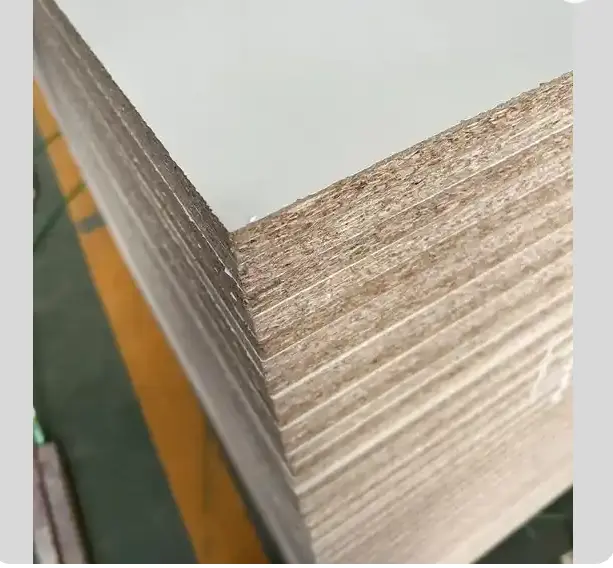
This is a critical detail that is sometimes overlooked, especially in projects that demand high precision, like high-end cabinetry or flush-fitting furniture. When you order a veneered mdf or a high-quality wood grain melamine MDF, you are getting a core MDF panel with a thin layer of decorative material bonded to its surface(s). This overlay, whether it’s a real wood veneer or a resin-impregnated paper (melamine), adds to the final dimension of the board.
A sheet of melamine paper, for example, might be fractions of a millimeter thick, but when it’s pressed onto both sides of an 18mm MDF core, the final thickness could be closer to 18.3mm or 18.5mm. While this seems like a tiny difference, it can be significant when calculating joinery or fitting hardware. If your design relies on a precise 18mm thickness, you need to account for this. As a supplier, we always clarify the nominal thickness of the core MDF board versus the finished thickness of the laminated panel. For any project where tolerances are tight, it’s a good practice to confirm the final, finished thickness of the sheet with your manufacturer.
What Should I Consider When Ordering Cut-to-Size MDF Panels?
Ordering cut to size panels is a fantastic way to streamline your production process, reduce labor costs, and minimize waste. Many manufacturers, including my factory, offer this service. However, to ensure you get exactly what you need, clear communication is key. The first step is providing precise dimensions. Don’t just ask for a "small sheet"; provide exact length and width measurements in millimeters or inches. It’s also wise to provide a cutting list or diagram, especially for complex projects with many different part sizes.
Another important factor to consider is the "kerf" of the saw blade. The kerf is the width of the cut made by the blade, which removes a small amount of material (usually 3-4mm). When planning your cuts from a standard sheet, you must account for the kerf to ensure all your pieces will fit. A good supplier will optimize the cutting pattern to maximize yield from each MDF board. Finally, specify the edge finish you require. Do you need a sharp, raw edge, or a slightly beveled one? Discussing these details upfront ensures that the panels arrive at your facility ready for assembly, saving you valuable time and effort. If you are looking for a reliable product, you can start with a Custom Raw Plain MDF Board.
Why is Core Density as Important as the MDF Sheet Size?
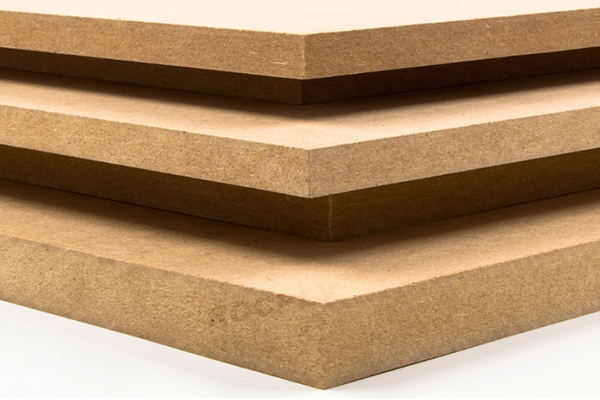
When people talk about MDF, they often focus on size and thickness, but the core density of the board is an equally critical factor that determines its performance. "Medium-Density Fiberboard" is a broad term. Within this category, the actual density can vary, impacting the panel’s weight, strength, and screw-holding capability. Generally, MDF density ranges from about 600 to 800 kg/m³. A higher density panel will be heavier, more durable, and offer a much better grip for screws and fasteners—a crucial attribute for building sturdy furniture.
There are also related products like LDF (Low-Density Fiberboard) and HDF (High-Density Fiberboard). HDF, or high density fiberboard, is even denser and harder than standard mdf, making it a popular choice for laminate flooring and applications requiring superior durability. When you place an order for MDF panels, especially for structural components like cabinet carcasses or load-bearing shelves, it’s worth asking about the core density. A slightly more expensive, high-density MDF board can significantly improve the quality and longevity of your finished product, providing better stability and resistance to wear and tear.
How Can a Builder Ensure Consistent Quality Across a Large MDF Order?
For a business owner like Mark, receiving a container of MDF where the quality varies from sheet to sheet is a major headache. It can lead to production delays, increased waste, and inconsistent product quality. As a manufacturer, I believe preventing these issues starts with clear communication and a robust quality control process. The first step is a detailed purchase order. Specify not just the MDF sizes and thicknesses, but also the required density, formaldehyde emission standard (e.g., CARB P2, E1, E0), and any special requirements like moisture resistance.
Second, don’t hesitate to request pre-production samples, especially when working with a new supplier or ordering a custom decorative finish. A physical sample of a melamine impregnated paper for MDF allows you to approve the color, texture, and finish before the full production run begins. Ask your supplier about their internal quality checks. How do they inspect for surface defects? How do they ensure uniform thickness and density? A reputable factory will have clear protocols and be happy to share them. By establishing these standards upfront, you create a partnership built on trust and a shared commitment to quality, ensuring every MDF sheet you receive meets your exact specifications.
Key Takeaways:
- Standard Size is Versatile: The most common MDF sheet size is 2440mm x 1220mm (8×4 ft), but oversized panels are available for specific needs.
- Thickness Dictates Use: Match the MDF thickness (3mm for backs, 18mm for furniture, 25mm for heavy shelves) to the application’s structural demands.
- Specialty Boards Solve Problems: Use Moisture Resistant MDF for humid areas like kitchens and bathrooms.
- Core Density Matters: Higher density MDF offers superior strength and screw-holding ability, crucial for durable furniture and cabinetry.
- Details are Crucial for Laminated Panels: Remember that a melamine or veneer laminate will add slightly to the overall thickness of the board.
- Communication is King: To ensure quality and consistency, provide detailed specifications, request samples, and discuss your supplier’s quality control processes. A clear plan prevents costly errors.
Post time: 07-08-2025