As a manufacturer in the wood-based panel industry, I’ve seen firsthand how Medium Density Fiberboard (MDF) has revolutionized everything from large-scale furniture production to intricate craft projects. My name is Allen, and from my factory in China, we ship high-quality MDF sheets across the globe to discerning clients like Mark Thompson in the USA. Mark, a savvy business owner, knows that the secret to a great product lies in the quality of the raw materials. He needs a smooth, reliable, and easy-to-paint wood alternative for building shelves, cabinets, and more. This article is for professionals like Mark and for anyone who wants to understand this incredible material. We’ll dive deep into MDF sheets, exploring everything from choosing the right thickness to achieving a perfect finish, so you can unlock the full potential of these versatile board sheets for your next project.
What Exactly Are MDF Sheets and How Are They Engineered?
First, let’s break down what an MDF sheet really is. MDF stands for Medium Density Fiberboard. It’s an engineered wood product, which means it’s man-made rather than being milled directly from a log. The process starts with wood residuals—the leftover bits from sawmilling operations. Instead of wasting this material, we break it down into tiny, individual wood fiber particles. These fibers are then mixed with a resin binder and wax, and this mixture is pressed into a large mat. Under immense heat and pressure, this mat is compressed into a dense, solid, and flat panel.
The result is a sheet of material that is incredibly consistent. Unlike natural wood, an MDF sheet has no grain, knots, or voids. Its density is uniform from the edge to the center and across the entire panel. This uniformity is its superpower. It provides an exceptionally smooth surface that is perfect for painting and laminating. When you see a perfectly painted kitchen cabinet door with a glass-like finish, there’s a very good chance it’s made from a high-quality MDF board.
In our factory, we have multiple production lines dedicated to creating these boards. We control every variable—the size of the fiber, the amount of glue, and the pressure—to ensure every sheet meets strict quality standards. This is crucial for our clients, who depend on this consistency for their own manufacturing processes, whether they are using a CNC machine or assembling products by hand.
How Does an MDF Sheet Compare to Plywood or Solid Wood?
This is a question I get all the time. Each material has its place, and choosing the right one depends on your project’s needs. Let’s compare MDF sheets to their common alternatives: plywood and solid wood lumber.
MDF vs. Plywood:
Plywood is made from thin layers, or "plies," of wood veneer that are glued together with their grains at right angles to one another. This cross-graining makes plywood very strong and resistant to warping. However, the edges of a plywood sheet can have voids and are often rough, requiring edge banding for a clean look. MDF, on the other hand, has a perfectly smooth and solid edge that can be machined and painted directly. While a sheet of plywood is generally stronger and holds screws better, MDF is denser, heavier, and has a superior surface for painting. For decorative panels or cabinet doors that require a flawless paint job, MDF is often the better choice.
MDF vs. Solid Wood:
Solid wood is beautiful and strong, with a natural grain that many people love. However, it’s also expensive and prone to warping, expanding, and contracting with changes in humidity. MDF sheets are far more dimensionally stable. A large MDF panel will stay flat where a solid wood board might cup or twist. It’s also significantly more affordable. The downside is that MDF is not as strong as solid wood and doesn’t handle moisture well unless it’s a specially treated, moisture-resistant grade. You can’t stain MDF like you would wood to reveal a grain, but you can achieve a much smoother painted finish.
| Feature | MDF Sheet | Plywood Sheet | Solid Wood |
|---|---|---|---|
| Surface Finish | Very Smooth | Grainy, potential voids | Natural Grain |
| Edge Finish | Smooth, Solid | Layered, can have voids | Solid, Grainy |
| Stability | Very Stable | Stable, resists warping | Prone to movement |
| Cost | Low | Medium | High |
| Best For | Painting, Cabinets, Shelves | Structural uses, Cabinets | Furniture, Stain finishes |
What Should You Look For in a High-Quality MDF Sheet?
Not all MDF sheets are created equal. As a procurement officer, Mark knows that the quality of the raw sheet directly impacts his final product and his bottom line. A low-quality panel can be difficult to machine, have a rough surface, and lead to more waste.
Here are the key indicators of a high-quality MDF sheet:
- Surface Smoothness: Run your hand across the sheet. It should feel completely smooth, almost like a sheet of paper. There should be no bumps, fibers, or rough patches. This is crucial for a good paint or melamine finish.
- Core Density: A good MDF sheet has a consistent density throughout its core. You can check this by looking at the edge. It should look uniform and compact. A "punky" or soft core is a sign of a low-quality panel that won’t machine well or hold screws effectively.
- Color: The color should be a consistent, light tan. Dark spots or significant color variations can indicate problems in the manufacturing process, such as improperly mixed fiber or overheating.
- Dimensional Accuracy: The sheet must be flat and consistent in thickness. Any reputable manufacturer will provide a sheet with very tight tolerances on both dimension and thickness.
When we produce our Plain/Raw Mdf Materials Board, we conduct rigorous quality control checks at every stage to ensure these characteristics are perfect. A good rating from a client comes from delivering a consistently excellent product, shipment after shipment.
Understanding MDF Sheet Thickness: Which Dimension Do You Need?
MDF sheets come in a wide range of thicknesses, and choosing the right one is critical for the success of your project. The thickness you need depends entirely on the application—what you’re building and how much strength it requires.
For common applications, here is a general guide to MDF sheet thickness:
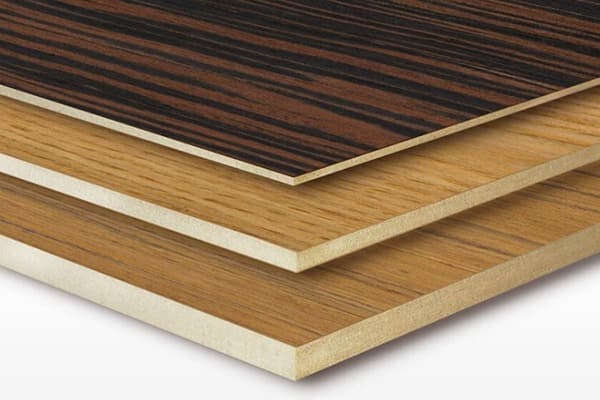
- 3mm (approx. 1/8"): This is a very thin sheet, sometimes called hardboard. It’s perfect for cabinet backs, drawer bottoms, craft projects, and as a substrate for veneers. Its light weight and flexibility make it easy to work with for these uses. Our 3mm 6mm 10mm 15mm 17mm 18mm Laminated Fiberboard MDF Board is a popular choice for decorative applications at this thickness.
- 6mm (approx. 1/4"): A bit more rigid than 3 mm, this thickness is great for more substantial craft projects, picture frames, and decorative paneling like wainscoting.
- 12mm (approx. 1/2"): This is where MDF starts to become structural. It’s a good choice for smaller shelves that won’t hold excessive weight, simple box construction, and smaller cabinet carcasses.
- 18mm (approx. 3/4"): This is the workhorse of the cabinet and furniture industry. It is the standard thickness for building sturdy cabinet boxes, doors, and long shelves. It offers excellent rigidity and strength for most furniture applications.
- 25mm (approx. 1 inch thick) and Thicker: Thicker sheets are used for substantial pieces like desktops, chunky floating shelves, and heavy-duty workbenches where maximum rigidity is needed.
When you order from a supplier, be sure to specify the exact size and thickness you need. We can produce a custom dimension to minimize waste for large-scale projects.
What are the Best Applications for Thin MDF Sheets in Craft Projects?
Thin sheets of MDF, especially in the 3mm to 6mm range, are a dream material for hobbyists and crafters. Their perfectly smooth surface, affordability, and how easily they can be cut into intricate shapes make them incredibly versatile. They are the go-to material for a huge variety of craft projects.
One of the most popular uses for thin MDF is in laser cutting and engraving. Because of its uniform density and lack of grain, MDF allows a laser to engrave text and images with incredible detail and cut out complex shapes with clean, sanded edges. This has opened up a world of possibilities for creating custom decorations, personalized signs, jewelry, and even detailed architectural models. If you’ve ever bought a custom-made wooden ornament online, it was likely cut from a thin MDF sheet.
Beyond laser cutting, these thin sheets are perfect for:
- Model Making: Building detailed scale models of buildings or vehicles.
- Picture Frames: The backing of almost every store-bought picture frame is made from a thin hardboard or MDF panel.
- Scrapbooking and Art: The rigid panel provides a stable base for paintings or mixed-media art.
- DIY Decorations: Cutting out letters, holiday shapes, and other decorative elements.
The fact that it is so easy to paint makes it a favorite. A quick coat of primer and a couple of coats of acrylic craft paint result in a vibrant, professional-looking finish.
Why are Thicker MDF Panels Ideal for Building Shelves and Cabinets?
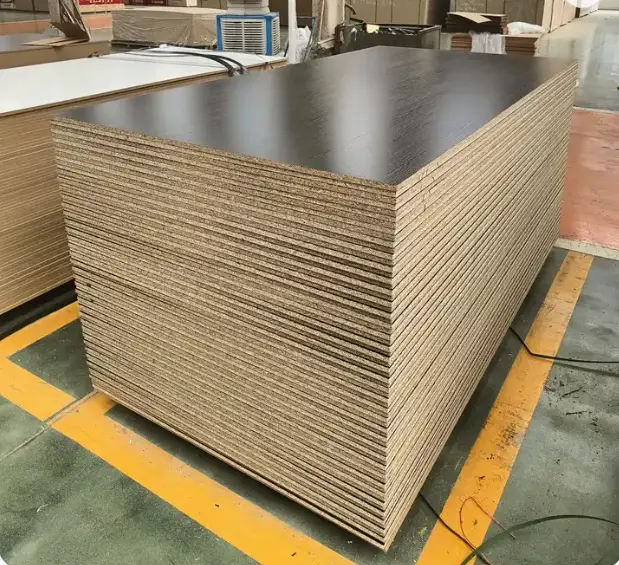
When you move up to thicker MDF panels, like 12mm and especially 18mm, the material’s properties make it ideal for more structural applications like shelves and cabinet construction. The main advantage here is rigidity. A thicker MDF sheet is incredibly resistant to sagging under weight, which is a critical requirement for bookshelves or kitchen cabinets loaded with dishes.
For shelves, an 18mm MDF panel can span a respectable distance without needing a central support. For very long spans, it’s easy to reinforce the edge by gluing on a strip of solid wood or another piece of MDF to create a stronger T-beam shape. This combination of affordability and performance is why MDF is the default choice for shelving in homes, retail stores, and offices.
In cabinetry, MDF excels. Its dimensional stability means that large cabinet doors will remain flat and true over time, unlike solid wood which can warp. The smooth surface and solid edges are perfect for modern kitchen designs that require a flawless, high-gloss paint or melamine finish. We supply vast quantities of 18mm MDF to furniture manufacturers who use CNC machines to cut out all the components for a kitchen’s worth of cabinets from a single stack of sheets with incredible precision. The result is a durable, high-quality cabinet at a fraction of the cost of solid wood.
How Are MDF Sheets Packed and Shipped to Prevent Damage?
For an international B2B supplier like myself, getting the product to the customer safely is just as important as manufacturing it. A business owner like Mark can’t afford to receive a shipment of damaged goods. MDF sheets, while dense, can be susceptible to damage on their corners and edges if not handled properly. This is why our packing and shipping process is so rigorous.
Typically, MDF sheets are stacked on a wooden pallet. The first layer of protection is often a "sacrificial" sheet of hardboard or MDF on the very bottom and very top of the stack. This protects the usable sheets from forklift damage or moisture from the pallet. The corners of the entire stack are then protected with heavy-duty cardboard or plastic corner protectors. This is the most critical step, as corners are the most vulnerable part of the sheet.
The entire stack, with its corner protection, is then tightly bound with multiple steel or plastic straps to prevent the sheets from shifting during transit. Finally, the entire pallet is often shrink-wrapped. This provides a final layer of protection against moisture and keeps the whole package secure. Whether we ship by sea container or truck, this method ensures that the MDF sheets arrive at their destination flat, clean, and with crisp, undamaged edges, ready for production.
Can You Engrave and Laser Cut an MDF Sheet with Precision?
Absolutely. In fact, MDF is one of the best and most popular materials for both CNC routing and laser cutting. This is due entirely to its engineered uniformity. The lack of grain means that a cutting tool, whether it’s a spinning router bit or a focused laser beam, encounters the same density and resistance at every point on the sheet. This allows for an unparalleled level of precision and detail.
With laser cutting, you can cut out incredibly intricate patterns, lace-like designs, and sharp-cornered letters from a thin MDF sheet with a clean, dark-brown edge. The laser vaporizes the material, leaving behind a slightly sealed edge that requires minimal cleanup. You can also engrave highly detailed graphics and text onto the surface. The laser burns away the top layer of the MDF, creating a contrasted, recessed image. This process is used extensively for making signs, awards, and personalized products.
CNC routing is more common for thicker MDF sheets. A CNC machine can carve 3D designs, cut out perfectly shaped furniture parts, and engrave large-scale lettering. Because the MDF is so consistent, the machine can run at high speeds with predictable results every time. This precision is essential for modern carpentry and manufacturing, allowing for complex designs and perfect-fit joinery that would be nearly impossible to achieve by hand.
What’s the Best Way to Finish an MDF Sheet for a Smooth Surface?
Achieving a professional finish on MDF is all about sealing the material properly, especially the edges. The faces of an MDF sheet are already very smooth, but the cut edges are porous and will soak up paint like a sponge if not treated.
Here is the professional, no-fail process to get a perfect finish:
- Sand the Edges: Start by lightly sanding any cut edges with 220-grit sandpaper. The goal is just to knock down any loose fibers and create smooth edges. Don’t over-sand the faces; they rarely need it.
- Seal the Edges: This is the most important step. Apply a coat of wood glue, drywall compound, or a specialized MDF primer to the cut edges. Use your finger or a small putty knife to work it into the porous surface. Let it dry completely.
- Sand the Sealant: Once dry, sand the sealed edges again until they are perfectly smooth and flush with the rest of the panel. You should now have a hard, non-porous edge.
- Prime Everything: Apply a coat of high-quality solvent-based or water-based wood primer to the entire piece—faces and edges. A solvent-based primer is often preferred as it won’t raise the wood fibers at all.
- Final Sand and Paint: After the primer is dry, give the entire piece a final, very light sanding with fine-grit sandpaper (320-grit). This scuffs the surface just enough for the topcoat to adhere perfectly. Now you are ready to apply your color coats. Following these steps is the only way to get that durable, glass-smooth finish that makes MDF projects look so professional.
Are There Different Grades or Ratings of MDF to Consider?
Yes, there are several different grades and types of MDF, and understanding them is key to choosing the right material and ensuring safety. The differences usually relate to density, strength, and resistance to environmental factors.
The most important rating for interior use, especially in North America and Europe, relates to formaldehyde emissions. The resins used as a binder in MDF can release tiny amounts of formaldehyde gas. To ensure air quality and safety, regulatory bodies have established standards.
- CARB P2: This is the standard set by the California Air Resources Board and is one of the strictest in the world. It is the required standard for any product sold in California and has been widely adopted across the US.
- E1/E0: These are European standards, with E0 having the lowest formaldehyde emissions.
Beyond emissions, you can find specialized MDF sheets:
- Moisture-Resistant (MR) MDF: This type is made with a special moisture-repellent resin, making it suitable for use in high-humidity areas like bathrooms and kitchens. It is often identifiable by a green tint.
- Fire-Retardant (FR) MDF: This grade has fire-retardant additives mixed in during manufacturing and is required for certain commercial building applications. It often has a pink or red tint.
- Ultralight MDF: This is a lower-density version that is significantly lighter, making it easy to use for projects where weight is a primary concern, such as trade show exhibits or film sets.
As a supplier, we provide detailed technical data sheets for all our products, including their rating for emissions, density, and strength. This allows our clients to choose the perfect MDF panel for their specific needs, ensuring both safety and performance. We also offer decorative surfaces like our good quality melamine paper for plywood which can be laminated directly onto these various MDF grades.
Key Takeaways for Working with MDF Sheets
- MDF is a Versatile Wood Alternative: Its smooth, grain-free surface and consistent density make it superior to plywood and solid wood for projects requiring a painted finish.
- Choose the Right Thickness: Use thin sheets (3mm-6mm) for crafts and laser cutting, and thicker panels (18mm+) for sturdy shelves and cabinets.
- Quality Matters: Look for a sheet with a smooth surface, uniform color, and a dense, compact core for the best results.
- Perfect for Precision Cutting: MDF is an ideal material for detailed work with CNC machines and laser cutters due to its lack of wood grain.
- Edge Sealing is Non-Negotiable: To get a professional painted finish, you must seal the porous cut edges with glue or primer before applying your final color coats.
- Know Your Grades: Always check the formaldehyde emission rating (like CARB P2 or E1) for safety, and consider specialized grades like Moisture-Resistant MDF for kitchens or bathrooms.
Post time: 09-03-2025