Medium-Density Fiberboard, commonly known as MDF, is a cornerstone building material in modern furniture manufacturing, interior design, and home improvement projects. But what exactly is it? How does it compare to traditional solid wood or even plywood? If you’re like Mark Thompson, a discerning company owner or procurement officer sourcing materials for furniture or cabinet making, understanding the nuances of MDF is crucial for making cost-effective and quality-driven decisions. This ultimate guide delves deep into the world of MDF, exploring its composition, manufacturing process, pros and cons, applications, and how it stacks up against alternatives like solid wood. We’ll provide the insights you need to make an informed decision for your next project, drawing on our extensive experience as a manufacturer (like Allen’s factory) specializing in MDF and decorative surfaces. Reading this will equip you with the knowledge to confidently choose the right wood product for your specific needs.
What Exactly Is Medium-Density Fiberboard (MDF)?
Medium-Density Fiberboard (MDF) is a versatile engineered wood product. Think of it as a high-performance panel made from wood fibers, primarily softwood or hardwood residuals, combined with resin (typically urea-formaldehyde) and wax, and then pressed under high temperature and pressure. This process creates a dense, stable, and uniform panel without the natural grain patterns, knots, or voids found in solid wood. The result is a consistent building material known for its smooth surface.
Unlike solid wood, which is milled directly from logs, MDF is meticulously engineered. It falls under the category of fiberboard, which includes other products like particle board (lower density) and hardboard (higher density). MDF hits that sweet spot – medium density – making it strong yet workable. Its uniformity makes it an excellent substrate for veneers, laminates (like melamine), and paint, making it a popular choice in the furniture and cabinetry industries globally, including major markets like the USA and Europe. Understanding this basic composition is the first step for procurement professionals like Mark when evaluating material costs and suitability.
The term "medium-density" specifically refers to the panel’s density, typically ranging from 600 to 800 kg/m³ (about 37 to 50 lb/ft³). This density gives MDF its characteristic weight and stability. It’s heavier than most solid wood and plywood of the same dimensions. This engineered consistency is precisely what makes MDF appealing for applications requiring precision and smooth finishes, something difficult to achieve consistently with natural wood due to its inherent variations.
How is MDF Made? A Peek Behind the Production Curtain
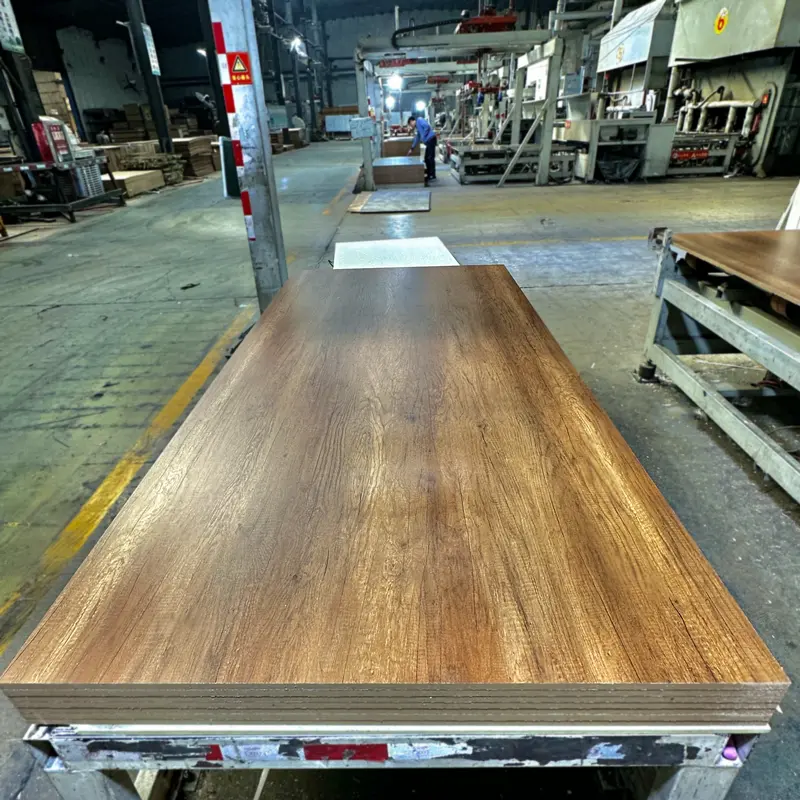
The manufacturing process of MDF is quite fascinating and highlights the "engineered" aspect of this wood product. It begins with wood residuals – often chips and shavings from sawmills, or specifically harvested pulpwood – which are broken down into fine wood fibers in a defibrator machine. This process ensures that the resulting fibre is consistent in size, which is crucial for the final board’s uniformity. These fine particles are the fundamental building blocks of MDF.
Next, these wood fibres are mixed with a synthetic resin binder (commonly urea-formaldehyde, though lower emission options like E1/E0 or CARB P2 compliant resins are standard in quality production for markets like the USA) and a small amount of wax. The wax improves moisture resistance. This mixture is then dried to a specific moisture content before being laid out into a thick mat. This mat enters a large press where it’s subjected to intense heat and pressure. This step cures the resin and compresses the fibres together, forming a dense, solid panel – the MDF board.
After pressing, the large MDF sheets are cooled, sanded to achieve a precise thickness and exceptionally smooth surface, and finally cut into standard or custom dimensions. Quality control is paramount throughout, checking for density, thickness tolerance, surface quality, and formaldehyde emissions. As manufacturers like us (Allen’s factory) know, maintaining consistency across batches is key to satisfying clients like Mark, who rely on predictable material properties for their production lines. This meticulous process ensures that MDF offers a reliable and consistent alternative to solid wood. Explore our range of Factory Price Wood Grain Melamine MDF Board to see the finished results.
MDF vs. Solid Wood: What’s the Real Difference for Your Project?
Comparing MDF vs. solid wood is essential for anyone involved in furniture making, cabinetry, or interior design. The most obvious difference lies in their origin and structure. Solid wood is natural lumber, milled directly from trees. Each piece of wood is unique, boasting distinct wood grains, knots, and color variations. Solid wood consists of natural wood fibres held together by lignin. MDF, on the other hand, is an engineered wood product, made from wood fibers bonded with resin under pressure, resulting in a uniform, dense panel with no natural grain or knots.
This structural difference leads to key variations in properties and performance. Solid wood is generally prized for its natural beauty and strength and durability, especially along the grain. However, it’s susceptible to environmental changes – it can expand, contract, warp, or even crack with fluctuations in humidity and temperature. MDF, being engineered, is much more dimensionally stable. It doesn’t warp or crack like solid wood does. Its smooth surface is perfect for painting, laminating, or applying a wood veneer, allowing for flawless finishes that can be harder to achieve on natural wood with its inherent grain patterns.
However, MDF has its own set of considerations. It’s typically heavier than solid wood. While strong, MDF lacks the same screw-holding strength as solid wood, especially on the edges, and it’s more prone to sag over long spans when used for shelves without adequate support. Perhaps the most significant difference, especially for Mark’s concerns, is moisture resistance. Standard MDF absorbs water readily (like a sponge!) if not properly sealed, causing it to swell and lose structural integrity. While moisture-resistant (MR) MDF is available, solid wood generally handles incidental moisture damage better, though prolonged exposure affects both. Cost is also a major factor; MDF is usually significantly more affordable than most species of solid wood, making it a budget-friendly choice for furniture and cabinet components.
How Does MDF Stack Up Against Plywood?
Another common comparison is MDF vs. plywood. Both are engineered wood products, but they are constructed very differently, leading to distinct characteristics. Plywood is made by layering thin sheets of wood veneer (plies) with the grain direction alternating for each layer. These layers are bonded together with adhesive under heat and pressure. This cross-grain construction gives plywood excellent strength and durability in multiple directions and good dimensional stability, making it resistant to warping and cracking, similar to MDF in that regard, but often considered stronger structurally.
MDF, as we know, is made from wood fibers, creating a very dense and uniform core. This uniformity is MDF‘s key advantage over plywood. Plywood layers can sometimes have internal voids or inconsistencies, and its edges reveal the layered structure, which might require edge banding or filling for a smooth finish. MDF, conversely, has smooth, easily machinable edges and that signature perfectly smooth surface, ideal for painting or applying thin laminates or veneers without the risk of the underlying grain pattern showing through (telegraphing), which can sometimes happen with plywood.
When it comes to applications, plywood is often preferred for structural components like subflooring, roof sheathing, and cabinet boxes due to its strength-to-weight ratio and screw-holding ability. MDF shines in applications where a smooth finish and intricate shaping are desired, such as cabinet doors, decorative panels, mouldings, and furniture components that will be painted or laminated. Compared to plywood, MDF is generally heavier and less resistant to moisture unless specifically treated (MR MDF). Cost-wise, MDF is often less expensive than plywood, especially higher grades of plywood. For Mark, deciding between MDF and plywood often comes down to whether the application prioritizes structural strength (plywood) or a superior surface finish and cost-effectiveness (MDF).
What are the Major Pros of Using MDF in Furniture and Cabinets?
MDF offers several compelling advantages that make it a popular choice for many furniture manufacturers, cabinet makers like Mark, and DIY enthusiasts involved in home improvement. One of the most significant benefits is its cost-effectiveness. MDF is generally much less expensive than solid wood and often cheaper than plywood, allowing for lower material costs without significantly compromising on appearance for many applications, especially when finished with paint or veneer.
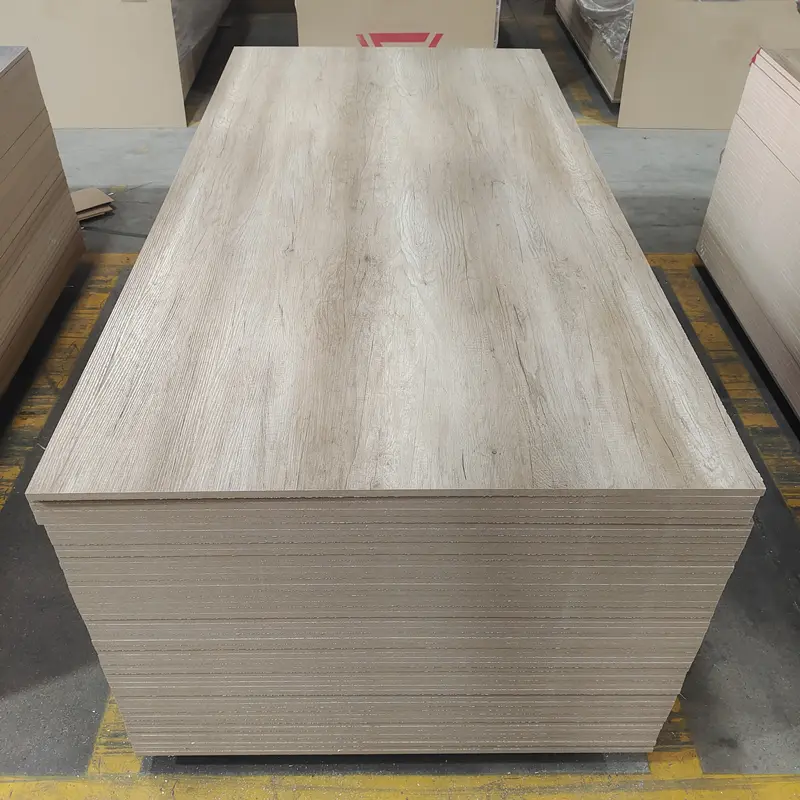
Another major pro is its exceptional surface quality. The manufacturing process results in an incredibly smooth surface, free from knots, voids, and the distinct wood grains found in solid wood. This makes MDF an ideal substrate for painting, providing a flawless finish that’s difficult to achieve directly on natural wood. It’s also perfect for applying thin laminates, melamine papers (like those our factory produces), and wood veneers, as the uniform surface prevents any underlying texture from showing through. This consistent surface is a huge plus for achieving modern, sleek designs in kitchen cabinets and furniture.
Furthermore, MDF boasts excellent dimensional stability. Unlike solid wood, it doesn’t expand, contract, or warp significantly with changes in temperature and humidity. This stability is crucial for applications like cabinet doors where tight tolerances are required. MDF is also very consistent; each board is virtually identical in density and properties, which simplifies manufacturing processes. Its uniform composition allows for intricate machining, routing, and shaping without the risk of splintering or chipping that can occur with solid wood or even plywood edges. This workability allows for creative designs and detailed profiles, making MDF is a great material for decorative elements.
Are There Significant Cons to Consider Before Choosing MDF?
Despite its advantages, MDF isn’t without its drawbacks, and it’s crucial to be aware of these potential issues before committing to use MDF. One primary concern is its susceptibility to moisture. Standard MDF absorbs water readily if its surfaces or edges are not thoroughly sealed. When exposed to high moisture, it can swell, weaken, and essentially disintegrate, losing its structural integrity. This makes standard MDF unsuitable for applications in high moisture areas like bathrooms or for exterior use unless it’s a specifically formulated moisture-resistant (MR) grade. Even MR MDF requires careful sealing.
Another consideration is the weight. MDF is a dense material, making it significantly heavier than solid wood and most plywood of the same thickness. This weight can make handling large MDF sheets difficult and adds considerable weight to furniture pieces, potentially requiring stronger hardware or support structures. Additionally, while MDF is strong, it can sag under load over time, especially over long spans like shelves, more so than plywood or solid wood. Reinforcement is often necessary for load-bearing applications.
Finally, there are considerations regarding health and repairs. MDF contains formaldehyde-based resins, although reputable manufacturers adhere to strict emission standards like CARB P2 or E1/E0, especially for exports to the USA and Europe. Cutting and sanding MDF produces very fine particles of sawdust, requiring good ventilation and respiratory protection. Repairing damaged MDF can also be tricky; dents and deep scratches are harder to fix invisibly compared to solid wood, and stripped screw holes are a common issue if not handled carefully. MDF doesn’t hold screws as tenaciously as solid wood, particularly on the edges.
When Should You Definitely Use MDF (and When Should You Avoid It)?
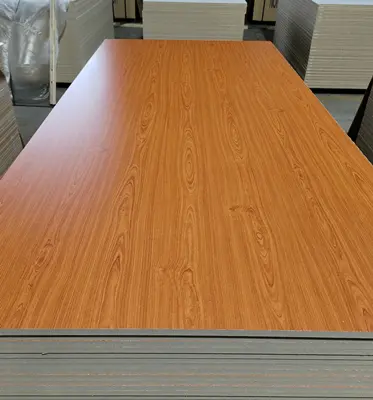
Knowing the pros and cons helps determine the best applications for MDF. You should definitely consider using MDF when a smooth, paintable surface is your top priority. It’s an excellent choice for furniture components like painted cabinet doors, drawer fronts, decorative panels, mouldings, and non-structural furniture parts. Its stability makes it ideal for environments with controlled humidity. If you’re applying veneer or melamine, MDF provides a perfect substrate. It’s also a good material for projects requiring intricate routing or shaping due to its uniform density and lack of grain. Budget-conscious projects often benefit greatly from using wood alternatives like MDF, especially for interior applications where solid wood‘s cost isn’t justifiable. Check out options like Melamine MDF board panel for pre-finished solutions.
Conversely, there are situations where you should avoid MDF, or at least standard grades of it. Steer clear of MDF for outdoor projects or in areas exposed to high levels of moisture or direct water contact (like shower surrounds or countertops near sinks), unless you are using a specialized exterior or marine-grade MDF and employing rigorous sealing techniques. For structural applications requiring high strength-to-weight ratio or significant load-bearing capacity over long spans (like primary structural beams or heavily loaded shelves), plywood or solid wood are generally better choices.
If you desire the natural beauty of exposed wood grains, MDF isn’t the right material, although a wood veneer can be applied. For furniture expected to endure heavy wear and tear or frequent relocation, the weight and potentially lower screw-holding strength of MDF compared to solid wood might be drawbacks. Furniture made from solid wood can often be refinished multiple times, extending its lifespan, which is harder with MDF. Ultimately, the decision hinges on balancing cost, desired finish, structural requirements, and environmental exposure.
Can You Paint or Finish MDF Easily?
Absolutely! One of the standout features of MDF is how well it takes paint and other finishes. Its incredibly smooth surface, free from the grain patterns and knots of solid wood, provides an ideal canvas. Achieving a high-quality, glass-smooth painted finish on MDF is often easier and requires less prep work than achieving the same on natural wood. This makes MDF a favorite for painted kitchen cabinets, furniture, and decorative trim.
Before painting, it’s crucial to properly prepare the MDF. The surface itself is smooth, but the edges are more porous and tend to absorb paint differently. It’s recommended to lightly sand the surface and especially the edges, then apply a good quality primer specifically designed for MDF or a general-purpose wood primer. Sealing the edges, perhaps with wood glue diluted slightly with water or a specialized edge sealer before priming, can help achieve a uniform finish. Using a primer ensures better paint adhesion and a more consistent final color.
Once primed, MDF can be painted using various methods – brushing, rolling, or spraying – with latex, acrylic, or oil-based paints. Spraying generally yields the smoothest result. Beyond painting, MDF is also an excellent substrate for wood veneer, high-pressure laminates (HPL), and melamine papers. These finishes adhere well to the smooth, stable surface, allowing MDF to mimic the appearance of solid wood or offer a vast variety of styles and colors, as seen in many melamine faced MDF board options. Proper finishing not only enhances aesthetics but also seals the MDF, improving its resistance to humidity.
Is MDF a Sustainable or Eco-Friendly Choice?
The environmental credentials of MDF are a topic of discussion, with points both for and against its sustainability. On the positive side, MDF is often made from wood residuals – recycled fibers, shavings, and offcuts from other wood processing operations. This means it utilizes parts of the tree that might otherwise be wasted, promoting more efficient use of timber resources compared to solid wood furniture that requires milling large piece of wood. Some MDF manufacturers also source fibre from sustainably managed forests and may carry certifications like FSC (Forest Stewardship Council).
However, there are environmental concerns primarily related to the resin binders used, typically urea-formaldehyde (UF). Formaldehyde is a volatile organic compound (VOC) that can off-gas from MDF products, potentially impacting indoor air quality. This is a significant concern for health-conscious consumers and regulators, particularly in the US and Europe. To address this, stringent emission standards like CARB P2 (California Air Resources Board) and European E1/E0 standards have been established. Reputable manufacturers, especially those exporting to these regions, produce low-emission or even no-added-formaldehyde (NAF) MDF using alternative resins (like MDI or PVA). When sourcing MDF, it’s crucial for buyers like Mark to verify compliance with these standards.
The energy required for the manufacturing process (breaking down fibers, pressing) is also considerable. Transportation impacts depend on sourcing locations. While MDF promotes efficient using wood fiber, its reliance on synthetic resins and energy consumption means its overall eco-friendliness depends heavily on responsible sourcing, adherence to emission standards, and options for end-of-life recycling, which can be challenging due to the mixed composition. Choosing MDF with low-VOC or NAF resins and FSC certification represents a more sustainable wood alternative.
How Can You Ensure Quality When Sourcing MDF or Melamine Faced Boards?
For procurement professionals like Mark Thompson, ensuring consistent quality when sourcing MDF or value-added products like melamine faced MDF board from overseas suppliers is critical. Quality variations can disrupt production schedules and impact the final product’s integrity and appearance. The first step is clear communication and detailed specifications. Define requirements for density, thickness tolerance, dimensional accuracy, surface smoothness, core quality (uniformity, absence of voids or contaminants), and especially formaldehyde emission standards (e.g., CARB P2, E1).
Requesting certifications is vital. Ask potential suppliers for documentation proving compliance with relevant standards (CARB P2, E1/E0, potentially FSC for responsible sourcing). Reputable manufacturers should readily provide these. Don’t hesitate to ask for batch testing results or third-party verification reports. For melamine-faced boards, pay close attention to the lamination quality – check for adhesion, surface defects (scratches, bubbles), color consistency across batches, and print accuracy for decorative papers. Specify the type and weight of the melamine paper used.
Establishing a robust quality inspection process is key. This might involve pre-shipment inspections (either by your own team, a trusted agent, or a third-party inspection service) to verify specifications before the goods leave the factory. Inspecting samples from the actual production run is more reliable than relying solely on initial samples. Building a long-term relationship with a reliable supplier who understands your quality expectations and maintains consistent production standards, like our factory strives to do, can mitigate many potential issues. Discussing moisture content specifications and packaging requirements to prevent damage during transit (especially crucial for MDF due to its moisture damage sensitivity) is also important.
Making an Informed Decision: Is MDF Right for You?
Choosing between MDF, solid wood, and plywood ultimately depends on the specific requirements of your project, your budget, and your priorities. MDF offers a compelling combination of affordability, stability, and an exceptionally smooth surface that’s perfect for painted finishes, veneers, and laminates. It’s an excellent choice for furniture components like cabinet doors, drawer fronts, decorative panels, and shelving in controlled environments. Its workability allows for intricate designs not easily achieved with natural wood.
However, you must weigh these benefits against its drawbacks: lower moisture resistance (for standard grades), higher weight, potential to sag under load without support, and lower screw-holding strength compared to solid wood or plywood. Concerns about formaldehyde emissions should be addressed by sourcing MDF that meets stringent standards like CARB P2 or E1/E0. MDF is not the ideal choice for structural applications requiring maximum strength or for projects exposed to high moisture or outdoor conditions.
For buyers like Mark, the decision involves balancing material costs, performance characteristics, and aesthetic goals. If a flawless painted finish or consistent laminate application is key, and the application isn’t overly demanding structurally or exposed to moisture, MDF is often the most practical and economical good material. If the natural beauty and character of wood grains are paramount, or if maximum strength and durability are needed, solid wood or high-quality plywood might be worth the investment. By understanding the distinct properties of each type of engineered wood and natural lumber, you can confidently make an informed decision that ensures the success and longevity of your piece of furniture or cabinetry project.
Key Takeaways:
- MDF (Medium-Density Fiberboard) is an engineered wood product made from wood fibers, resin, and wax, known for its smooth surface and stability.
- Pros of MDF: Cost-effective, exceptionally smooth surface ideal for paint/veneer, dimensionally stable (resists warping), consistent quality, easily machinable.
- Cons of MDF: Susceptible to moisture damage (standard grade), heavy, can sag under load, lower screw-holding strength than solid wood, contains formaldehyde (ensure low-emission standards).
- MDF vs. Solid Wood: MDF is cheaper, smoother, more stable but less strong, heavier, and lacks natural grain. Solid wood is beautiful, strong but pricier and prone to movement.
- MDF vs. Plywood: MDF has a smoother surface/edges, better for painting/laminating. Plywood is generally stronger, lighter, holds screws better, and often preferred for structural uses.
- Best Uses for MDF: Painted cabinet doors, furniture components, decorative panels, mouldings, substrate for veneer /laminates.
- Avoid MDF: For outdoor use, high moisture areas, primary structural components, or when natural wood grain is desired.
- Quality Assurance: Specify standards (CARB P2/E1), request certifications, conduct inspections, and partner with reliable suppliers.
Post time: 04-30-2025