As a manufacturer in the wood-based panel industry, I’ve seen firsthand how the right material can make or break a project. For business owners and procurement officers like Mark Thompson in the USA, choosing the perfect panel is about more than just looks—it’s about performance, reliability, and the bottom line. Medium-Density Fiberboard, or MDF, is often at the center of these decisions. This article is your comprehensive guide to understanding MDF wood texture, from the raw, unfinished board to the stunning, durable melamine finishes that define modern furniture and interiors. We’ll explore what to look for, how it’s made, and how to leverage its unique properties to ensure your final product is nothing short of excellent.
What Exactly is an MDF Wood Texture?
When we talk about an MDF wood texture, it’s important to know we could be discussing two very different things. First, there’s the texture of the raw MDF board itself. As my team and I work with these panels daily, I can tell you it’s a uniquely smooth, dense, and uniform surface. Unlike natural wood, it has no knots, rings, or grain direction. This consistency is its greatest strength. It’s a blank canvas, engineered from fine wood fibers, perfect for precision machining and painting.
The second, and more common, meaning refers to a decorative surface applied to an MDF core. This is where the magic happens. Through advanced lamination technology, we can press a paper layer with a printed wood grain design onto the fiberboard core. The result is a panel that has the beautiful appearance of oak, walnut, or maple but with the stability and cost-effectiveness of MDF. This decorative layer can even have a physical texture embossed into it, mimicking the feel of real wood grain or other materials.
So, whether you’re sourcing raw boards for a paint-grade project or finished panels for cabinet construction, understanding which MDF texture you need is the first step. The raw board offers unparalleled smoothness, while the laminated board provides endless aesthetic possibilities.
How is Raw MDF Made and Why Does its Texture Matter?
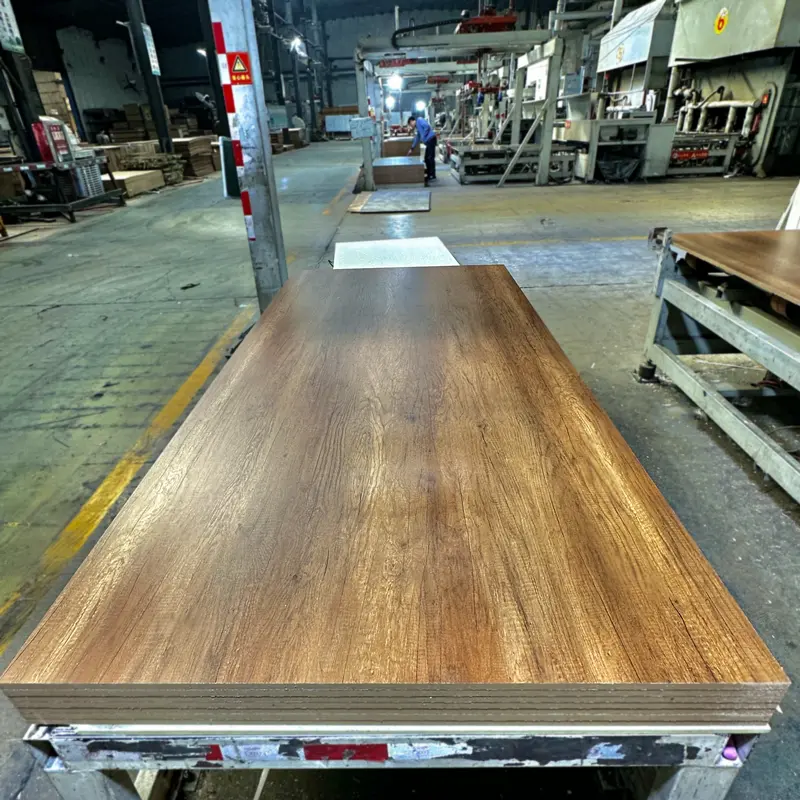
As a factory owner, I find the process of creating MDF fascinating. It’s a testament to modern engineering. We start with residual hardwood or softwood fibers. Think of it as recycling wood that might otherwise go to waste. These tiny fibers are mixed with wax and a resin binder and then subjected to intense heat and pressure. This process fuses the fibers into a dense, solid, and flat panel. The result is medium-density fiberboard, a material celebrated for its consistency.
The texture of this raw board is its defining feature. Because it’s made from fine, broken-down fibers rather than layers of veneer like plywood, the surface is incredibly smooth and uniform. There are no voids, splinters, or unpredictable grain patterns to contend with. Why does this matter for a furniture manufacturer or an interior designer? It means you get a perfect finish every time. When you cut or rout it, the edges are clean and sharp. When you paint it, the paint goes on evenly without needing extensive sealing or priming. This flawless texture saves time, reduces waste, and ensures a high-quality end product.
For any building project where a painted finish is desired—from kitchen cabinets to decorative wall panels and architectural moldings—the smooth, inert nature of a raw MDF board is simply unbeatable. It provides a level of predictability and perfection that natural wood cannot always guarantee.
Can You Get a Natural Wood Grain Texture on MDF?
This is a question I hear often, especially from clients accustomed to working with solid wood or plywood. The answer is a resounding yes, and the method is what has revolutionized the furniture and design industries. While a raw MDF board itself lacks a natural grain, its perfectly smooth surface is the ideal substrate for applying one. We achieve this by laminating a decorative paper layer onto the board.
This process involves using high-quality decorative melamine impregnated paper, which has been printed with a high-resolution image of a specific wood grain. The level of detail is extraordinary; modern printing can capture every subtle nuance of color and pattern found in species like white oak, rich cherry, or contemporary ash. The paper is saturated with melamine resin and then thermally fused to the MDF core. This creates a permanent, durable bond.
The result is a panel that offers the best of both worlds: the stunning aesthetic of natural wood and the superior engineering properties of MDF. For businesses that need to produce dozens or even hundreds of identical cabinet doors or furniture pieces, this is a game-changer. You get absolute consistency in color and pattern from one board to the next, eliminating the expensive and time-consuming process of matching solid wood boards.
What is a Seamless MDF Texture and Why is it Crucial for Designers?
The concept of a "seamless" texture is vital in modern design, and it applies to both the physical and digital worlds. In the physical sense, a seamless design means that when you place two panels side-by-side, the pattern continues flawlessly across the joint. This is particularly important for large applications like feature walls, long countertops, or extensive cabinetry in a commercial building. Achieving this with natural wood is incredibly difficult and expensive. With our printed wood grain melamine MDF boards, the pattern is designed to be repeatable, allowing for a beautiful, uninterrupted visual flow.
In the digital realm, a seamless texture is even more critical. Architects, interior designers, and 3D artists rely on digital texture maps to create realistic renderings of their projects before a single board is ever cut. A seamless digital texture file can be "tiled" or repeated across a large virtual surface without any visible edges or breaks in the pattern. This allows an architect to accurately visualize how a specific wood grain will look on a kitchen island or an entire office wall.
As a manufacturer, we understand this dual need. We ensure our physical products match the high-resolution digital samples we provide. This synergy between the real and virtual product allows designers to specify our materials with confidence, knowing the final installation will precisely match their digital vision. This attention to detail is what separates a good supplier from a great one.
How Does Melamine Facing Create a Durable Wood Texture on MDF?
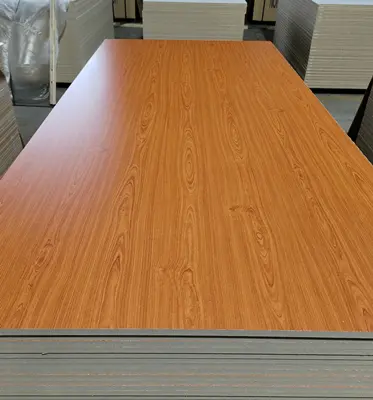
The beautiful wood texture on a melamine-faced board isn’t just painted on; it’s part of a robust, multi-layer system. The process, which we have perfected across our production lines, is key to the product’s durability. It starts with the decorative paper printed with the wood design. This paper is then impregnated with melamine resin, a type of thermosetting plastic. This step is crucial, as the resin provides the strength and resilience.
This resin-saturated paper is then placed on a raw MDF core and put into a large press. Under immense heat and pressure, the melamine resin cures and permanently fuses with the MDF board. During this process, a textured steel plate, or "press plate," can be used to emboss a physical texture into the surface, perfectly matching the visual grain. This is how we create finishes that not only look but also feel like real wood. The final material is a composite panel with a hard, sealed, and incredibly durable finish.
This melamine surface is resistant to scratches, stains, heat, and moisture, making it ideal for high-traffic applications like kitchen cabinets, office furniture, and retail displays. Unlike a simple veneer or lacquer, the melamine face is non-porous and easy to clean, ensuring the furniture or wall panel maintains its appearance for years. It’s a highly engineered solution that delivers both beauty and brawn.
MDF vs. Plywood: Which Offers a Better Surface Texture for Finishing?
This is a classic debate in the workshop, and the answer truly depends on the desired final look and application. As a producer of various panel products, including melamine laminated particle board, I have a clear perspective on the strengths of each. Plywood is made from thin layers of wood veneer, so its surface is actual wood, with a natural grain and texture. For projects requiring a stained finish where the real wood grain is meant to be the star, plywood is an excellent choice. However, its surface can be inconsistent, with variations in the grain and the potential for small knots or rough patches that require sanding and prep work.
MDF, on the other hand, presents a perfectly uniform and non-directional surface. It is the undisputed champion for painted finishes. There’s no wood grain to "telegraph" through the paint, which means you can achieve a flawless, glass-smooth finish with minimal effort. This makes it the preferred material for modern, high-gloss kitchen doors or sleek, painted furniture.
When it comes to laminated finishes, MDF again has the edge. Its stable and smooth core provides the perfect base for applying melamine or high-pressure laminates, ensuring a bubble-free and perfectly flat result.
| Feature | Raw MDF | Plywood |
|---|---|---|
| Surface Texture | Exceptionally smooth, consistent, no grain | Natural wood grain, can be inconsistent |
| Best For Painting | Excellent, provides a flawless finish | Fair, grain can show through paint |
| Best For Staining | Not suitable for staining | Excellent, absorbs stain to show real wood |
| Machinability | Superior, cuts cleanly with no splintering | Good, but can splinter at the edges |
| Consistency | High, every board is nearly identical | Varies from sheet to sheet |
| Cost | Generally more cost-effective | Generally more expensive |
For procurement professionals like Mark, the choice often comes down to balancing aesthetic goals with production efficiency. For consistent, high-volume production, the predictability of MDF is a powerful advantage.
What Should You Look for When Inspecting MDF Texture Quality?
For any business owner whose reputation rests on the quality of their finished products, proper material inspection is non-negotiable. This is a key concern I discuss with my clients, as a small defect in a panel can cause major headaches down the line. When you receive a shipment of MDF, whether raw or melamine-faced, here is a practical checklist based on what my own QC teams look for.
For Raw MDF Boards:
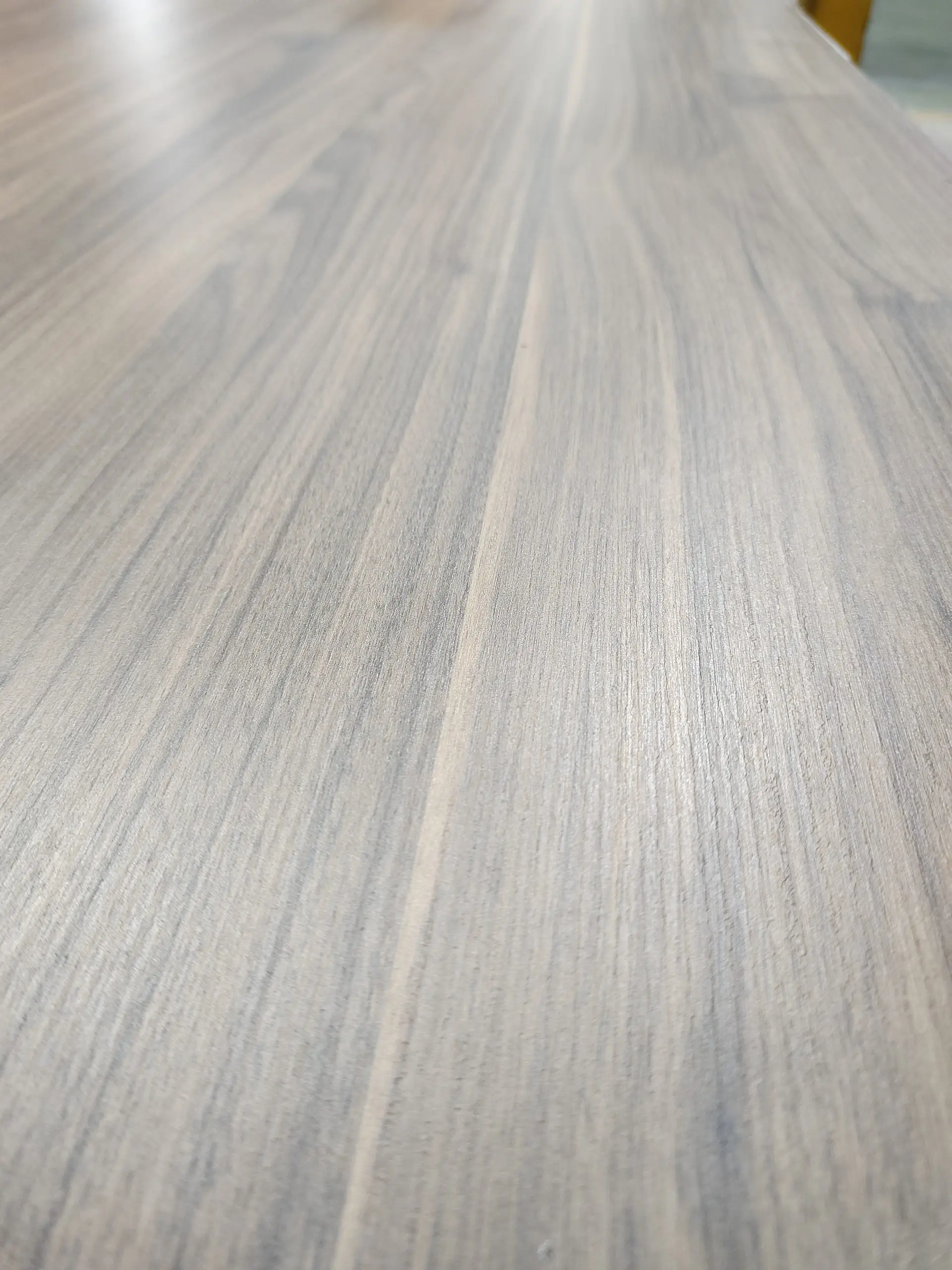
- Surface Smoothness: Run your hand over the board. It should feel perfectly smooth, with no bumps, fibers, or gritty areas. Look at it under a low-angle light to spot any subtle imperfections.
- Core Density: Inspect a cut edge of the board. The texture should be tight and uniform from the face to the center. A fuzzy or less dense core can indicate poor manufacturing quality.
- Dimensional Stability: Check for flatness. The board should not be warped or bowed. Our Custom Raw Plain MDF Board is manufactured to strict tolerances to avoid these issues.
For Melamine-Faced MDF Boards:
- Print and Color Consistency: Take several boards from the shipment and place them side-by-side. The color and wood grain pattern should be a perfect match. Any variation can ruin the look of a large set of kitchen cabinets.
- Lamination Adhesion: Carefully inspect the edges and corners. There should be no signs of peeling, bubbling, or delamination. The melamine layer should be fully bonded to the fiberboard core.
- Surface Finish: Check for scratches, scuffs, or defects in the embossed texture. The finish should be consistent across the entire panel, whether it’s a matte, gloss, or textured finish.
Establishing a clear quality standard with your supplier from the start is crucial. It prevents misunderstandings and ensures you get the exact material you paid for, every single time.
How Are High-Resolution MDF Textures Used in Architectural Visualization?
The partnership between material manufacturers and the architecture world has become incredibly close, thanks to technology. Before construction on a building begins, architects and designers create highly realistic 3D renderings to show their clients. This is where the concept of a PBR texture comes in. PBR stands for "Physically Based Rendering," an approach that mimics how light interacts with real-world materials.
A high-quality MDF wood texture for PBR applications is not just a single image. It’s a set of maps that tell the rendering software how to behave. This includes:
- Albedo/Diffuse Map: The flat color and pattern of the wood grain.
- Normal Map: This map fakes the small bumps and grain details, telling the software how light should bounce off the surface to create the illusion of physical texture.
- Roughness Map: This controls how glossy or matte the surface is. A high-gloss melamine would have a very different roughness value than a rustic, matte wood finish.
We work with designers to provide them with these high-resolution digital assets that are a "digital twin" of our physical products. When an architect specifies "Demeter Melamine Board #8042" in their project, they can use our pbr texture files to create a photorealistic rendering. The client sees exactly how their future kitchen or office wall will look. This level of accuracy removes guesswork, streamlines the approval process, and builds immense confidence. It’s a unique service that bridges the gap between manufacturing and high-end design.
What are the Best Applications for Different MDF Textures in a Building Project?
The versatility of MDF means there’s a perfect board for almost any interior application. Choosing the right texture and finish is key to matching the material to the demands of the space. As a supplier, I often advise clients on how to make the most of our product range.
-
Raw MDF: Its super-smooth surface makes it the go-to choice for components that will be painted. Think shaker-style cabinet doors, intricate architectural moldings, wainscoting, and paint-grade furniture. Its stability also makes it great for substrates that will be covered with veneer or other materials.
-
Standard Wood Grain Melamine MDF: This is the workhorse of the cabinet and furniture industry. It’s perfect for cabinet carcasses, drawer boxes, closet systems, office desks, and shelving. The durable, pre-finished surface saves immense labor time and offers a consistent, attractive look. It’s also an excellent choice for decorative wall panels in commercial and residential settings.
-
High-Gloss Melamine MDF: This finish provides a sleek, contemporary look popular in modern kitchen and bathroom design. The reflective surface can make a space feel larger and brighter. It’s used for cabinet fronts and feature panels where a dramatic, high-end aesthetic is desired.
-
Textured Melamine MDF: These panels, with their embossed textures that mimic deep wood grain, stone, or even fabric, are used to add depth and tactile interest to a project. They are fantastic for feature walls, hotel headboards, retail displays, and high-end office furniture, offering a premium feel without the cost of real exotic materials. From a simple closet shelf to a complex architectural installation, the right MDF product can elevate the result.
How to Partner with a Reliable MDF Manufacturer for Your Needs
For a business owner like Mark, the relationship with a supplier is just as important as the product itself. Finding a partner who you can trust to deliver consistent quality, on time, is paramount. After years of exporting our products worldwide, I’ve learned that success is built on a few key pillars.
First is Communication. Your supplier should be responsive, clear, and understand your technical requirements. Language barriers and time zone differences can be a challenge, but a professional supplier will have systems in place to ensure communication is seamless. Second is a commitment to Quality Control. Ask about their processes, their certifications (like CARB P2, E0/E1 for formaldehyde emissions), and how they handle any potential issues. A great partner stands behind their product.
Third is Logistical Expertise. Getting a container of MDF from a factory in China to a warehouse in the USA involves complex logistics. A reliable manufacturer will have an experienced team that can handle documentation, booking, and tracking, ensuring you’re informed every step of the way and minimizing the risk of costly delays. Finally, look for a Factory-Direct Relationship. Working directly with the manufacturer, rather than a trading company, often leads to better pricing, more control over customization, and a deeper understanding of the production process. A factory partner is invested in your long-term success, as your growth fuels their own.
Key Takeaways to Remember:
- Two Types of Texture: "MDF texture" can mean the smooth surface of a raw board or the decorative, laminated finish on a melamine board.
- MDF Means Smoothness: The primary advantage of raw MDF is its incredibly smooth, consistent surface, making it ideal for painted finishes.
- Melamine for Beauty & Durability: Melamine-faced MDF offers endless design possibilities (wood grain, solid colors) with a tough, scratch-resistant surface.
- Inspection is Crucial: Always check for surface consistency, color matching, and lamination quality to avoid production issues.
- Digital and Physical Worlds Align: High-quality seamless textures are vital for both real-world installation and digital architectural renderings.
- Choose the Right Partner: A reliable manufacturer provides clear communication, certified quality, logistical support, and the benefits of a direct factory relationship.****
Post time: 06-19-2025