In the world of professional furniture manufacturing and interior design, finding the balance between the aesthetic of natural wood and the stability of engineered materials is a constant battle. As a factory owner in China, I, Allen, have spent decades perfecting wood-based panels for the global market. I know that for buyers like Mark Thompson in the USA, the goal is a product that looks like solid timber but behaves with the predictability of engineering. This is where Oak Veneer MDF shines. It is the marriage of a thin layer of genuine hardwood and a stable MDF core. This article is essential reading because it unpacks why this specific composite sheet is likely the most versatile, cost-effective, and beautiful material for your high-end furniture and cabinetry needs.
What Makes Oak Veneer MDF the Ultimate Product for Furniture Manufacturing?
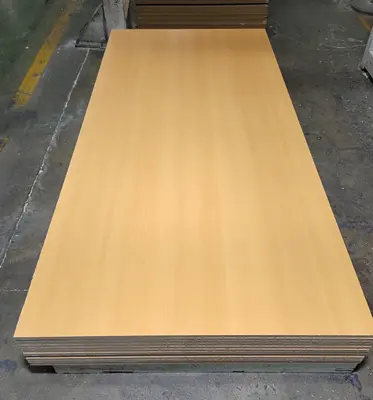
Oak veneer MDF is a composite panel that features a thin layer of real oak wood bonded to a medium-density fiberboard (MDF) substrate. Unlike printed melamine, which mimics wood, oak veneer showcases the authentic, organic texture and grain of the tree. When you run your hand across it, you feel the wood. For a manufacturer, this product offers the best of both worlds: the visual prestige of hardwood and the mechanical advantages of MDF.
In my factory, we source high-quality oak logs—often Red Oak or White Oak, depending on the client’s preference—and slice them into thin veneers. These are then pressed onto our premium Custom Raw Plain MDF Board. The result is a sheet that looks identical to a solid oak board but is far more uniform and easier to work with. It allows furniture makers to create pieces that appear to be solid wood but are lighter, flatter, and significantly more affordable. It is, quite simply, the ultimate product for modern joinery.
Why is the MDF Core Essential for a Stable and Durable Project?
You might ask, "Why use an MDF core instead of plywood or particle board?" The answer lies in stability and surface quality. MDF (Medium Density Fiberboard) is an engineered material made from wood fibers and resin. It has no grain direction, which means it is incredibly stable. It doesn’t expand and contract with humidity changes nearly as much as solid wood or even plywood.
For a high-stakes project like a fitted kitchen or a large conference table, this stability is crucial. If the core moves, the veneer can crack. The MDF core provides a rigid, flat, and smooth foundation. Furthermore, MDF has a consistent density, which makes it easy to machine. You can cut, route, and drill it without worrying about hitting voids or knots in the core. This makes oak veneer MDF an ideal material for precise manufacturing where tolerances are tight and the final look must be flawless.
How Does Oak Veneer Compare to Solid Wood for Your Next Design Project?
Solid oak is undeniably beautiful, but it comes with challenges. It is heavy, expensive, and notoriously temperamental. It can warp, cup, or bow if the environment changes. For a commercial project, these are risks that can lead to costly returns and repairs.
Oak veneer MDF eliminates these headaches. Because the MDF is stable, the panel stays flat. You get the natural beauty of the oak grain—the cathedrals, the rays, the warmth—without the structural unpredictability. Additionally, using veneer is environmentally responsible. We can produce hundreds of sheets of veneer from a single log, whereas that same log might only yield a few solid boards. This makes oak veneer MDF a sustainable choice that allows you to incorporate the luxury of wood into a design without the ecological footprint of using solid timber for the entire construction.
How Do You Choose the Perfect Sheet of Oak Veneer MDF?
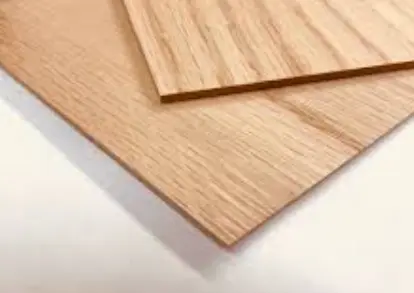
Choosing the perfect sheet involves understanding grading and grain. Veneers are sliced from the log in different ways. "Crown cut" (or flat sliced) veneers produce the classic cathedral pattern that most people associate with oak. "Quarter cut" veneers produce a straighter, linear grain.
In my factory, we grade our oak veneer MDF based on the visual quality of the face.
- A-Grade: The highest quality. The grain is uniform, free of knots and defects. This is ideal for visible faces like table tops and cabinet doors.
- B-Grade: May contain small pin knots or slight color variations. This is perfect for less visible areas or for a more rustic style.
When selecting a product for your shop, consider the final look. Do you want a uniform, contemporary look (Quarter Cut A-Grade)? Or a character-rich, traditional look (Crown Cut)? We make both available to ensure your project meets your exact specifications.
What Thickness and Size Options Are Available for Your Product Line?
Versatility is key in manufacturing. That is why oak veneer MDF is produced in a wide range of specs. The standard size for the North American market is typically 4ft x 8ft (1220mm x 2440mm), which fits standard production lines perfectly.
Regarding thickness, we offer a full spectrum:
- 3mm – 6mm: These thin sheets are ideal for cabinet backs, drawer bottoms, and door skins.
- 12mm – 15mm: Often used for drawer sides or lighter shelving.
- 18mm – 19mm (3/4 inch): The industry standard for cabinet carcasses, doors, and shelves.
- 25mm: Perfect for heavy-duty desktops or chunky floating shelves.
We ensure that these options are available to ship, allowing you to source all the materials for a complex project from a single supplier. Whether you need a thick board for a tabletop or a thin sheet for a panel insert, there is a thickness to suit the job.
How Can You Achieve a Stunning Finish on Oak Veneer MDF?
One of the greatest assets of oak veneer MDF is how well it takes a finish. Oak is an open-grained wood, which means it absorbs stains and oils beautifully, allowing you to customize the color and depth.
To stun your clients with the final result, preparation is key. Although the factory sands the veneer, a final light sanding with fine-grit paper is recommended before finishing.
- Oiling: Applying a natural oil brings out the warmth and deepens the contrast of the grain. It feels amazing to the touch.
- Lacquering: For a durable, maintenance-free surface, a clear lacquer is the best choice. It protects the wood while keeping the natural color.
- Staining: Oak is the best wood for staining. You can darken it to look like walnut or whitewash it for a Scandi look.
Because the underlying substrate is MDF, the surface is perfectly flat, ensuring your finish looks professional and uniform across the entire project.
Is Oak Veneer MDF the Perfect Solution for Cabinetry and Shelving?
For kitchen manufacturers and cabinet makers, oak veneer MDF is often considered the perfect material. Solid wood shelves can sag over time if not properly supported, and they can split in the dry heat of a kitchen. MDF is stiffer and more consistent.
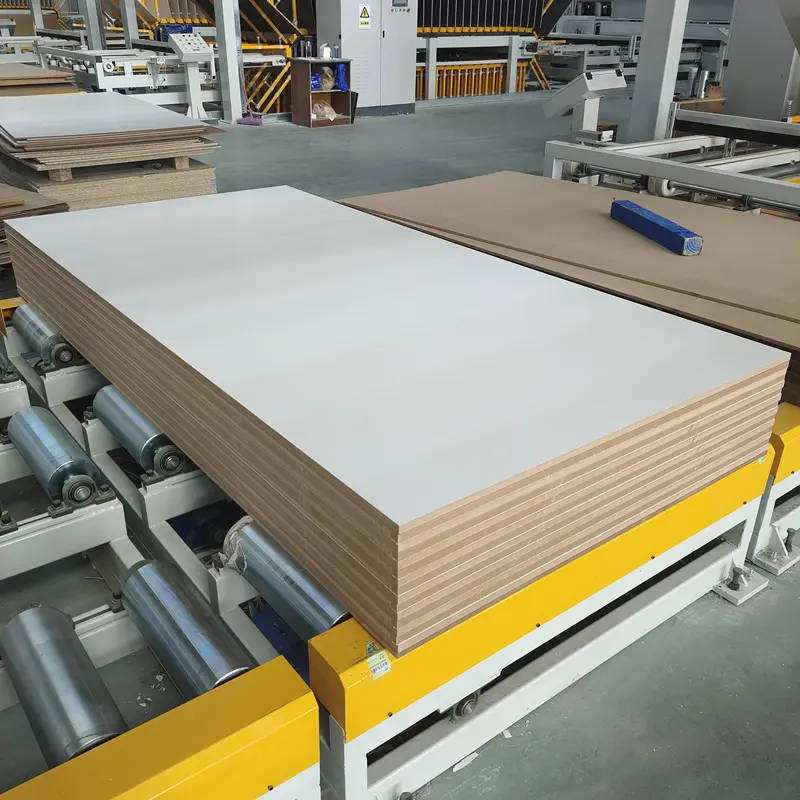
When building a high-quality kitchen, you want the visible exteriors to look like premium wood. Using oak veneer mdf for the doors, end panels, and open shelving provides that high-end aesthetic. For the interior carcass, you might use our Factory export melamine LSB or plain MDF to save cost, but the veneer is what the customer sees and touches. It offers the structural integrity needed to hold heavy hardware and hinges securely, making it a stable and long-lasting choice for cabinetry.
How Do We Ensure High-Quality Standards in Every Sheet We Produce?
As a high-quality manufacturer, I take quality control personally. Producing oak veneer MDF requires precision. The moisture content of the veneer and the MDF core must be perfectly balanced before bonding to prevent future warping.
In my factory, we use E1 or E0 grade glues to meet strict environmental and safety standards (like CARB P2 for the US market). We inspect the veneers for consistency in grain and color. During the pressing process, we monitor the temperature and pressure to ensure a bond that will never delaminate. We treat every sheet as if it were going into our own home. This dedication to quality is why our product is trusted by distributors and furniture makers worldwide. We also offer good quality melamine paper as an alternative for budget-conscious lines, but our veneer line remains the premium choice.
Why is this Product the Cost-Effective Choice for Large-Scale Manufacturing?
For a business like Mark’s, profit margins are tight. Using solid oak for an entire furniture line is often cost-prohibitive. Oak veneer MDF offers a massive cost advantage. The MDF core is significantly cheaper than solid timber, yet the finished product commands a similar price point because the visual value is high.
Furthermore, the yield is better. With solid wood, you have to cut around knots and defects, leading to waste. Oak veneer MDF sheets come in standard, usable sizes with minimal defects. This efficiency reduces waste in your shop and speeds up production times. It is the easy way to produce luxury-looking items at a competitive price, making it the best value proposition for B2B buyers.
How Does Using Oak Veneer Elevate the Aesthetic Beauty of Interior Design?
Ultimately, we choose materials for their beauty. There is a warmth and character to natural oak that synthetic materials struggle to replicate. The way light plays across the grain, the subtle variations in tone—these elements add soul to a room.
Using oak veneer MDF allows designers to use wood in places where solid wood would be impossible or too heavy, such as large wall panels, floating ceilings, or expansive conference tables. It brings the outside in, creating a calming, organic atmosphere. Whether it is a minimalist modern design or a rich, classic library, the aesthetic versatility of oak veneer makes it a staple of interior design. It allows you to create a beautiful, cohesive look throughout a space, matching doors to desks and shelves to paneling.
Key Takeaways for Your Next Project
- Best of Both Worlds: Oak veneer MDF combines the authentic beauty of natural hardwood with the stability and consistency of an MDF core.
- Stability is Key: The MDF core prevents the warping and twisting common in solid wood, ensuring your project remains flat and durable.
- Versatile Options: Available in various thickness options (from 3mm to 25mm) and grades (A/B) to suit every application from cabinet backs to table tops.
- Cost-Effective Luxury: Provides the high-end look of solid oak at a fraction of the cost, maximizing profitability for manufacturers.
- Easy to Finish: Takes oils, lacquers, and stains beautifully, allowing for complete customization of the final aesthetic.
- Sustainable: Uses less precious hardwood than solid lumber, making it an environmentally responsible choice for your design.
Post time: 12-17-2025