When you’re in the business of manufacturing furniture, cabinetry, or interior components, the quality of your raw materials is non-negotiable. One of the biggest enemies to wood-based products is moisture. It can lead to swelling, warping, and a complete breakdown of the material’s integrity, costing you time, money, and your reputation. As a factory owner with multiple production lines dedicated to wood-based panels, I’ve seen firsthand what works and what doesn’t. That’s why I want to talk about a game-changing sheet material: Moisture-Resistant MDF (MR MDF). This article will be your comprehensive guide to understanding this durable and versatile material, explaining what it is, how it differs from standard MDF, and why it should be a staple in your inventory, especially for projects in moisture-prone areas.
What Exactly is Moisture-Resistant MDF (MR MDF)?
Let’s start with the basics. Moisture-resistant MDF, often abbreviated as MR MDF, is an engineered wood product. Like standard MDF, it’s made by breaking down hardwood or softwood residuals into fine wood fibers. These fibers are then combined with wax and a special resin binder and formed into panels by applying high temperature and pressure. The key difference lies in the type of resin used in its manufacture. MR MDF uses a specially formulated, moisture-repellent resin. This is what gives the board its enhanced ability to withstand humid conditions and occasional wetness.
The result is a highly uniform and dense panel with a smooth surface that is perfect for a wide range of interior applications. It’s important to understand that this isn’t a new, untested product. It’s a reliable and proven material that we have been producing for years to meet the demands of clients in the USA, Europe, and Australia. The careful engineering process ensures that each board has a consistent density and thickness, making it a predictable and easy material to work with in a large-scale furniture manufacturing setting. This consistency is crucial for procurement officers like Mark, who need to ensure every sheet material meets a strict quality standard for production.
The specific formulation of the moisture-resistant resin significantly improves the internal bond strength of the MDF board, particularly when exposed to moisture. While standard MDF would quickly absorb moisture and swell, MR MDF is engineered to resist this absorption. This makes it an ideal choice for environments where humidity levels are high, but direct and prolonged contact with water is unlikely. It’s a cost-effective solution that provides enhanced durability without the much higher cost of fully waterproof materials.
How is Moisture-Resistant MDF Different from Standard MDF?
At first glance, a sheet of MR MDF might look similar to a sheet of standard MDF (unless it has the green dye, which we’ll discuss later). However, their performance in the presence of moisture is worlds apart. The difference is not just superficial; it’s engineered right into the core of the panel. As a manufacturer, controlling these differences is central to producing a reliable grade of MDF.
The primary distinction is the adhesive resin used. Standard MDF uses a urea-formaldehyde (UF) resin, which is effective for dry conditions but offers little protection against moisture. When UF resin gets wet, it weakens, allowing the wood fibers to absorb water, swell, and lose their structural integrity. In contrast, moisture-resistant MDF is made with a melamine-urea-formaldehyde (MUF) resin or a similar moisture-repellent adhesive. This advanced resin creates a stronger, more water-resistant bond between the wood fibers, drastically reducing the rate of water absorption.
Here’s a simple table to illustrate the key differences:
| Feature | Standard MDF | Moisture-Resistant MDF (MR MDF) |
|---|---|---|
| Resin Type | Urea-Formaldehyde (UF) | Melamine-Urea-Formaldehyde (MUF) or equivalent |
| Performance in Humidity | Prone to swelling and warping | High resistance to moisture and humidity |
| Density | Standard density | Often denser than standard MDF |
| Color | Typically uniform light brown | Often dyed green for identification purposes |
| Ideal Application | Dry interior use (e.g., standard furniture, shelving) | Humid interior use (e.g., kitchen, bathroom cabinetry) |
| Cost | Lower | Moderately higher |
This enhanced composition means that MR MDF is a much more durable material for use in challenging environments. For a furniture maker, this means fewer product failures and call-backs due to moisture-related damage. The slightly higher upfront cost of moisture-resistant MDF is easily justified by the longevity and superior performance it provides in its intended application. It’s a classic case of investing in the right material for the job to ensure a high-quality final product.
Is Moisture-Resistant MDF Completely Waterproof?
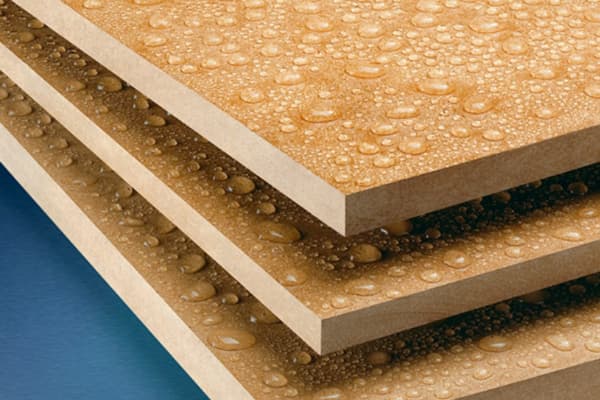
This is one of the most common questions we get, and it’s a critical point to clarify. Moisture-resistant MDF is not waterproof. There is a significant difference between being "resistant" and being "proof." A material that is moisture-resistant is designed to withstand exposure to high humidity and occasional splashes of water over a period of time. A waterproof material, on the other hand, is impervious to water and can be submerged for long periods without damage.
Moisture-resistant MDF will resist the penetration of moisture for a certain duration, but if it is left in direct contact with water for an extended period, it will eventually absorb moisture and swell. The special resin slows this process down dramatically compared to standard MDF, but it doesn’t stop it entirely. Think of it like a water-resistant watch versus a diver’s watch. You can wash your hands with a water-resistant watch, but you shouldn’t go swimming with it. Similarly, MR MDF is perfect for a bathroom vanity or kitchen cabinets where steam and splashes are common, but it would not be suitable for an outdoor deck or a shower enclosure.
For an application that requires a fully waterproof panel, you would need to consider materials like PVC foam board, composite panels, or marine-grade plywood. However, for the vast majority of interior applications in environments with high humidity, MR MDF provides the perfect balance of performance and cost. It offers excellent protection where it’s needed most, preventing the common issues of swelling and deterioration that plague lesser materials in humid environments.
Why is MR MDF Often Colored Green?
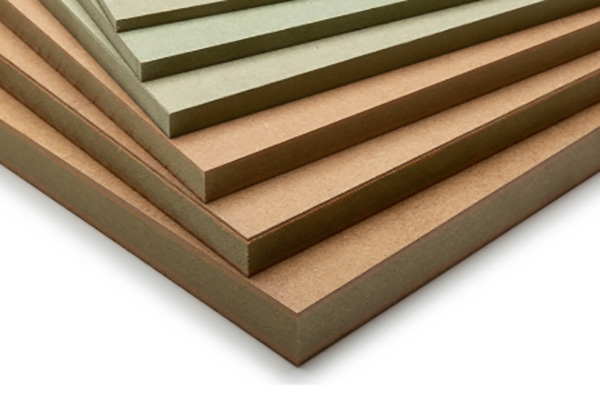
If you’ve handled moisture-resistant MDF, you’ve probably noticed that it’s often green. This has led to a common misconception that the green dye itself provides the moisture resistance. This is not the case. The green color is simply a dye added during manufacture for easy identification. This practice, known as using a "marker dye," helps builders, suppliers, and furniture makers quickly distinguish moisture-resistant MDF from standard MDF in a warehouse or on a job site.
This visual cue, often referred to as "always green," is an industry standard in many regions. It ensures that the correct grade of MDF is used for the intended application. Imagine a large construction project with thousands of sheets of MDF; the green color prevents a costly mix-up where a standard MDF panel might be accidentally used in a bathroom or kitchen. As a manufacturer, we add this dye purely for identification purposes. The actual protection comes from the specialized, moisture-repellent resin mixed with the wood fibers.
So, when you see a green MDF board, you can be confident it’s the moisture-resistant variant. However, it’s worth noting that not all moisture-resistant MDF is green. Some manufacturers may produce it in the standard brown color, so it’s always crucial to verify the product’s specifications with your supplier. At our factory, we adhere to the common industry practice to ensure clarity and prevent errors for our clients. We understand that for a busy procurement officer, simple visual confirmation can save valuable time and prevent mistakes.
What are the Key Benefits of Using a High-Grade MDF?
Beyond its resistance to moisture, high-quality MR MDF offers a host of other benefits that make it a superior choice for many projects. These advantages are why it has become a go-to material for discerning furniture and cabinet makers worldwide. The features that make it so popular stem from its unique manufacturing process.
Here are the key benefits:
- Exceptional Surface Finish: One of the greatest strengths of any MDF is its incredibly smooth surface. Because it’s made from fine wood fibers, it has no knots, grain, or voids like solid wood or plywood. This makes it an ideal substrate for painting, laminating, or veneering. You can achieve a flawless, glass-like smooth finish with far less preparation, saving time and labor.
- Consistency and Uniformity: As an engineered product, MDF is exceptionally consistent. Every board has the same density, thickness, and performance characteristics. This uniformity is a massive advantage in modern furniture production, where CNC machines require predictable materials for precise cutting and shaping. You won’t find the hidden flaws that can sometimes appear in natural wood.
- Durability and Strength: Moisture-resistant MDF is not only resistant to humidity but is also a very durable and strong material. It is typically denser than standard MDF and has a high internal bond strength, which means it holds screws well and resists delamination. Its stability ensures that cabinet doors won’t warp easily in humid conditions.
- Versatility: This versatile material can be used in a wide range of interior projects. From kitchen cabinets and bathroom vanities to skirting boards, window sills, and decorative paneling, its applications are extensive. The ability to use one reliable material across multiple applications simplifies inventory and purchasing.
- Cost-Effectiveness: While MR MDF costs more than standard MDF, it is significantly more affordable than solid wood or fully waterproof composite panels. It provides a high level of performance and durability for its price point, offering excellent value for projects where moisture is a concern.
These mdf offers a combination of performance and workability that is hard to beat, making it a smart investment for any quality-focused manufacturing operation.
Where is Moisture-Resistant MDF Most Commonly Used?
The unique properties of moisture-resistant MDF make it the perfect choice for any interior space where humidity and moisture are present. Its use is not just limited to obvious wet areas; it’s also a smart upgrade for any application where ambient moisture could be a long-term issue. We see our clients use our MR MDF across a variety of demanding projects.
The most commonly used areas include:
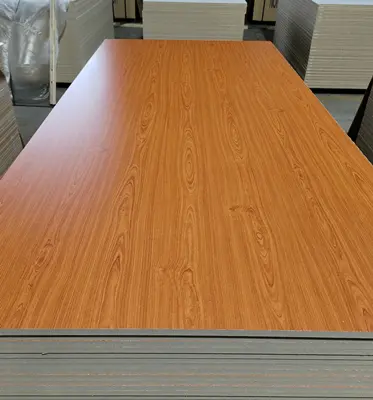
- Kitchens: This is a prime location for moisture-resistant MDF. It is an excellent material for kitchen cabinets, carcasses, drawer fronts, and end panels. Kitchens are high-traffic areas with constant steam from cooking and potential splashes from sinks, making the enhanced moisture protection of MR MDF essential for long-lasting furniture. For an even more durable and aesthetic finish, you can source high-quality wood grain melamine MDF boards which are often built on an MR MDF core.
- Bathrooms: The bathroom is arguably the most humid environment in any building. MR MDF is perfect for use in bathroom vanities, cabinet units, mirror surrounds, and bath panels. It can handle the steam from showers and daily humidity without the swelling or deterioration you’d see with standard MDF.
- Laundry Rooms: Similar to kitchens and bathrooms, laundry rooms have high levels of moisture and humidity from washing machines and dryers. Moisture-resistant MDF is ideal for shelving, cabinetry, and work surfaces in these spaces.
- Architectural Moldings: It is also frequently used for skirting boards, architraves, and window boards, especially in basements or coastal homes where ambient moisture levels are naturally higher. Its smooth surface provides a perfect base for a crisp paint finish.
- Commercial Applications: Beyond residential use, MR MDF is a staple in commercial fit-outs for spaces like gym changing rooms, restaurant kitchens (non-food-contact surfaces), and hotel bathrooms, where durability and resistance to moisture are paramount.
Essentially, anywhere that standard MDF would be at risk from humid conditions is an ideal place to upgrade to moisture-resistant MDF.
How Does MR MDF Compare to Plywood in Humid Conditions?
This is a common debate among furniture makers: when should you use moisture-resistant MDF versus plywood? Both are excellent materials, but they have different strengths and weaknesses, especially when moisture is a factor. As a factory that produces various types of panels, including melamine-faced plywood, we have a clear perspective on this.
Plywood, particularly exterior or marine-grade plywood, is known for its structural strength and water resistance. It’s made from layers of wood veneer glued together, and its cross-grained construction gives it excellent rigidity. However, lower-grade plywood can have voids or gaps in the inner layers, and its surface is not as smooth as MDF, often requiring more prep work for a fine finish.
Moisture-resistant MDF, on the other hand, excels where a smooth, stable surface is needed. For painted cabinet doors, for example, the uniform density of MDF is far superior. It won’t show any grain, and its edges can be machined to a clean profile. While plywood is generally stronger for structural purposes (like subflooring), MR MDF often provides better aesthetic results and superior surface durability for non-structural components. In terms of moisture, while marine-grade plywood is more water-resistant, MR MDF often outperforms standard interior-grade plywood in humid environments because the entire panel is infused with moisture-repellent resin, whereas plywood’s resistance can be compromised if the edges aren’t sealed properly.
Ultimately, the choice depends on the specific application. For a cabinet carcass that needs to be strong and functional, plywood might be a good choice. But for the cabinet doors and decorative panels that require a perfect, painted finish and must resist ambient moisture, moisture-resistant MDF is often the better, more reliable option.
Do You Need to Prime Moisture-Resistant MDF Before Painting?
Yes, absolutely. This is a step you should never skip. While moisture-resistant MDF has a wonderfully smooth surface, its composition means it’s still quite porous. If you apply paint directly to the raw MDF, the board will absorb the liquid unevenly, resulting in a patchy, unprofessional finish. The edges, which are even more porous, will soak up even more paint. This is why you need to prime it.
Priming serves two crucial purposes. First, it seals the surface of the MDF, creating a uniform, non-porous base. This ensures that your topcoats of paint will apply evenly and smoothly, giving you that flawless finish you’re looking for. Second, a good quality primer improves the adhesion of the paint to the MDF, creating a more durable and long-lasting finish that is less likely to chip or peel over time.
For best results on MR MDF, you should use a solvent-based or oil-based primer, especially on the cut edges, as it provides a better seal against any potential moisture ingress. Apply at least two coats of primer, sanding lightly between coats, to achieve an optimal surface. Taking the time to prime the MDF board properly is a small investment in labor that pays huge dividends in the quality and durability of the final product. For any professional operation, this is a non-negotiable step in the finishing process.
What Should You Look for When Sourcing High-Quality MR MDF?
As a procurement officer, your biggest concern is sourcing a consistent, high-quality product. When it comes to moisture-resistant MDF, not all panels are created equal. As a manufacturer, I can tell you exactly what to look for to ensure you’re getting a premium product. Low-quality MDF can lead to production delays, product failures, and unhappy customers.
Here are the key quality indicators to inspect:
- Consistent Density and Color: A good MDF panel should have a uniform color and feel consistently dense across the entire board. Inconsistent dark patches can indicate problems in the pressing or resin distribution.
- Surface Quality: The surface should be perfectly smooth, free of fibers, bumps, or blemishes. This is crucial for lamination and painting. Run your hand over the panel to feel for imperfections.
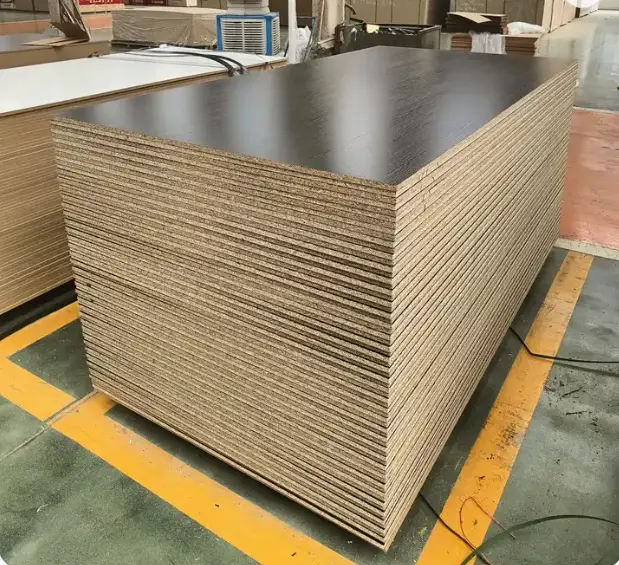
- Core Quality: Inspect the core of the MDF by looking at the edge. It should be compact and uniform. A fluffy or layered appearance suggests poor pressing and low internal bond strength. A high-quality MDF will have a high internal bond strength, making it better for machining and screw-holding.
- Certifications: This is critical, especially for exporting to the USA and Europe. Ensure your supplier can provide certifications like CARB P2 or E1/E0 for formaldehyde emissions. This is not just a quality mark but a legal requirement in many markets. It demonstrates the manufacturer’s commitment to safety and environmental standards.
- Moisture Content: Ask the manufacturer about their process for controlling moisture content. The ideal moisture content for MDF is typically between 6-8%. Incorrect moisture levels can lead to warping or cracking later on.
- Supplier Reliability: Work with a supplier who understands your needs. Inefficient communication and shipment delays are major pain points. A good partner, like Demeter Deco, will provide clear communication, reliable lead times, and robust quality control, ensuring you get the product you need, when you need it. We pride ourselves on producing top-tier custom raw plain MDF board that meets these stringent criteria.
Why is FSC® Certification Important for Your MR MDF Supply?
In today’s market, quality isn’t just about the physical properties of the MDF; it’s also about its origin. This is where FSC® (Forest Stewardship Council®) certification becomes incredibly important. FSC® is a global, not-for-profit organization dedicated to promoting responsible management of the world’s forests.
When you purchase FSC®-certified MDF, it means the wood fibers used to manufacture the board come from forests that are managed in an environmentally appropriate, socially beneficial, and economically viable manner. For your business, this offers several key advantages:
- Market Access: Many large retailers and government contracts, particularly in North America and Europe, now require FSC®-certified materials. Using certified MDF can open doors to new, high-value markets.
- Brand Reputation: Sourcing responsibly enhances your brand’s image. It shows your customers that you are committed to sustainability, which is an increasingly important factor for consumers.
- Risk Mitigation: FSC® certification provides a guarantee that your MDF is not sourced from illegal logging or other controversial practices. It protects your supply chain and your business from reputational damage.
- Proof of Authenticity: The FSC® chain of custody system tracks the material from the forest to the final product, ensuring that any claims of sustainability are credible and verifiable.
As a manufacturer that exports globally, we understand the importance of these standards. We are committed to responsible sourcing and can provide FSC®-certified MDF to meet the requirements of our clients. Choosing a supplier who values and holds FSC® certification is a smart business decision that aligns with modern expectations for quality and corporate responsibility.
Key Takeaways
Moisture-resistant MDF is a highly versatile and reliable material that offers a perfect solution for interior projects in humid environments.
- It’s Not Waterproof, It’s Resistant: MR MDF is designed to withstand high humidity and occasional moisture, but it is not for applications involving prolonged water contact.
- The Green Color is for Identification: The "always green" dye is a marker to easily distinguish moisture-resistant MDF from standard MDF. The real protection comes from the special resin.
- Superior for Finishing: Its smooth surface makes it an ideal, stable substrate for high-quality paint, laminate, and veneer finishes, far superior to plywood for aesthetic applications.
- Prime Before Painting: Always prime MDF to seal the surface and ensure a durable, professional finish.
- Quality is Key: When sourcing, look for consistent density, a flawless surface, a solid core, and crucial certifications like CARB P2 and FSC® to ensure you are getting a premium product.
Post time: 08-06-2025