Building furniture or installing trim in spaces that see a lot of steam and splashes requires careful planning. If you grab the wrong wood, your project will slowly turn into a swollen, ruined mess. This is where specialized panels step in to save the day. Moisture resistant MDF provides a brilliant, smooth surface for painting while fighting off the dampness that destroys ordinary boards. It literally saves projects from failing due to water damage. If you want your next cabinet or vanity to last, reading up on how these durable boards work is an absolute must.
What Exactly is Moisture Resistant MDF?
A standard panel has serious limits, but moisture resistant MDF steps right over them. This board is engineered differently from the ground up. To create it, factories take fine wood fibers and mix them with a specialized, moisture-repelling resin. They then press this mixture under intense heat. This process creates an incredibly strong MDF panel that fights off dampness. It is a highly versatile material that builders love.
When you compare it side-by-side, you will notice it feels different. It is denser and heavier than standard boards. The unique glue formulation gives it a high internal bond strength, meaning the fibers hold together tightly even when the air gets sticky. Because of this, it is one of the most trusted materials for interior applications where regular wood would fail.
In the world of furniture manufacturing, this specific type of board is a lifesaver. MDF offers a flawless, flat surface that takes paint perfectly. You get the beauty of a smooth finish paired with real durability. Whether you are building shelves or complex architectural moldings, this MDF board delivers exceptional results every time.
Is MR MDF Always Green or Is It Just a Green Dye?
People often ask a very simple question: is MR MDF always green? The short answer is no, but it is often green. During the manufacturing process, there is a dye added to the wood fiber mix. This creates a distinct green MDF board. However, this color has absolutely nothing to do with the board’s water-repelling abilities.
The green dye is purely for identification purposes. It simply helps warehouse workers, builders, and inspectors instantly recognize that they are looking at a specialized board rather than a standard one. Because the market expects this color, MDF is green in most hardware stores. This visual cue prevents costly mix-ups on busy job sites.
So, while the color is famous, remember that MDF is designed to function based on its resins, not its tint. Some high-end manufacturers produce boards without the dye for specific clear-coat projects. But for general construction, you can usually trust the green hue. It is just a clever industry standard that makes MR MDF easy to spot in a stack of lumber.
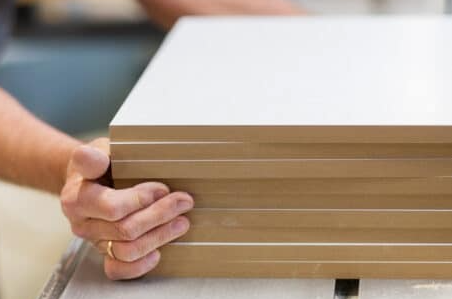
Does Moisture-Resistant MDF Mean It Is Completely Waterproof?
Let’s clear up a massive misconception right now. Is moisture-resistant MDF actually completely waterproof? Absolutely not. It is highly water-resistant, meaning it can handle high humidity and accidental splashes. However, it is not a fully waterproof material.
If you leave this board sitting in a puddle, it will eventually absorb water. You must never place it in direct contact with water for long periods. Furthermore, it is strictly for indoor use. You cannot use it for outdoor use where rain and snow will pound against it. Prolonged water contact will break down the resins and ruin the panel entirely.
Understanding this difference is vital when giving advice on material selection. You must seal the edges properly to maximize its lifespan. When correctly sealed and painted, it can easily withstand the dampness of a steamy room. Just remember to wipe up standing water quickly to protect your investment.
How Does It Compare to Standard MDF in a Bathroom?
In a bathroom, standard MDF fails miserably and quickly. The steam from showers creates a brutal climate. Humid environments easily penetrate traditional MDF, causing the fibers to expand. Within a few months, the edges will flare out, and the paint will start to peel away in flakes.
On the other hand, when a specialized panel is used in a bathroom, the story changes entirely. Moisture-resistant boards manage to survive environments with high humidity without flinching. The specialized glue stops the steam from penetrating deep into the core. This is why it is the ultimate choice for custom bathroom vanities and shelving.
You can actually test this yourself. Take two small scrap pieces—one standard and one resistant—and leave them in a steamy room. The standard piece will swell and lose its shape. The specialized piece will remain sharp and crisp. It easily outperforms standard options, making it the smartest choice for any damp space.
MR MDF vs. Plywood: Which is More Durable?
When debating between MR MDF and plywood, you have to look at how you plan to use them. Plywood is a remarkably durable option known for its massive structural durability and strength. If you are building the hidden framework for a house or needing something for hidden structural support like subflooring, plywood is the undisputed champion.
However, plywood has a rough texture and visible wood grain. If you want a perfectly smooth, painted cabinet door, plywood requires hours of filling and sanding. This is where the engineered board steps in as the go-to material. It provides a glass-like finish that plywood simply cannot match without extreme effort.
For extreme water exposure, such as building a boat, you would use marine-grade plywood. But for beautifully painted interior cabinets, the engineered fiberboard wins. It is a brilliantly durable and versatile material. If you want the best of both worlds, many high-end builders combine them. They useFactory Provide Melamine plywood 12mm for Furniture Cabinet Kitchen wardrobe for the strong cabinet boxes and use fiberboard for the flawless, painted doors.
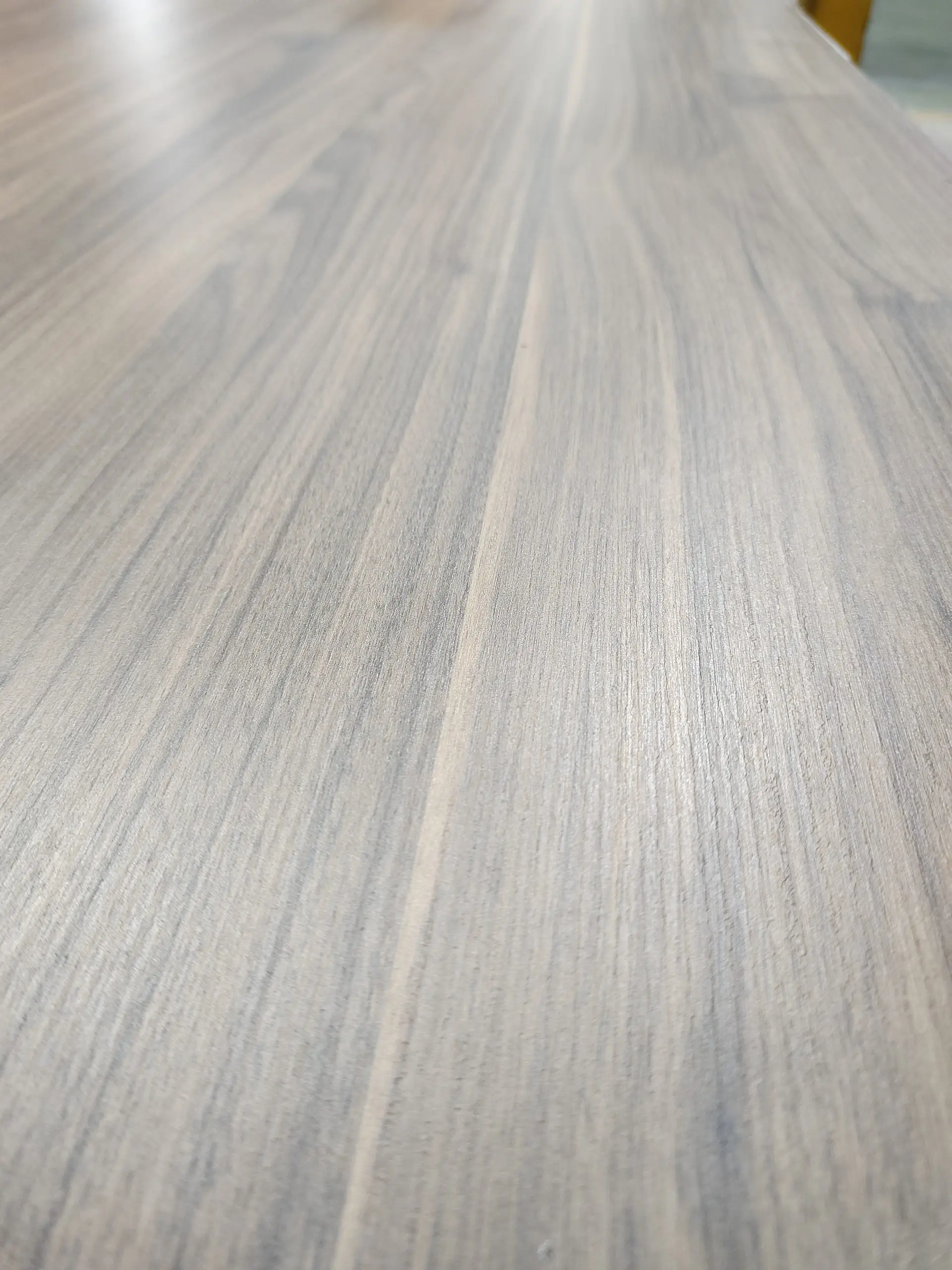
Do You Need to Prime Moisture-Resistant Boards Before Painting?
Do you need to prime these boards before you break out the paint roller? Yes, you absolutely do. Even though it is moisture-resistant, the cut edges remain porous. Because it has a medium density, the exposed fibers will suck the moisture right out of your paint if you skip the primer.
MDF is designed to take paint beautifully, but only if you prepare it right. You should use a high-quality, oil-based or shellac-based primer. Water-based primers can sometimes cause the wood fibers on the cut edges to raise, creating a fuzzy texture. Sand the edges smooth, apply a thick coat of primer, and sand it gently once it dries.
Wherever MDF is used, this priming step is the secret to a professional look. Once the primer seals the pores, you can apply any topcoat you like. The final result will look like a solid piece of plastic or metal. This flawless finish is why MDF is a highly versatile choice for modern homes.
What is the Exact Specification of a High-Quality Moisture Resistant MDF?
If you look closely at the specification sheet for a premium moisture resistant MDF, you will see some impressive numbers. First, it is notably denser than standard MDF. This extra density gives it a heavier, more solid feel. It also provides a cleaner cut when you run it through a table saw.
The most critical spec is its high internal bond strength. This measures how hard it is to pull the board apart. Because the board is engineered to withstand stress, this number is kept very high. The factory also strictly controls the moisture content of the wood chips before pressing them.
These technical details are what elevate the board. If you want to see a great example of a top-tier board, you can check out a Factory High-Quality Melamine Mdf Board. The precision in the manufacturing process guarantees that every sheet performs exactly as promised, saving builders from unexpected failures.
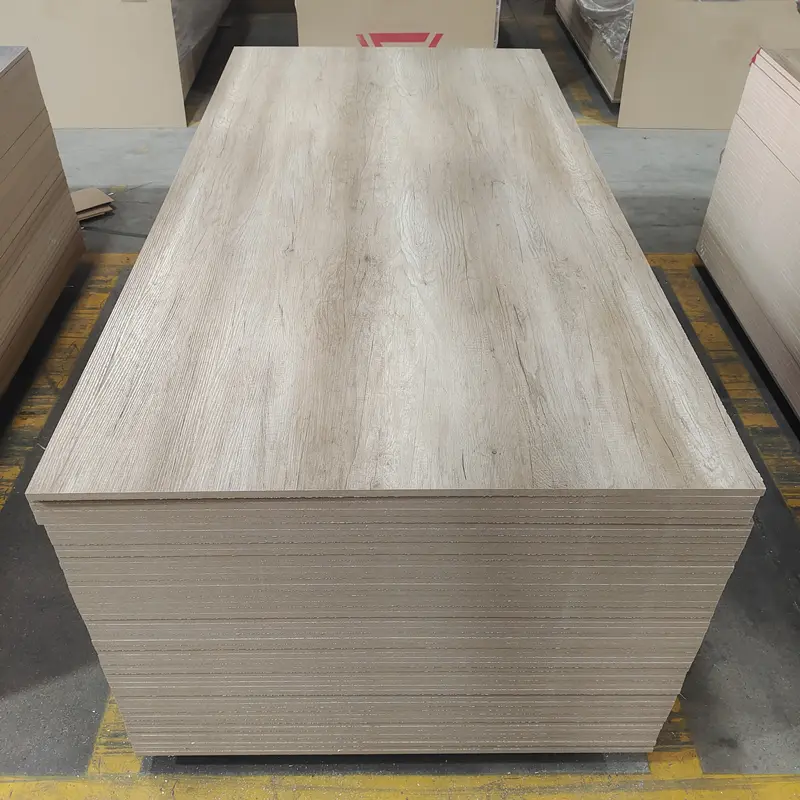
Can Moisture-Resistant MDF Be Used for Kitchen and Bathroom Vanities?
Absolutely. Moisture-resistant MDF truly shines in kitchens and bathrooms. These rooms experience wild temperature swings and heavy steam. If you use cheap materials here, your cabinets will look awful within a year.
For high-end cabinetry, builders rely heavily on this material. It is especially popular for kitchen cabinets. The smooth surface allows for sleek, modern designs without the distraction of wood grains. Because it repels steam so effectively, MDF is perfect for use right next to a boiling stove or a hot shower.
In fact, MDF offers the best canvas for creating custom painted bathroom vanities. You can route intricate designs into the doors without splintering the wood. When sealed with good paint, it handles humidity and occasional moisture flawlessly. It is the secret ingredient behind those pristine, magazine-cover bathroom designs.
Will Humid Conditions Cause MR MDF to Swell or Warp?
Humid conditions are the natural enemy of all wood products. When ordinary wood gets damp, it tries to expand. This movement can quickly lead to warping. If you have ever seen a cabinet door that won’t close properly in the summer, you have witnessed this problem firsthand.
However, MR MDF is built to fight this exact issue. Because it is chemically bonded, it can easily withstand moisture and humidity. The internal glue matrix locks the fibers in place. Even in a space where humidity is a constant problem, this board holds its shape beautifully.
While a tiny amount of expansion might occur in extreme weather, it is vastly superior to solid timber. It is specifically designed to withstand these environmental shifts. You won’t have to worry about your doors twisting out of shape. It manages to stay perfectly flat, which is why carpenters trust it so much.
Where Else Should You Install Moisture Resistant MDF?
Beyond the kitchen and the bathroom, there are many other places to use moisture resistant MDF. One of the smartest uses is for skirting boards and baseboards. Floors get mopped frequently, meaning baseboards are constantly exposed to moisture. Using a resistant board here prevents water damage from creeping up the walls.
It is also fantastic for commercial applications. Restaurants, gyms, and public restrooms use it extensively. In these busy wet areas, ordinary materials get destroyed fast. Using this board ensures the fixtures look new for years. It is simply one of the most common choices for commercial fit-outs.
You can easily buy large MDF sheets for big projects. Whether you need a few small cuts or massive sheets of MDF for wall paneling, it is readily available. In places where moisture is a concern, this board steps up to the plate. It confidently replaces standard wood in areas where it would normally rot or warp. If you need a reliable, smooth-surfaced material that can withstand humid conditions, this board is exactly what you are looking for. You can easily source high-quality options like a Custom Raw Plain MDF Board tailored to your specific project needs.
Summary
- Moisture resistant MDF uses a special resin to bind the fibers, making it highly resistant to humidity and steam.
- The green dye is purely for identification purposes; the color itself doesn’t make it waterproof.
- It is incredibly water-resistant, but it is not completely waterproof. Never submerge it in water.
- It easily outperforms standard boards in a bathroom or kitchen, preventing unsightly swelling.
- While plywood has greater structural strength, this engineered board provides a much smoother finish for painting.
- You absolutely need to prime the cut edges before painting to seal the porous fibers properly.
- It is denser than standard MDF and features a very high internal bond strength.
- It is the ideal choice for skirting boards, cabinetry, and architectural moldings in damp areas.
Post time: 02-27-2026